
Why weather protection for students matters in UK schools
- Andrew Crookes

- 2 days ago
- 7 min read
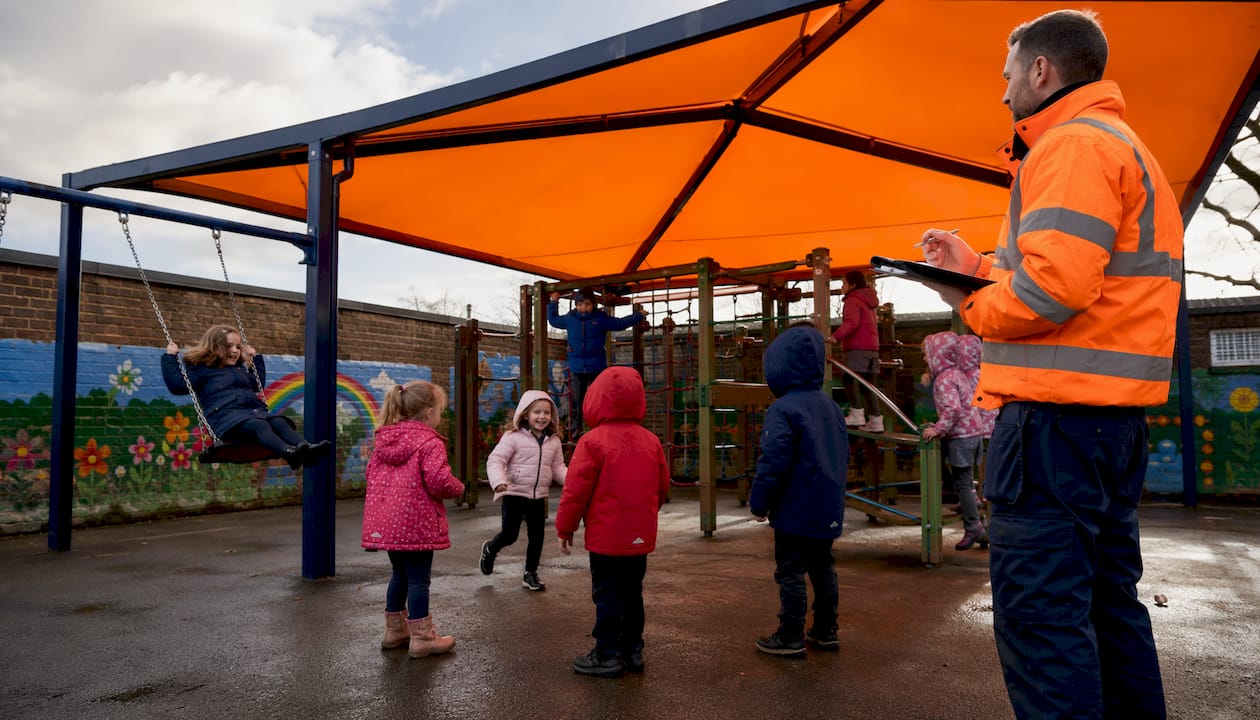
Why weather protection for students is essential in outdoor educational spaces
Weather protection for students means the durable shading structures and shelters that keep pupils safe from rain, wind, UV rays, and temperature extremes during outdoor learning and play. In UK schools, where the climate shifts from driving rain in October to sharp summer sun in June, this is not a seasonal nicety. It is the difference between an outdoor space that gets used and one that sits empty.
The case for investing in outdoor shading rests on four pillars:
Pupil health and safety: Covered spaces reduce exposure to harmful UV radiation, cold, and wet conditions that can cause illness and injury.
Year-round usability: Covered outdoor areas enable free-flow play and learning in all weathers, a standard embedded in UK early years design guidance.
Learning engagement: Outdoor lessons consistently improve motivation and behaviour when students can access them reliably.
Attendance and wellbeing: Students who enjoy outdoor breaks are less likely to fall ill and more likely to attend consistently.
UK facilities managers face a practical challenge: outdoor spaces that cannot be used in bad weather are wasted capital. Shelters convert that wasted space into a year-round educational asset.
Table of Contents
How weather protection improves student wellbeing and learning outcomes
What types of weather protection work best for school outdoor spaces
What to consider when selecting weather protection for student areas
How Infinityawnings supports educational institutions with weather protection
Is investing in weather protection for schools worth the cost?
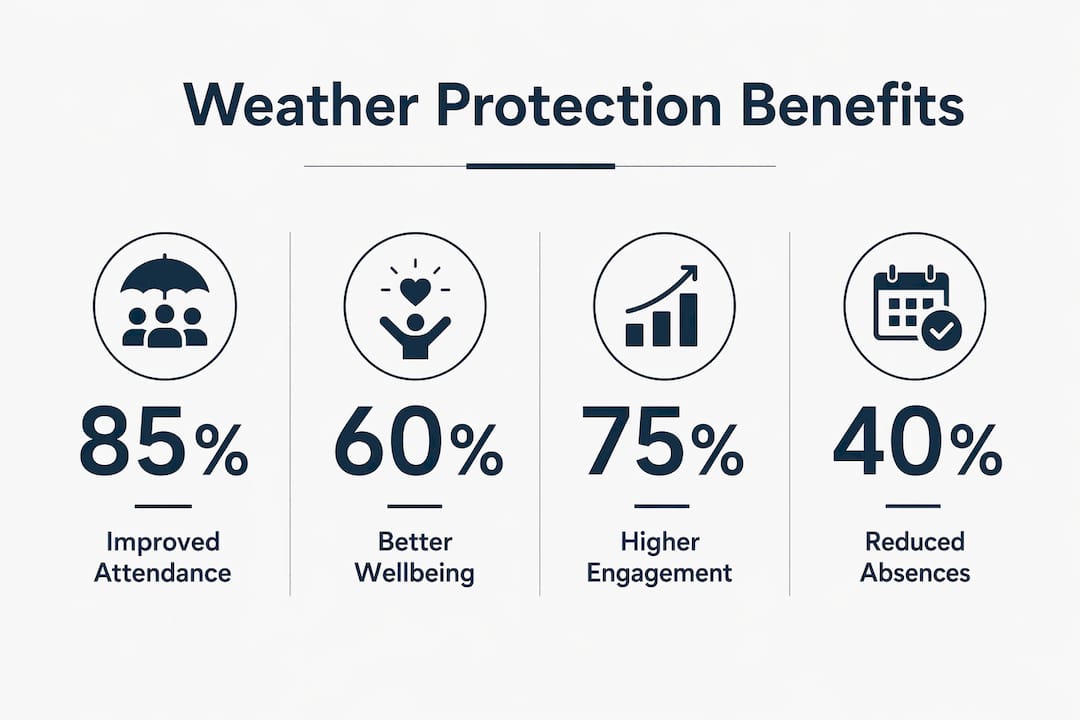
How weather protection improves student wellbeing and learning outcomes
The evidence linking outdoor access to student outcomes is substantial. The Natural Connections Demonstration Project, which ran across 125 schools and involved over 40,000 pupils, found that 92% of pupils said they enjoyed lessons more when outdoors, and 90% felt happier and healthier as a result.
Outcome area | Finding |
Pupil enjoyment | 92% of pupils enjoyed outdoor lessons more |
Pupil health and happiness | 90% of pupils felt happier and healthier outdoors |
Behaviour impact | 85% of schools saw positive behaviour change |
Teacher teaching practice | 79% of teachers reported a positive impact on their teaching practice |
Teacher job satisfaction | 69% of teachers reported higher job satisfaction |
Physical health benefits are direct. Outdoor play develops gross motor skills, increases physical activity, and triggers endorphin release that reduces stress and anxiety. For pupils who struggle with classroom confinement, a sheltered outdoor space offers a genuine pressure valve. Sheltered play areas reduce conflict during breaks, and calmer breaks translate into calmer classrooms.
Stat to note: A controlled trial of the Wilderness Schooling programme found that pupils in the outdoor group improved attainment faster than the control group in English reading, writing, and maths, with gains persisting after the intervention ended.
Academic benefits follow from consistent outdoor access. When students can get outside reliably, regardless of the weather, teachers can plan outdoor lessons with confidence rather than treating them as weather-dependent bonuses. That reliability is what converts occasional outdoor activity into a genuine curriculum tool.
What types of weather protection work best for school outdoor spaces
Schools have several options, each with distinct trade-offs in cost, durability, and flexibility. Understanding those trade-offs is what separates a good procurement decision from an expensive mistake.

Fixed permanent canopies are the workhorse of school weather protection. Steel or aluminium frames with polycarbonate roofing provide all-weather cover across large areas, from playgrounds to outdoor classrooms. They carry a higher upfront cost but require minimal maintenance and can last decades. Powder-coated aluminium resists corrosion, and shatterproof polycarbonate roofing handles everything from hail to heavy snow. For high-traffic areas used daily, this is the most cost-effective long-term choice.
Shade sails offer a lower-cost, visually striking alternative. Tensioned fabric stretched between posts works well for sun protection and light rain, particularly in early years play areas or outdoor dining spaces. The limitation is significant: fabric sails must be taken down in severe weather and do not provide the year-round reliability of a hard roof. They suit schools that want to supplement existing cover rather than replace it.
Retractable awnings give flexibility where fixed structures are impractical. They can be extended during lessons and retracted when not needed, preserving sightlines and reducing wind load. Electrically operated models from brands such as Weinor allow staff to deploy cover quickly without manual effort.
Verandas and pergolas suit schools looking to create a defined outdoor classroom or social space. A well-designed pergola installation can serve multiple functions: sheltered seating, outdoor teaching, and a transition zone between indoor and outdoor environments.
Open-air spaces remain valuable for fine weather, but without any cover they become unusable in rain, which in the UK means a significant proportion of the school year.
Pro Tip: Combine a permanent canopy over the highest-traffic zone with shade sails or retractable awnings in secondary areas. This gives you reliable all-weather cover where it matters most, with flexible, lower-cost solutions elsewhere.
For examples of how schools have implemented these solutions in practice, the range of configurations is wider than most facilities managers initially expect.
What to consider when selecting weather protection for student areas
Choosing the right structure involves more than picking a product from a catalogue. Several factors determine whether an installation delivers value over its lifetime.
Material durability: UK weather is relentless. Structures must withstand sustained wind, UV degradation, and freeze-thaw cycles. Powder-coated aluminium and polycarbonate roofing consistently outperform cheaper alternatives over a ten-year horizon.
Maintenance requirements: Fixed canopies with quality materials need little more than periodic cleaning. Fabric solutions require seasonal removal, cleaning, and re-tensioning. Factor maintenance time and cost into the total cost of ownership.
Health and safety compliance: Any permanent outdoor structure on school grounds requires appropriate planning permissions and must meet building regulations. Procurement must also align with relevant financial governance frameworks. Guidance for schools notes that outdoor structures are functional infrastructure requiring adherence to procurement frameworks aligned with school financial codes.
Integration with school schedules: Installation during term time causes disruption. Plan for holiday-period installation and confirm lead times with suppliers well in advance.
Ofsted alignment: Sheltered outdoor spaces directly support Ofsted’s Personal Development judgement by enabling physical activity, mental health benefits, and social skill development year-round.
Pro Tip: Request a site survey before committing to any structure. The orientation of your building, prevailing wind direction, and existing drainage all affect which solution will perform best in your specific location.
For a detailed look at school awning installation processes and what to expect from a professional fit, the specifics of groundwork and fixings matter more than most buyers realise until they are mid-project.
How Infinityawnings supports educational institutions with weather protection
Infinityawnings brings over 15 years of experience supplying and installing outdoor shading solutions for educational clients across Yorkshire, Derbyshire, Nottinghamshire, and Lincolnshire. That depth of experience matters in a school context, where installations must be safe, durable, and delivered without disrupting the academic calendar.
The product range covers the full spectrum of school requirements:
Retractable awnings from brands including Weinor and Llaza, available in manual or electric operation with a wide choice of fabric patterns and UV-resistant materials.
Pergolas and verandas designed for multipurpose use, suitable for outdoor classrooms, social spaces, and covered walkways.
Bespoke shading consultations that account for site-specific factors including wind exposure, drainage, and existing architecture.
Free quotes and downloadable guides to support facilities managers through the specification and procurement process.
Infinityawnings works with reputable brands to deliver installations that meet the durability standards schools require, with aesthetics that complement rather than clash with existing buildings. The focus is on structures that get used every day, not just when the weather is kind.
Is investing in weather protection for schools worth the cost?
The short answer is yes, and the financial case is stronger than it first appears. A permanent canopy carries a higher upfront cost than a shade sail or temporary shelter, but the comparison that matters is cost per year of use, not purchase price. A quality aluminium and polycarbonate structure installed correctly can serve a school for 20 years or more with minimal maintenance expenditure.
The indirect savings are harder to quantify but real. Schools with sheltered outdoor spaces report better attendance, partly because pupils are less likely to fall ill when they get regular fresh air and exercise rather than being confined indoors during breaks. Fewer wet lunchtimes indoors means less conflict, less staff stress, and fewer behavioural incidents to manage. Those are genuine reductions in staff time and resource.
Outdoor learning also supports curriculum delivery across multiple subjects without additional cost. A sheltered outdoor classroom that enables science, art, and English lessons outside represents a return on investment that a simple cost-per-square-metre calculation misses entirely. For schools serving disadvantaged communities, outdoor learning access functions as an upstream health resource, delivering wellbeing benefits that would otherwise require costly interventions elsewhere.
Infinityawnings: outdoor shading built for UK schools
Facilities managers who have spent a wet November watching an empty playground know the cost of inadequate cover. Infinityawnings offers a practical route from that frustration to a genuinely usable outdoor space, with structures specified for UK conditions and installed by a team that has been doing this for over 15 years.

Whether you need a permanent canopy over a primary school playground, a pergola for a sixth-form social area, or a retractable awning for a covered teaching zone, Infinityawnings will survey your site, advise on the right solution, and provide a free, no-obligation quote. Explore the pergola range or contact the team directly to start the conversation about what your school’s outdoor spaces could look like with the right cover in place.
Key takeaways
Weather protection for students is a direct investment in outdoor learning capacity, pupil health, and year-round facility usability across UK schools.
Point | Details |
Outdoor learning outcomes | A large majority of pupils enjoyed outdoor lessons more; 90% felt happier and healthier, per the Natural Connections project. |
Behaviour and attendance | Schools reported positive behaviour impact from sheltered outdoor access. |
Structure selection | Fixed aluminium and polycarbonate canopies offer the best long-term durability for high-traffic school areas. |
Procurement compliance | Outdoor structures are functional infrastructure; procurement must align with school financial governance frameworks. |
Infinityawnings | Over 15 years’ experience supplying and installing school-grade shading solutions across Yorkshire, Derbyshire, Nottinghamshire, and Lincolnshire. |
Recommended
Comments