
Year-round comfort with heated awnings: Key benefits
- Andrew Crookes

- Mar 30
- 8 min read
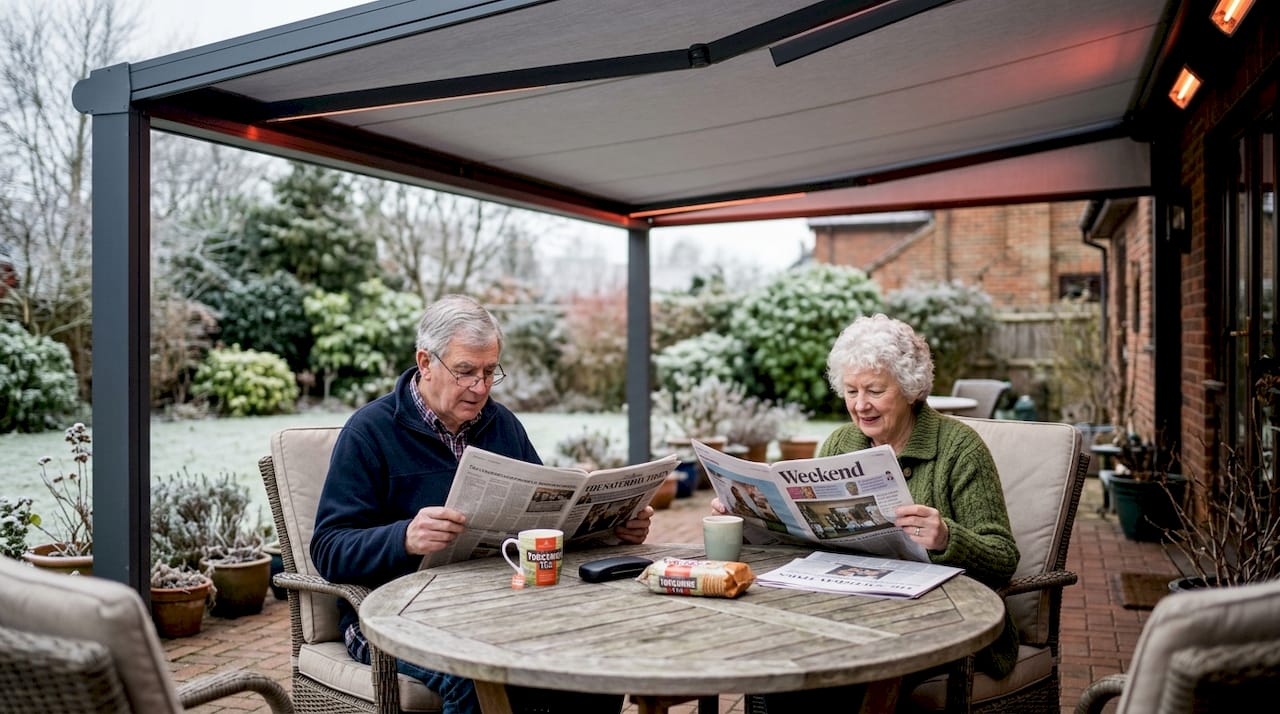
Most people assume that living in Yorkshire, Derbyshire, Nottinghamshire, or Lincolnshire means accepting that outdoor spaces are off-limits for a good chunk of the year. Cold snaps, drizzle, and unpredictable winds seem to make the patio a seasonal luxury at best. But that assumption is outdated. Modern heated awnings extend outdoor usability year-round by delivering targeted warmth even during cooler months, turning your garden or business frontage into a genuinely usable space in every season. This guide walks you through how the technology works, the real benefits for our region, and how to get the most from your investment.
Table of Contents
Key Takeaways
Point | Details |
Year-round outdoor comfort | Heated awnings provide targeted warmth, letting you enjoy patios and business frontages in all seasons. |
Enhanced energy efficiency | Awnings reduce solar heat gain and cooling costs, offering substantial savings for homes and businesses. |
Boosted property value | Upgrading with heated awnings can increase property value by up to 10% in Yorkshire and surrounding areas. |
Expanded business capacity | Businesses benefit from greater outdoor seating, higher customer retention, and stronger revenue. |
Safety and convenience | Modern solutions include weather sensors for reliability and easy integration with smart controls. |
How heated awnings work: Infrared technology explained
Infrared heaters are the engine behind a great heated awning setup. Unlike conventional heaters that warm the surrounding air, infrared technology emits radiant heat that warms people and surfaces directly. This matters enormously in the UK, where a gust of wind can strip warmth from the air in seconds. Because infrared heating works efficiently even in windy or cold conditions without any pre-heating period, you get instant comfort the moment you switch it on.
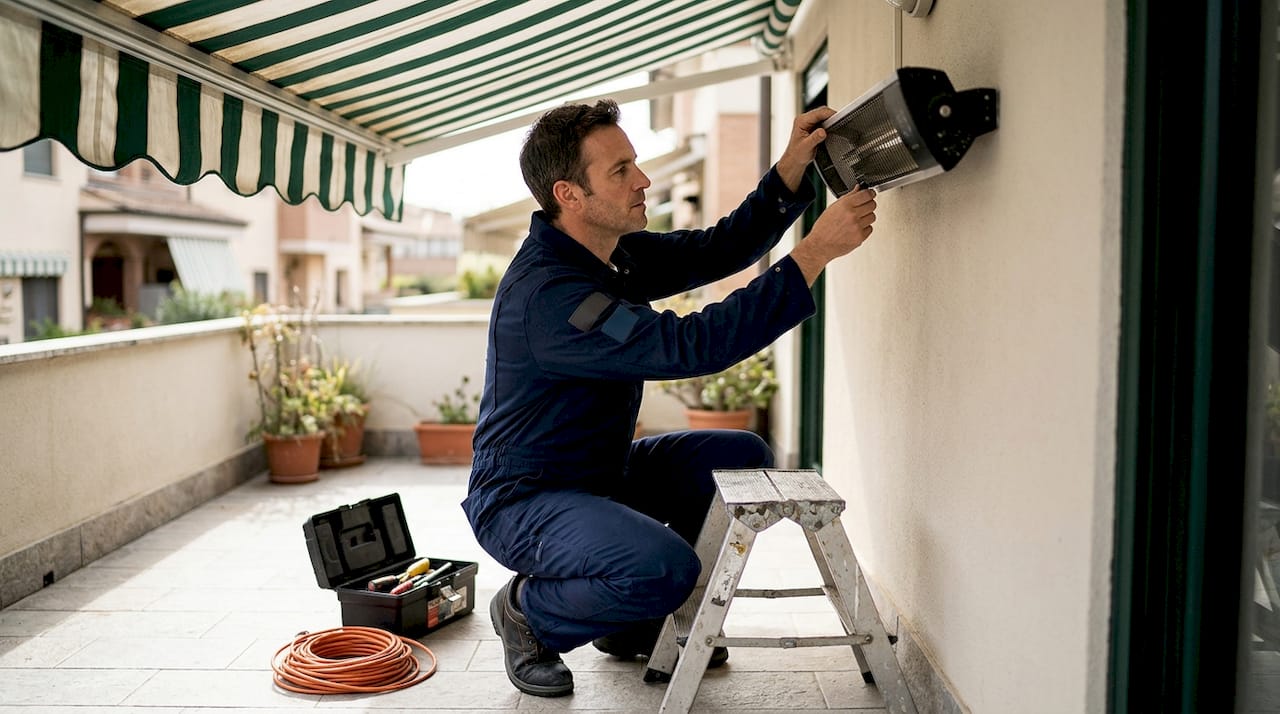
Most awning-mounted infrared heaters operate between 1.5kW and 3kW, with running costs ranging from roughly 20p to 65p per hour depending on your energy tariff and the unit’s output. That is comparable to running a kettle, not a central heating system. The heaters are IP-rated for outdoor use, meaning they are built to resist rain and moisture without any risk to performance or safety.
Here is a quick comparison of common outdoor heating options:
Heating type | Response time | Weatherproof | Fumes | Typical cost per hour |
Infrared electric | Instant | Yes (IP-rated) | None | 20p to 65p |
Gas patio heater | 1 to 2 mins | Partial | Yes | 30p to 80p |
Halogen heater | Near-instant | Limited | None | 15p to 50p |
Key advantages of infrared heaters for awnings:
No energy wasted heating the surrounding air
Silent operation with no fumes or combustion
Compatible with all-weather awning essentials and smart controls
Compact enough to mount flush within the awning cassette or valance
Safe for use around children and pets
Pro Tip: Infrared heaters outperform gas options for awning use. There are no gas canisters to replace, no fumes to worry about, and the response is immediate. For a busy restaurant terrace or a family patio in Nottinghamshire, that convenience is hard to beat.
Main benefits for Yorkshire and surrounding regions
Understanding the technology, let us look at how heated awnings deliver tangible benefits right here in Yorkshire and neighbouring counties. Our regional weather is notoriously changeable. A sunny afternoon in Sheffield can turn blustery within the hour, and East Lincolnshire coastal winds are a different challenge entirely compared to the sheltered valleys of Derbyshire.
Regional awning specialists tailor solutions for local climate conditions, incorporating wind and rain sensors that automatically retract the awning before damage can occur. This is not a luxury feature; in our part of the country, it is essential.
“Heated awnings can increase property value by up to 10% alongside improved outdoor usability, making them a sound investment for homeowners across the East Midlands and North of England.”
Beyond comfort, the practical benefits stack up quickly:
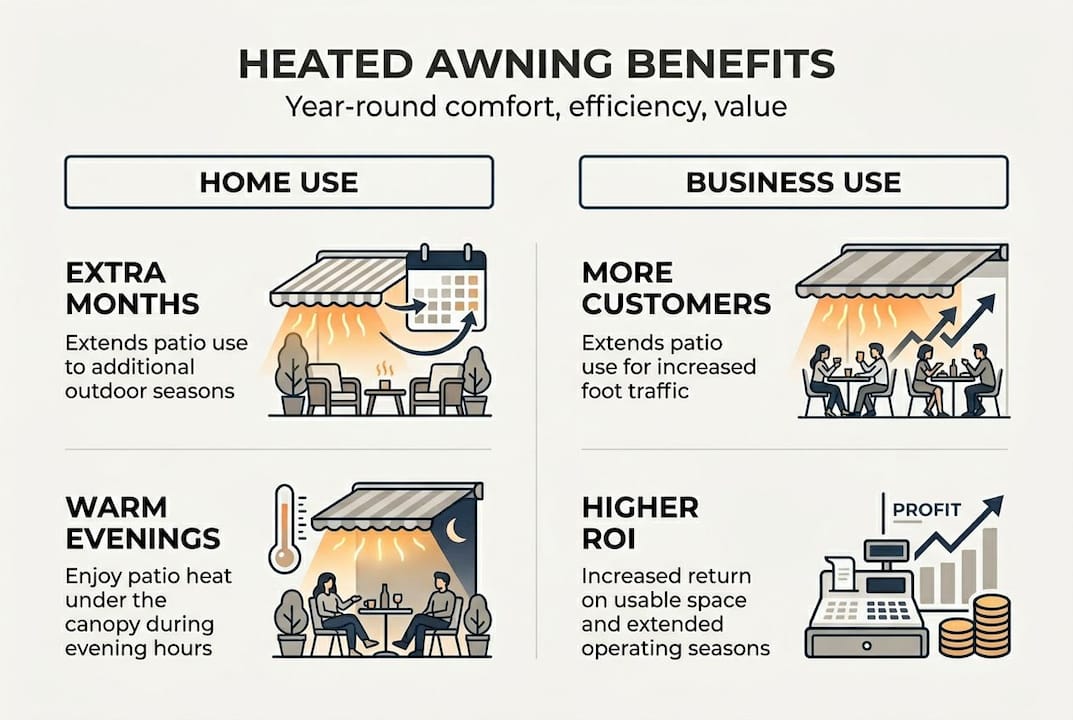
Extended outdoor season from early spring through to late autumn
Increased usable square footage without the cost of a full extension
Wind and rain sensors protect the structure automatically
Local installers provide ongoing support and aftercare
Improved kerb appeal and enhanced home energy efficiency
Feature | Without heated awning | With heated awning |
Usable outdoor months | 4 to 5 | 9 to 10 |
Weather protection | None | Wind, rain, UV |
Evening comfort | Cold, unusable | Warm, inviting |
Property appeal | Standard | Noticeably improved |
For homeowners considering the full picture, exploring premium awnings for Yorkshire and reviewing installation tips for Yorkshire awnings will help you plan a setup that suits your property and lifestyle.
Energy efficiency and cost savings explained
With regional benefits clear, let us look at the numbers. Awnings do not just add warmth in winter; they also block solar heat gain in summer. Shading reduces solar heat gain by 65 to 77%, cutting indoor temperatures by up to 8°C and reducing cooling costs by 10 to 25% in the UK. One widely cited figure is a 77% reduction in solar heat gain with electric awnings, which translates directly into lower air conditioning or fan usage during warmer months.
Steps to maximise energy efficiency with your heated awning:
Choose a model with integrated wind and sun sensors for automatic adjustment
Opt for a light-coloured, UV-blocking fabric to reflect summer heat
Use the infrared heater only when needed rather than running it continuously
Pair with side screens to retain warmth and reduce draughts
Schedule regular maintenance to keep sensors and motors performing accurately
For a clearer picture of running costs, here is how different awning types compare:
Awning type | Typical annual running cost | Energy saving potential | Convenience |
Manual | Minimal | Moderate | Low |
Motorised | Low (motor use) | High | High |
Motorised with heater | Moderate | Very high | Very high |
Exploring electric awnings that reduce heat gain and reviewing custom awning options will help you identify the most cost-effective configuration for your home or business. For further reading on efficient cooling solutions, the evidence strongly supports awning investment as a practical energy measure.
Business benefits: Customer comfort, capacity, and ROI
For businesses, the advantages run even deeper. A heated awning is not just a comfort feature; it is a revenue tool. Expanded outdoor seating boosts revenue for pubs and cafes in Doncaster and across the region, with operators reporting measurable increases in covers and average spend when outdoor areas remain usable through cooler months.
Consider a Doncaster pub that installs a heated awning over its beer garden. Previously, that space sat empty from October to April. With a heated, weatherproof setup, it becomes a year-round asset. Customers stay longer, order more, and return because the experience is genuinely comfortable rather than an afterthought.
“Expanded comfort leads directly to customer retention and higher turnover, particularly during shoulder seasons when competitors close their outdoor areas.”
Key business benefits at a glance:
More covers without the cost of a permanent indoor extension
Longer dwell times and higher average spend per customer
Competitive advantage during autumn and spring shoulder seasons
Positive reviews driven by comfort and atmosphere
Flexible setup for events, private dining, and seasonal promotions
Pro Tip: Pair your heated awning with side screens to create a semi-enclosed outdoor room. This combination dramatically improves warmth retention and gives customers a sense of shelter without feeling closed in. See how awning installation in Hull and patio awning installation in Retford have transformed local business spaces.
Safety, durability, and weather resilience
Ensuring your investment stands up to local conditions is crucial. The good news is that modern heated awnings are engineered with UK weather firmly in mind. Wind and rain sensors auto-retract the awning before conditions become damaging, and the infrared heaters themselves are weatherproof by design. That said, extreme gusts may occasionally require manual monitoring if sensor response lags behind rapidly changing conditions.
Practical durability features to look for:
Wind sensors that trigger automatic retraction at a set Beaufort scale threshold
Rain sensors that protect the fabric and motor from water ingress
IP-rated heaters that resist moisture and temperature fluctuations
Powder-coated aluminium frames that resist corrosion in coastal and urban environments
UV-stable fabrics that retain colour and structural integrity over years of use
Maintenance is straightforward. Check sensors annually, clean the fabric with a soft brush and mild detergent, and have the motor and electrical connections inspected by a qualified installer every two to three years. Homeowners in Nottingham can find local support through residential awnings in Nottingham specialists who understand the specific demands of the area.
Installation and integration tips for maximum comfort
Finally, to make the most of your heated awning investment, here are expert tips for a smooth installation and integration.
Key steps for a seamless, smart installation:
Have a structural survey carried out to confirm the wall or roof fixing point can bear the load
Choose a motorised model with integrated wind, rain, and sun sensors from the outset
Plan the electrical supply for the heater and motor before installation begins
Integrate LED lighting within the awning cassette for evening ambience
Connect the system to a smart home controller or app for remote operation
The newest integration trend is the full outdoor room concept: infrared heaters, LED and smart controls combined into a single cohesive setup that you manage from your phone. It sounds premium, and it is, but the running costs are manageable and the long-term savings offset the initial outlay. Motorised and heated awnings do carry a higher upfront cost than manual alternatives, but the convenience, energy savings, and extended usability make the investment worthwhile over a three to five year horizon.
Pro Tip: Always opt for a motorised awning with integrated sensors rather than retrofitting sensors later. The wiring and calibration are far cleaner when planned from the start, and you will avoid the additional labour cost of a second installation visit. For those weighing up the full picture, reviewing electric awning investment for Yorkshire homes and businesses provides a detailed cost breakdown.
Explore tailored heated awning solutions for your region
If you are ready to transform your outdoor space into a comfortable, year-round retreat, the right expertise makes all the difference. Infinity Awnings has over 15 years of experience designing, supplying, and installing heated awnings across Yorkshire, Derbyshire, Nottinghamshire, and Lincolnshire. Whether you are a homeowner wanting to reclaim your patio or a business owner looking to increase outdoor capacity, the team offers tailored solutions, free quotes, and reliable aftercare.
From premium brands like Weinor and Tarasola to fully customisable fabric choices and smart control integration, every installation is matched to your property, your climate, and your budget. Visit Infinity Awnings in Yorkshire to request your free consultation and discover which heated awning solution fits your space perfectly.
Frequently asked questions
Are heated awnings expensive to run in the UK?
Heated awnings use infrared heaters that typically cost between 20 and 65p per hour to run, depending on the unit’s power output and your energy tariff. Most homeowners find this very manageable for occasional evening or weekend use.
Will heated awnings withstand rain and strong winds?
Modern awnings include auto-retract wind and rain sensors and weatherproof heaters, but extreme gusts may require manual monitoring if conditions change rapidly.
Do heated awnings increase home or business value?
Yes. Heated awnings can boost property value by up to 10% while significantly improving the usability and appeal of outdoor spaces for both residential and commercial properties.
How do I maximise energy savings with a heated awning?
Choose a model with integrated sensors and infrared heating, and use the shading function to reduce solar heat gain by up to 77%, which lowers indoor temperatures and cuts cooling costs throughout the warmer months.
Recommended
Comments