
All-weather shading: durable, stylish year-round comfort

TL;DR:
All-weather shading offers durable, year-round protection against UK climate challenges like wind, rain, and snow.
Modern systems feature adjustable louvers, smart sensors, and certified load capacity for lasting performance.
Investing in quality, certified systems provides greater value and longevity compared to cheaper, unproven alternatives.
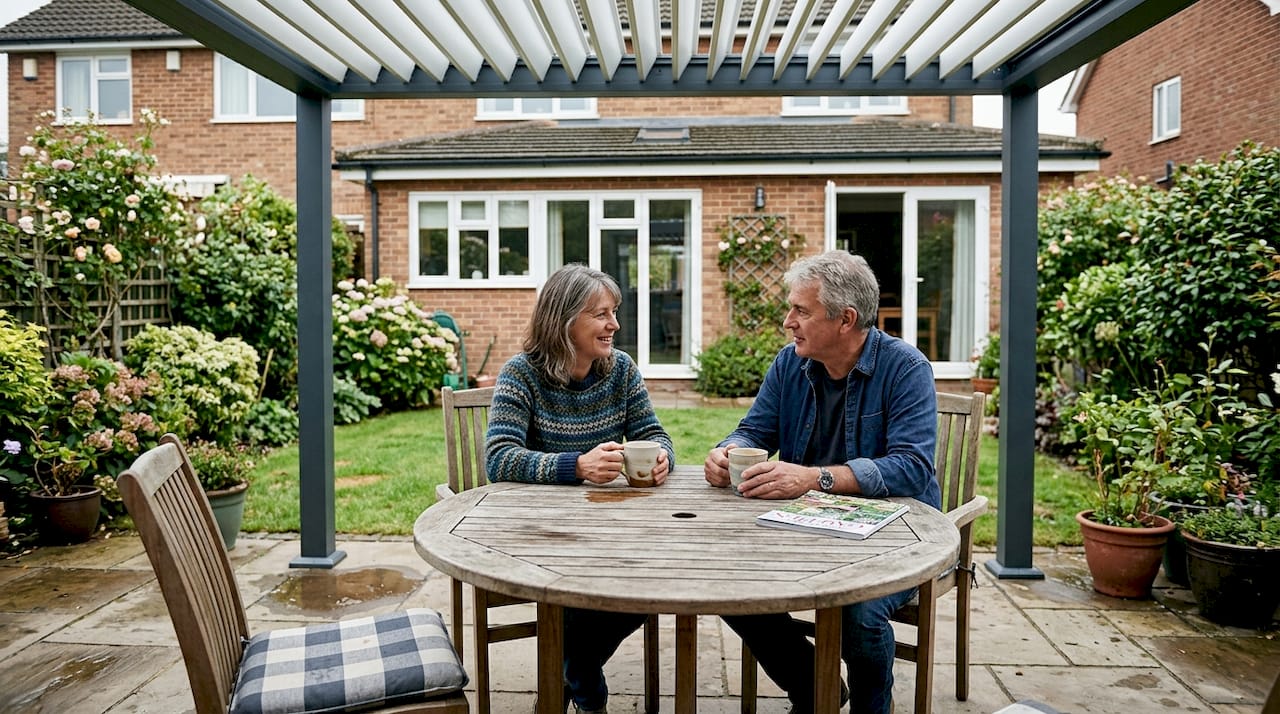
Most homeowners in Yorkshire, Derbyshire, Nottinghamshire, and Lincolnshire have spent good money on garden furniture, only to watch it sit unused under grey skies for months at a time. The UK averages over 130 rainy days per year, which means a standard parasol or seasonal awning simply cannot keep pace with the demands of real outdoor living. All-weather shading is not a luxury upgrade reserved for Mediterranean climates. It is a practical, long-term investment that transforms your outdoor space into a genuinely usable extension of your home or business, whatever the season throws at it. This article explains exactly how these systems work, what makes them last, and how to choose the right one for your region.
Table of Contents
Key Takeaways
Point | Details |
What counts as all-weather shading | It’s robust, permanent outdoor cover designed to handle sun, rain, wind, and snow with minimal maintenance. |
Bioclimatic pergolas lead the field | Adjustable aluminium louvers, integrated drainage, and smart sensors make them ideal for variable UK weather all year. |
Value over time | Higher upfront cost buys durability, lower long-term maintenance, and added outdoor enjoyment. |
Choose quality and certification | Always select shading systems with proven engineering and material specs for lasting, worry-free protection. |
What is all-weather shading and why does it matter?
Having established the importance of using your outdoor space year-round, it is essential to understand exactly what makes a shading solution “all-weather” and why it stands out in the UK climate.
All-weather shading is not simply a bigger umbrella or a sturdier fabric. According to engineering standards, all-weather shading refers to durable outdoor shading solutions designed to provide shade, UV protection, rain shelter, wind resistance, and snow load capacity year-round, typically achieved through bioclimatic louvered pergolas made from powder-coated aluminium with adjustable rotating louvers. That is a meaningful step beyond what most people picture when they think of garden cover.
Traditional options such as fabric gazebos, pop-up canopies, or basic retractable awnings were designed with summer in mind. They offer some shade on a sunny afternoon, but they struggle with wind, pool water on their surfaces, and often need to be taken down entirely before winter. All-weather systems are engineered to stay in place and perform across every season.
Understanding the outdoor shading basics helps clarify why this distinction matters. Modern all-weather solutions now integrate smart home automation, allowing louvers to respond automatically to changing conditions. You can also explore the full range of types of shading solutions to see how they compare in practice.
With the UK recording over 130 rainy days annually, the case for a more robust approach is clear. Here are the core features any serious all-weather shading system should include:
Adjustable rotating louvers that open and close to manage sunlight, airflow, and rain
Powder-coated aluminium frame for corrosion resistance and structural rigidity
Integrated guttering and drainage to channel rainwater away cleanly
Wind and snow load certification to meet real UK weather demands
Smart sensor compatibility for automatic weather response
UV protection rating of 95% or above to protect people and furnishings
“The difference between a seasonal cover and a true all-weather system is not just materials. It is the engineering intent behind every component, from the louver angle to the drainage channel.”
How do all-weather shading systems work?
Now that we see the value of all-weather shading for local climates, let us dig into how these systems actually operate and keep you comfortable year-round.
The heart of any quality all-weather system is the louvered roof. Individual aluminium blades rotate on a horizontal axis, typically between 0 and 135 degrees. At 0 degrees, the louvers lie flat and interlock to form a watertight roof. Open them fully and you get maximum ventilation and stargazing. Every position in between gives you precise control over light and airflow.
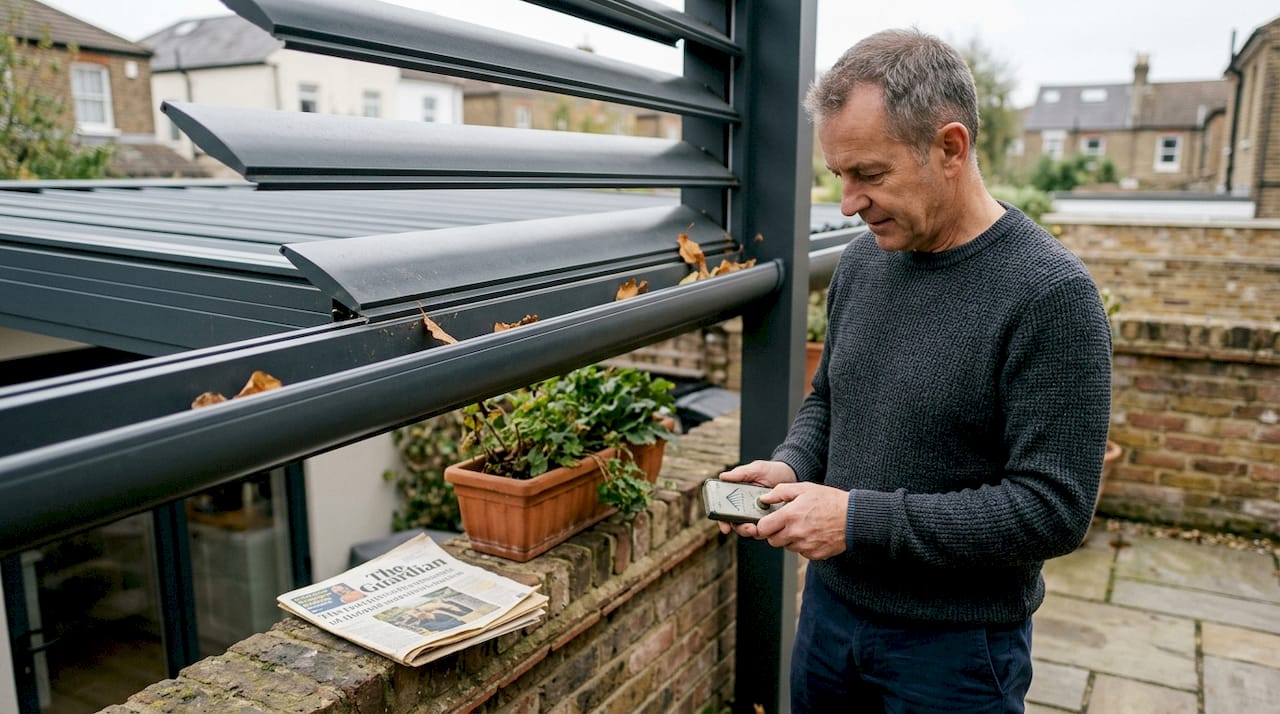
The mechanics behind these systems are more sophisticated than they first appear. Motorised or manual operation via remote or app, combined with sensors for wind and rain that auto-adjust the louvers, means interlocking blades form a waterproof roof that channels water via hidden gutters through the support posts. No pooling, no dripping, no mess.
Smart sensors add another layer of reliability. A wind sensor detects gusts above a set threshold and automatically opens the louvers to reduce resistance. A rain sensor closes them to keep the space dry. You can also integrate these systems with Alexa, Google Home, or similar platforms for full smart home control. The all-weather awning function page covers how motorised awnings complement these systems for added flexibility.
Here is what happens in practice when different weather conditions hit a modern system:
Rain begins — sensors detect moisture and louvers rotate to fully closed, water flows into integrated channels and exits through hollow posts
Sun intensifies — louvers adjust to a partial angle, reducing glare while maintaining airflow
Wind picks up — sensors trigger louvers to open slightly, reducing wind load on the structure
Evening chill sets in — optional integrated heaters activate, extending usable hours into autumn and winter
User overrides — remote or app control lets you set your preferred position manually at any time
Feature | Manual system | Motorised system | Smart sensor system |
Weather response | Manual only | Remote/app control | Automatic and remote |
Ease of use | Moderate | High | Very high |
Cost | Lower | Mid-range | Higher |
Best for | Sheltered spots | Most residential use | Exposed or commercial sites |
Pro Tip: In the UK, the most useful sensor combination is wind plus rain. Temperature sensors are a bonus, but wind and rain cover the conditions you will face most often across Yorkshire and the surrounding counties.
For deeper technical detail on bioclimatic pergola technology, it is worth reviewing manufacturer specifications before committing to a system.
Durability, protection and value: what sets all-weather shading apart
Understanding the moving parts and smart features is just one piece. True all-weather shading must also last through harsh conditions and provide long-term value.
The engineering benchmarks for quality all-weather shading are specific and testable. Durability benchmarks include wind resistance of 50 to 120 mph, snow load capacity of 30 lb per square foot (150 to 250 kg per square metre), UV blocking of 95 to 100%, and fabric or metal lifespans of 10 to 25 years or more with powder-coating. These are not marketing claims. They are certified performance ratings that responsible manufacturers test independently.
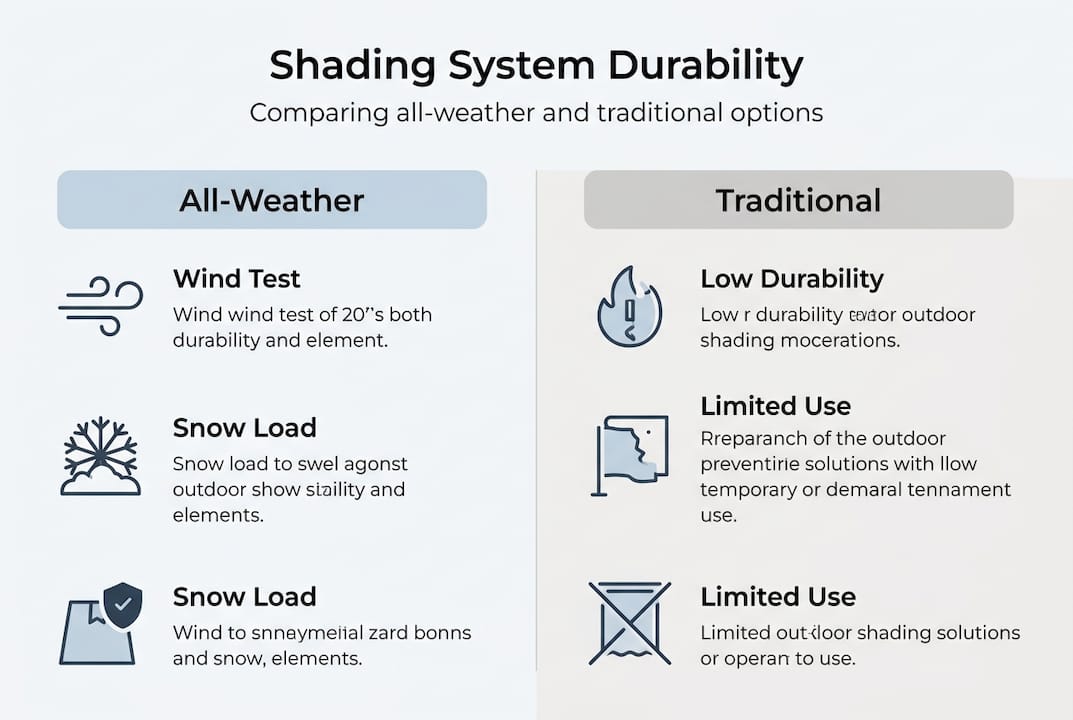
For context, a standard retractable awning typically handles winds up to 20 to 25 mph before needing to be retracted. A quality bioclimatic pergola handles wind and snow loads of 50 mph and above for wind, and up to 250 kg per square metre for snow, with a lifespan of 15 to 25 years. That is a fundamentally different product.
Key statistic: Quality all-weather shading reduces solar heat gain by 70 to 80%, which can translate into energy savings of up to 25% on cooling costs during warmer months. That figure alone makes the investment worth serious consideration.
Shading type | Wind resistance | Snow load | Lifespan | Relative cost |
Bioclimatic pergola | 50 to 120 mph | Up to 250 kg/m² | 15 to 25 years | Higher |
Retractable awning | 20 to 25 mph | None | 8 to 15 years | Mid-range |
Shade sail | 30 to 40 mph | None | 5 to 10 years | Lower |
For a more detailed pergola comparison between these options, it is worth reviewing real-world performance data before deciding.
When assessing quality, look for these durability features:
Marine-grade or powder-coated aluminium frame with no untreated steel components
Independently certified wind and snow load ratings, not just manufacturer estimates
Stainless steel fixings throughout, especially in exposed or coastal locations
UV-stable fabrics or anodised louvres that resist fading and degradation
Drainage channels integrated into the frame, not added as an afterthought
Getting it right in Yorkshire and beyond: practical tips and local insight
With durability established, let us zero in on how to apply these insights for lasting, effective shading in Yorkshire and neighbouring counties.
The regional case for all-weather shading is strong. With 133 rainy days per year on average and significant wind exposure across open moorland and valley sites, Yorkshire and its neighbouring counties represent exactly the conditions these systems are built for. A well-installed louvered pergola can add up to 30% more usable outdoor space to a property by making rain and wind manageable rather than prohibitive.
Here are the most important installation and maintenance steps for UK conditions:
Choose a certified installer who understands local wind exposure zones and can advise on fixing depth and anchor type for your specific ground conditions
Position the structure to face prevailing winds obliquely, not head-on, to reduce structural stress over time
Check drainage routes before installation to ensure rainwater exits away from foundations and paving
Service moving parts annually, including louver pivots, motor mechanisms, and sensor calibration
Open louvers fully during severe storms to reduce wind load on the structure, even with a wind-rated system
Clear any snow accumulation promptly if it exceeds the rated load, particularly on older or budget-grade systems
Pro Tip: Set your wind sensor threshold slightly lower than the manufacturer’s maximum rating. If the system is rated to 70 mph, set the auto-close trigger at 50 mph. This gives you a safety margin and reduces wear on the motor over time.
For a detailed walkthrough of the process, the patio shading installation guide covers Yorkshire-specific considerations. You can also browse outdoor space examples to see how similar properties have been transformed, and review the benefits for Yorkshire homes in more detail.
Budget-wise, expect to invest more upfront for a certified aluminium system than for a fabric alternative, but factor in the replacement costs of cheaper options every five to eight years. Over a 20-year period, a quality pergola almost always works out more economical.
The truth most guides miss about all-weather shading
Most buying guides focus on features and aesthetics, and there is nothing wrong with that. But after working with homeowners and businesses across Yorkshire and the surrounding regions for over 15 years, we have seen one pattern repeat itself more than any other: buyers who prioritise price over engineering certification end up replacing their structure far sooner than they expected.
The uncomfortable reality is that the term “all-weather” is used loosely in the market. Some products labelled as such are simply heavier-duty seasonal covers with no independent certification for wind or snow performance. When a winter storm arrives in the Pennines or across the Lincolnshire Wolds, that distinction becomes very expensive very quickly.
The range of outdoor shading types available varies enormously in quality. Wood-framed pergolas, however attractive, absorb moisture, warp, and rot without intensive maintenance. Budget fabric systems fade and fail under UV exposure within a few seasons. Neither of these is a genuine all-weather solution, regardless of how they are marketed.
Pro Tip: Always ask for the wind load and snow load certification documents before purchasing. A reputable supplier will provide these without hesitation. If they cannot, that tells you everything you need to know about the product.
Style matters, but it should come second to structural integrity. Choose the system that will still be performing in 20 years, then choose the colour.
Explore premium all-weather shading solutions
If this article has helped clarify what genuine all-weather shading looks like, the next step is finding a solution that has been engineered and installed for the specific conditions you face in your region.
At Infinity Awnings, we have spent over 15 years designing and installing shading systems across Yorkshire, Derbyshire, Nottinghamshire, and Lincolnshire. Our range of pergola options includes certified bioclimatic systems from leading brands, all installed by experienced professionals who understand local weather demands. Whether you are a homeowner looking to reclaim your garden or a business wanting to extend your outdoor trading space, our team can guide you through every option. Speak to us for expert pergola advice or request a free, no-obligation quote today.
Frequently asked questions
What features make a shading solution all-weather?
It must provide year-round resistance to wind, rain, sun, and occasional snow, usually by using aluminium structures with adjustable, watertight louvers and integrated drainage. Powder-coated aluminium, rotating louvers, and integrated gutters are the hallmarks of a genuinely weatherproof outdoor shading system.
How long do all-weather shading systems last?
High-quality models last 15 to 25 years when made from powder-coated metal and maintained properly. Lifespan of 15 to 25 years is achievable with powder coating and annual servicing of moving parts.
Are all-weather shading systems suitable for the UK’s variable climate?
Yes, especially in regions like Yorkshire, they are engineered for wind, rain, and infrequent snow, offering far more protection than standard awnings or parasols. These systems are recommended for variable UK weather, reducing heat by up to 80% in summer and keeping spaces usable through autumn and winter.
What is the difference between bioclimatic pergolas and regular awnings?
Bioclimatic pergolas use adjustable aluminium louvers for 360-degree weather protection, while standard awnings offer less wind and rain resistance and need more frequent replacement. Bioclimatic pergolas offer superior protection and longevity compared to traditional awnings, making them the stronger long-term investment for UK conditions.
Recommended
Comments