
Why invest in outdoor structures: a 2026 guide

TL;DR:
Investing in outdoor structures offers significant financial returns, adding value and expanding usable space at lower costs than interior renovations. They also enhance daily lifestyle through year-round comfort, socializing, and functional zones that suit British weather conditions. Proper design, high-quality materials, and strategic planning maximize both their value and long-term usability.
Investing in outdoor structures is one of the most financially and practically rewarding home improvements a property owner can make. Well-designed outdoor spaces, from pergolas and verandas to covered patios and shading systems, add measurable value to a property while transforming how you live day to day. The outdoor living sector has grown steadily as homeowners and investors alike recognise that outdoor living investment is no longer a luxury consideration but a mainstream priority in competitive property markets. This guide explains the financial returns, lifestyle advantages, and design principles that make outdoor structures worth every penny in 2026.
What financial benefits do outdoor structures offer?
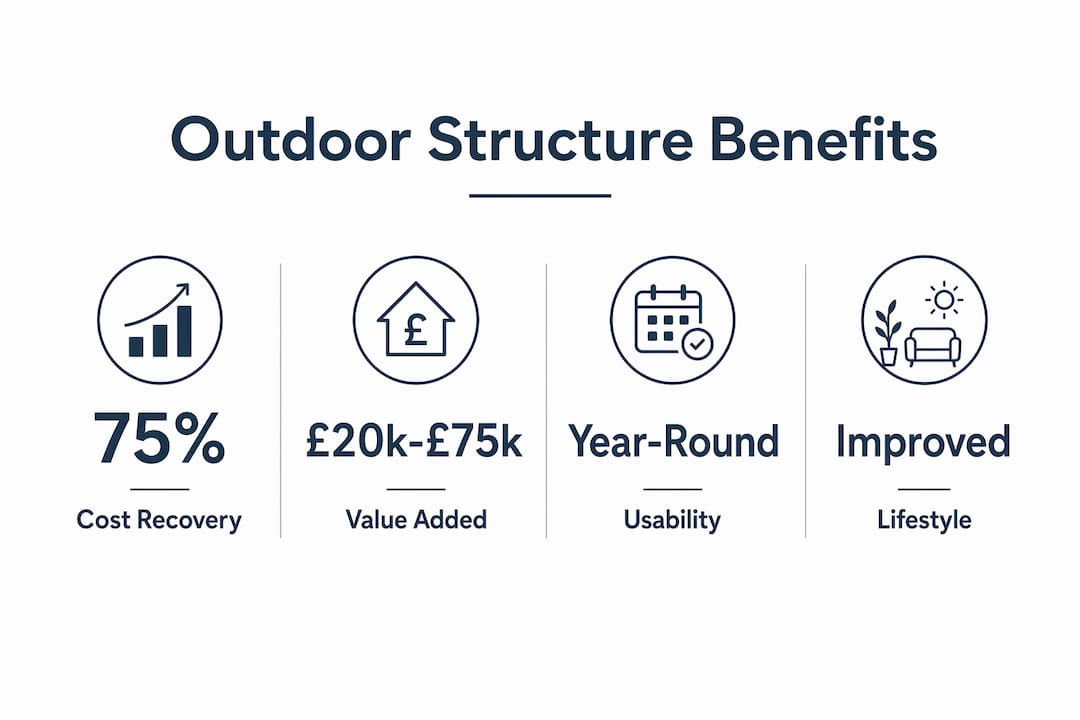
Professional outdoor improvements deliver 60 to 75% cost recovery at resale and can add between £20,000 and £75,000 or more to a property’s value depending on scope and quality. That figure means a well-executed pergola or covered terrace is not merely a lifestyle upgrade. It is a capital asset that pays back a significant portion of its cost when you sell.
One reason outdoor structures perform so well financially is that they increase usable square footage at a lower cost per square metre than interior additions. A kitchen extension or loft conversion typically involves structural work, insulation, plumbing, and electrical rewiring. A quality outdoor structure achieves comparable usable space at a fraction of that cost, making the return on investment proportionally stronger.
Premium materials amplify this effect. Composite decking and durable finishes reduce ongoing maintenance costs and extend the lifespan of the structure, which protects the investment over time. Buyers notice the difference between a well-maintained cedar pergola and a weathered timber frame that needs replacing. The former adds to the asking price; the latter can actually deter offers.
The table below summarises typical outdoor structure types and their approximate financial impact.
Structure type | Typical cost range | Estimated value added | Approx. cost recovery |
Covered patio or veranda | £8,000 to £20,000 | £12,000 to £30,000 | 65 to 75% |
Pergola with shading | £5,000 to £15,000 | £8,000 to £20,000 | 60 to 70% |
Outdoor kitchen area | £10,000 to £30,000 | £15,000 to £40,000 | 60 to 75% |
Retractable awning system | £2,500 to £8,000 | £4,000 to £12,000 | 60 to 65% |
Outdoor structures also create a competitive advantage when a property comes to market. Buyers searching in areas like Yorkshire or Nottinghamshire increasingly filter for homes with usable outdoor amenities. A property with a well-designed covered space stands out in listings and can attract higher offers, faster sales, and fewer price negotiations.
How do outdoor structures improve everyday lifestyle?
The benefits of outdoor structures extend well beyond the financial. Architects at Richmond American Homes observe that spaces with power, lighting, and seating become natural daily extensions of the home rather than occasional-use areas. That shift in how a space is used is the difference between a garden you glance at and one you actually live in.
Regular time outdoors reduces stress, improves mood, and supports better sleep through natural light exposure. A covered patio or pergola with integrated LED lighting and a heating system removes the two biggest barriers to outdoor use in the British climate: rain and cold. Once those barriers are gone, the space gets used year round, which compounds both the lifestyle and financial value.
The practical advantages of a well-equipped outdoor space include:
Comfortable socialising without the constraints of indoor square footage, making hosting easier and more enjoyable
A dedicated workspace or relaxation zone that separates home life from work life, particularly relevant since remote working became widespread
Family connection through shared outdoor meals, play areas, and evening gatherings that would not happen without a comfortable, sheltered setting
Multifunctional use across seasons, from summer dining to autumn evening gatherings under a heated veranda
Pro Tip: When planning your outdoor space, design for the worst-case British weather day, not the best. If the structure works in October, it will be used twelve months a year. Features like retractable awnings, infrared heaters, and all-weather fabrics are what separate a space that gets used from one that collects leaves.
For homeowners looking to improve how a space actually feels to use, patio comfort improvements often come down to a handful of targeted changes rather than a full redesign.
What design factors maximise value and usability?
Design decisions made at the planning stage determine whether an outdoor structure adds genuine value or simply adds cost. The most important principle is architectural harmony. Structures that integrate with the home’s existing style command higher resale prices, while those that look like afterthoughts fail to move the needle on property value. A modern aluminium pergola suits a contemporary home; a timber-framed veranda suits a period property. Getting this wrong is an expensive mistake.
Zoning is the second critical factor. Dividing outdoor areas into functional zones such as dining, lounging, and cooking avoids clutter and makes even modest gardens feel purposeful and spacious. A 40 square metre patio with a defined dining area, a seating zone, and a barbecue station feels far more usable than the same space left open with furniture scattered across it.
The sequencing of construction phases matters more than most homeowners realise. Practical guidance from experienced outdoor builders recommends building storage structures before landscaping to simplify material transport and avoid damaging newly planted areas. Similarly, anticipating future additions such as shade canopies or utility connections during the initial build prevents costly retrofits later.
Safety is non-negotiable. Fire safety and child safety must be treated as primary design features, not afterthoughts. This means specifying fire-rated materials near cooking areas, installing appropriate barriers around raised structures, and choosing non-slip surfaces for covered areas that will be wet in British weather.
A practical construction sequence for a new outdoor structure looks like this:
Confirm planning permission requirements and any permitted development rules for your local authority
Complete site preparation including drainage, levelling, and flood-proof footings
Install any utility runs (power, water, gas) before the surface is laid
Build permanent structures such as pergola posts, walls, or storage units
Lay the surface material, whether composite decking, porcelain paving, or concrete
Complete landscaping, planting, and soft furnishing last
Pro Tip: Plan for utilities you do not yet need. Running a conduit for a future outdoor socket or speaker system costs almost nothing during the build phase and saves a significant amount if you add it retrospectively.
Understanding the essential features of pergolas before you commit to a design helps avoid the most common planning mistakes.
How do outdoor structures compare with other home improvements?
Outdoor structures compare favourably with most interior renovation projects when assessed on cost per usable square metre and lifestyle impact. Interior additions such as kitchen extensions or bathroom refits deliver strong returns but typically cost two to three times more per square metre to build. Outdoor structures achieve comparable usable space at lower build cost, which is why their cost recovery percentage remains competitive despite lower absolute values.
The market trend reinforces this. Competitive real estate markets increasingly prioritise usable outdoor areas, and buyers in 2026 treat a quality outdoor structure as a selling point rather than a bonus. Interior renovations are expected; outdoor living amenities are differentiators.
Improvement type | Cost per sq metre | Typical ROI | Lifestyle impact |
Outdoor structure (pergola, veranda) | £300 to £800 | 60 to 75% | High: daily use, social, wellbeing |
Kitchen extension | £1,500 to £3,000 | 50 to 65% | High: functional, adds rooms |
Bathroom refit | £5,000 to £15,000 (fixed) | 40 to 60% | Moderate: hygiene and comfort |
Loft conversion | £30,000 to £60,000 | 55 to 70% | High: adds bedroom, significant build |
Outdoor structures also carry environmental advantages that interior renovations cannot match. A pergola with a retractable canopy reduces solar heat gain through adjacent glazing, cutting summer cooling costs. Planting integrated into a veranda structure improves local biodiversity and air quality. These benefits are increasingly valued by buyers who factor running costs and environmental credentials into purchasing decisions.
The emerging homeowner mindset treats outdoor structures not as luxury add-ons but as functional living spaces woven into daily routines. That shift in perception is what separates a well-timed outdoor investment from a missed opportunity.
Key takeaways
Outdoor structures deliver strong financial returns and meaningful lifestyle improvements when designed with architectural integration, quality materials, and functional zoning at their core.
Point | Details |
Strong financial return | Quality outdoor structures recover 60 to 75% of build cost at resale and add significant property value. |
Lower cost per square metre | Outdoor additions create usable space at a fraction of the cost of interior extensions. |
Design integration matters | Structures that match the home’s architectural style add value; those that look tacked on do not. |
Year-round usability drives value | Features like heating, lighting, and weather-resistant materials turn occasional spaces into daily ones. |
Sequence construction carefully | Install utilities and permanent structures before landscaping to protect plantings and reduce retrofit costs. |
What I have learned from 15 years of outdoor structure projects
The most persistent misconception I encounter is that outdoor structures are a finishing touch, something you add once the house is sorted. That thinking costs homeowners money. The projects that deliver the best returns, both financial and personal, are the ones where the outdoor space was planned alongside the interior from the start, with utilities roughed in, materials chosen to complement the house, and zones designed around how the family actually lives.
I have also noticed that homeowners consistently underestimate how much a covered, heated outdoor space changes their daily behaviour. People who said they rarely used their garden tell me six months after installation that they eat outside three or four evenings a week. That is not a small thing. It changes how a home feels to live in, and it changes how buyers perceive it when the property eventually comes to market.
The features that genuinely add value are not always the most expensive. A well-positioned retractable awning from a brand like Weinor or Tarasola, properly installed and integrated with the house, does more for a property than an oversized structure that dominates the garden and blocks natural light. Proportion, quality, and integration are the variables that matter. Scale and spectacle are not.
If you are weighing up outdoor improvements against other renovation options, my honest view is that a well-executed outdoor structure is one of the few home investments that pays you back in quality of life every single day while also protecting your capital.
— Andrew
Transform your outdoor space with Infinityawnings
Infinityawnings has spent over 15 years designing and installing premium outdoor structures across Yorkshire, Derbyshire, Nottinghamshire, and Lincolnshire. The company works with market-leading brands including Weinor, Tarasola, and Llaza to deliver pergolas, verandas, and retractable awning systems built for British weather and designed to complement your property. Every project is tailored to the home’s architecture, your lifestyle requirements, and your long-term investment goals. Whether you are looking to add a sheltered dining area, a year-round garden room, or a commercial shading solution, Infinityawnings provides free consultations and detailed quotes. Explore the full range of premium pergola designs and take the first step towards an outdoor space that works as hard as the rest of your home.
FAQ
What is the typical ROI for outdoor structures?
Professional outdoor structures typically recover 60 to 75% of their build cost at resale and can add between £20,000 and £75,000 or more to property value, depending on quality and scope.
Do outdoor structures add value in the UK property market?
Yes. Buyers in competitive UK markets increasingly treat usable outdoor amenities as a differentiator, and well-integrated structures consistently support higher asking prices and faster sales.
How do I make an outdoor structure usable year-round?
Incorporating infrared heating, LED lighting, retractable weatherproof canopies, and all-weather seating removes the seasonal barriers that limit outdoor use in the British climate. Structures designed for year-round garden use deliver the strongest lifestyle and financial returns.
Does planning permission affect outdoor structure investments?
Many outdoor structures fall under permitted development rights in England, but size, proximity to boundaries, and listed building status can trigger planning requirements. Always confirm with your local authority before committing to a design.
What materials offer the best long-term value for outdoor structures?
Composite decking, powder-coated aluminium frames, and UV-resistant fabrics from manufacturers like Weinor and Tarasola reduce maintenance costs and extend lifespan, protecting the financial return over the life of the structure.
Recommended
Comments