
Expert tips for choosing a durable pergola in Yorkshire

TL;DR:
Choosing the right pergola for Yorkshire gardens involves understanding local weather, planning regulations, and material durability. Aluminium and FSC-certified oak offer excellent weather resistance and longevity in the region’s wet, windy climate, with safety and structural integrity crucial for year-round use. Prioritizing proper planning, reliable local sourcing, and simple designs ensures long-lasting enjoyment and value.
Yorkshire gardens are genuinely beautiful spaces, but choosing the right pergola to suit them is far more involved than simply picking a style you like. Between the region’s notoriously wet and windy weather, strict planning regulations, and the sheer range of materials on the market, the decision can feel overwhelming. Get it right, though, and a well-chosen pergola adds lasting shade, visual appeal, and real value to your outdoor living space. This guide walks you through every key consideration, from planning rules to personalisation, so you can make a confident, well-informed decision.
Table of Contents
Key Takeaways
Point | Details |
Check regulations first | Understanding planning permission avoids legal trouble and ensures a smooth build. |
Prioritise weather-resilient materials | Oak and aluminium offer the best performance in Yorkshire’s wet, windy climate. |
Anchor for safety | Proper wind and snow resistance ratings are essential for pergola longevity. |
Personalise for style | Lighting, trims, and eco options help create the perfect garden space. |
Compare before deciding | Quick-reference tables simplify the material and feature selection process. |
Key planning and regulatory considerations
Before you invest a single penny in a pergola, it pays to understand exactly what you can and cannot build on your property. Planning rules catch many Yorkshire homeowners off guard, particularly those who assume that a garden structure is automatically exempt from regulation.
In most situations, a pergola in Yorkshire falls under Permitted Development Rights, which means you will not need to apply for formal planning permission as long as certain conditions are met. The key rules are:
The pergola height must not exceed 2.5 metres if it sits within 2 metres of a boundary.
Farther from the boundary, heights of 3 to 4 metres are generally acceptable.
The structure must not cover more than 50% of your garden area.
It must not be positioned forward of the principal elevation of your house (in other words, not in the front garden).
The property must not be listed or located within a designated conservation area.
Understanding local planning rules is especially important if you live in one of Yorkshire’s many historic villages or towns. Harrogate, Skipton, and parts of York all have conservation designations that trigger extra scrutiny.
“If your property sits within a national park, such as the Yorkshire Dales or North York Moors, the rules can be significantly more restrictive. Always contact your local planning authority before proceeding, because what applies in a suburban Leeds garden may not apply in a rural Wharfedale setting.”
For those buying in conservation areas or owning a listed building, it is possible to seek Listed Building Consent or a Certificate of Lawfulness to confirm your plans are compliant before work begins. This adds time but protects you from enforcement action later.
Pro Tip: Download your local authority’s householder planning guide before you consult a supplier. Arriving at a design consultation with a clear picture of what is and is not permitted saves both time and money.
Once you have clarity on your planning position, the next question is equally important: what should your pergola actually be made from? Learn more about pergolas explained for Yorkshire gardens to understand your options before committing.
Choosing materials to match Yorkshire’s climate
After clarifying planning requirements, focus turns to materials: the foundation of your pergola’s lifespan and maintenance workload. Yorkshire is not a gentle climate. The Pennine uplands deliver heavy rainfall, strong westerly winds, and occasional heavy snowfall, particularly at elevation. A pergola material that performs well in the south of England may fail prematurely here.
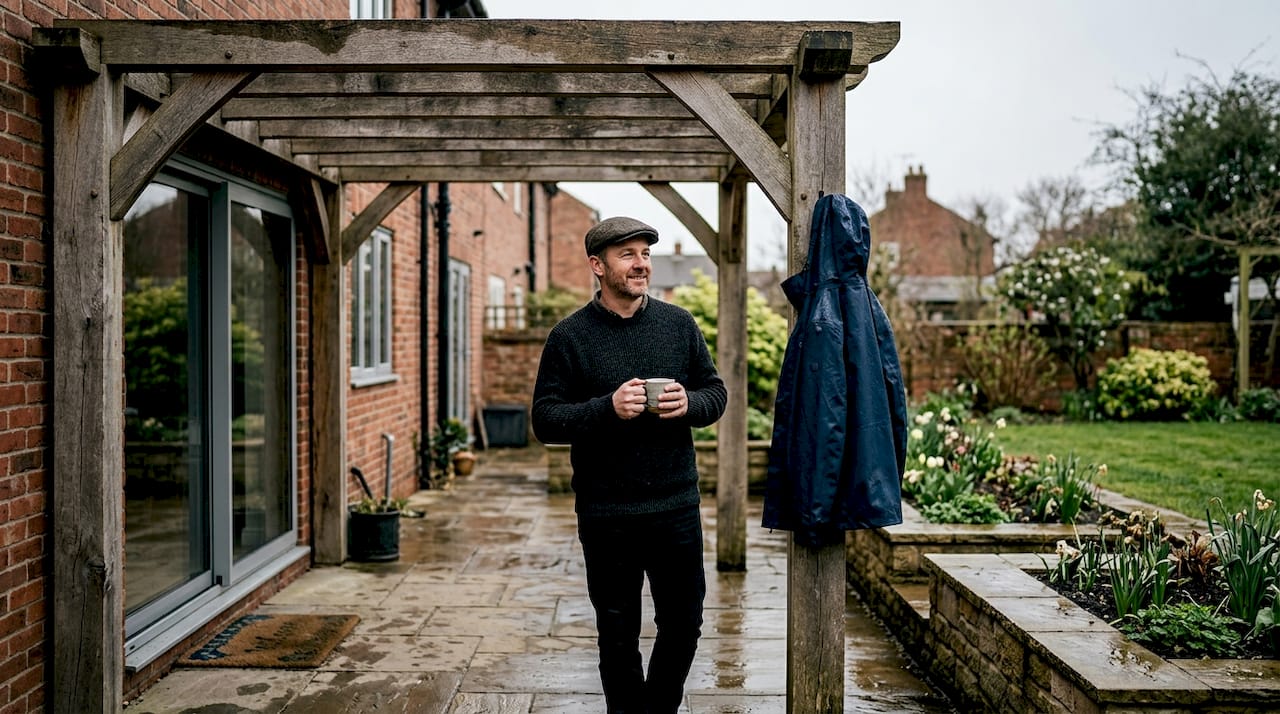
When it comes to timber, FSC-certified oak stands out as the strongest choice. It is naturally dense, highly resistant to rot, and requires far less treatment than softwood alternatives such as pine or spruce. Oak can realistically last 20 to 30 years with minimal maintenance when properly installed.
Aluminium is the other popular choice, and for many Yorkshire homeowners it is the smarter long-term investment. As highlighted in research on creating a pergola, aluminium outperforms softwood significantly in wet and cold conditions, with a lifespan of 15 to 25 years or more compared to softwood’s 5 to 15 years. It is rust-proof, powder-coated for colour stability, and essentially maintenance-free beyond an occasional wash down.
Material | Lifespan | Maintenance | Weather resistance | Cost relative |
FSC oak | 20 to 30 years | Low (oiling every 2 to 3 years) | Excellent | High |
Aluminium | 15 to 25 years+ | Very low (occasional wash) | Excellent | Medium to high |
Softwood (pine) | 5 to 15 years | High (annual treatment needed) | Poor to moderate | Low |
Composite | 15 to 20 years | Very low | Good | Medium |
Key material considerations for Yorkshire:
Moisture resistance is non-negotiable. Even a briefly standing puddle around a softwood post will begin rot within a few seasons.
Snow load tolerance matters more than most buyers realise. A covered pergola roof must handle the weight of accumulated snow without warping.
Wind rating should be checked against local conditions, particularly for exposed hilltop or countryside properties.
Colour retention is relevant for aluminium and composite structures; UV-stable powder coatings maintain appearance without repainting.
Pro Tip: If you love the look of timber but want the durability of aluminium, ask your supplier about timber-effect powder-coated aluminium. The finish is convincing, and the performance is far superior to real wood in Yorkshire’s wet winters.
For homeowners who want flexibility beyond a fixed roof, retractable pergolas offer a clever solution that adapts to changing weather. And if year-round usability is the goal, all-weather pergolas built with appropriate materials deliver genuine seasonal versatility.
Sizing and structural safety tips
With materials selected, safety and sizing come next, ensuring your pergola weathers Yorkshire’s infamous elements. Choosing the wrong dimensions is a common and costly mistake. Too small and the structure feels cramped; too large and it can dominate a modest garden, potentially triggering planning concerns.
A good starting rule is to size the pergola to the function it needs to serve. A dining pergola for six people needs a minimum footprint of roughly 3 metres by 4 metres. A relaxation space with lounge seating can work at 3 metres by 3 metres. If you plan to attach the structure to your house, ensure the fixing points and heights are structurally compatible with your property’s wall type.
When it comes to weather resilience, the numbers matter:
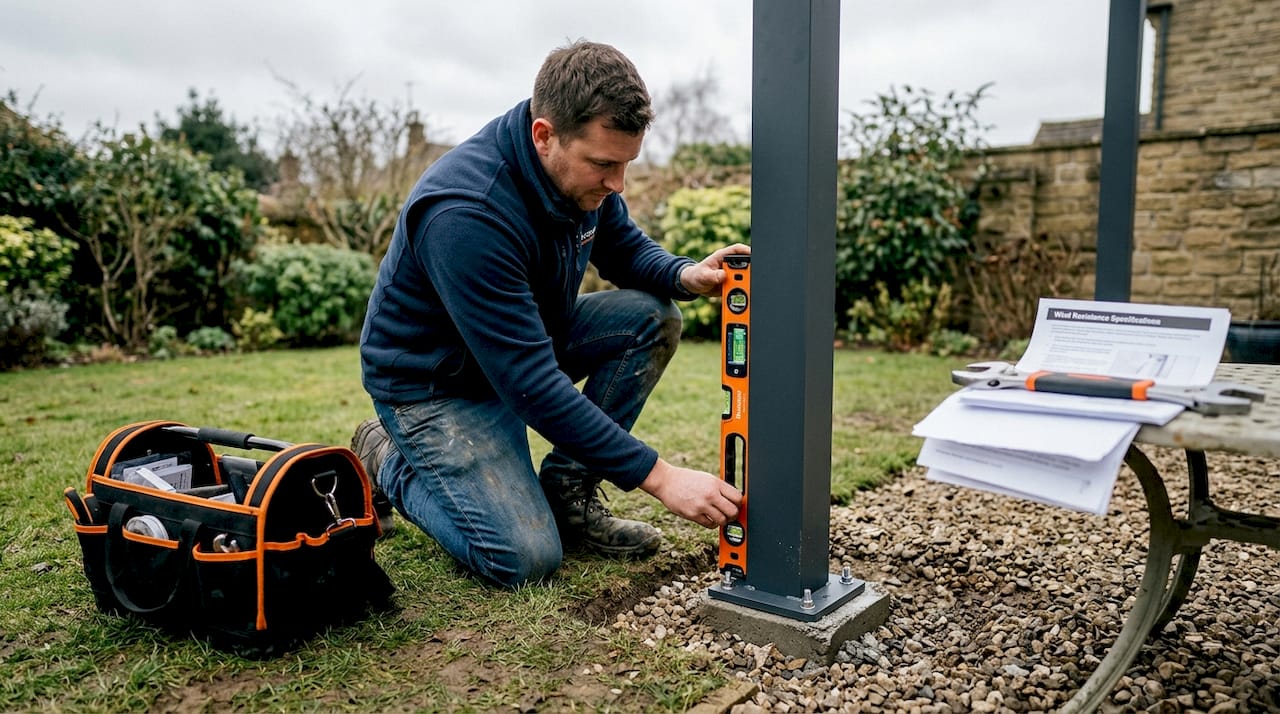
Wind resistance must be at least 60mph for Yorkshire conditions, equivalent to Beaufort 9 to 11 (75 to 117km/h). Exposed and elevated sites should aim even higher.
Snow load capacity of 50 to 60kg per square metre is appropriate for most Yorkshire locations. Roofed pergolas in higher areas need to meet or exceed this threshold.
Timber specifications of 90 to 100mm square posts and beams of 45 by 145mm spanning up to 3.6 metres are recommended for robustness. Locally sourced, renewable FSC oak meets these structural requirements particularly well.
Anchoring is often where DIY installations fall short. Concrete base anchors or ground spikes rated for the post size and local soil conditions prevent the entire structure shifting over time.
Safety factor | Minimum requirement | Recommended for Yorkshire |
Wind resistance | 50mph | 60mph+ |
Snow load | 30kg/m² | 50 to 60kg/m² |
Post size (timber) | 75mm square | 90 to 100mm square |
Anchoring depth | 450mm | 600mm+ in loose soil |
Pro Tip: Always request a manufacturer’s wind resistance certificate when purchasing a pergola. If a supplier cannot provide one, that is a significant warning sign about the quality of the product.
Getting the installation right is just as important as choosing the right structure. Reviewing pergola installation best practices before work begins will help you ask the right questions of your installer. You can also explore stylish features for safety and comfort to understand how design choices intersect with structural performance.
Design features and personalisation
You have the core structure sorted. Now it is time to add features that define your pergola’s style and functionality. This is where many Yorkshire homeowners have real fun with the process, and rightly so. The right additions transform a functional garden frame into an outdoor room that genuinely extends your living space.
The most popular feature additions for Yorkshire pergolas include:
LED lighting integrated into beams or posts creates ambience for evening use and is increasingly standard in quality pergola installations.
Retractable roof systems provide the flexibility to open up to sunshine and close against rain. Louvred aluminium roofs are particularly popular because the angle of the slats can be adjusted for shade or airflow.
Privacy screens in timber, glass, or polycarbonate protect against wind and neighbours without making the space feel enclosed.
Heating elements such as infrared heaters extend the usable season well into autumn and even winter.
Climbing plant frameworks built into the design allow plants such as wisteria or jasmine to soften the structure and integrate it into the wider garden planting scheme.
Power and data cabling installed at the build stage avoids unsightly surface-run cables later.
Sustainability is increasingly important to Yorkshire homeowners, and rightly so. Specifying FSC-certified timber for the structural elements ensures the wood originates from responsibly managed forests. Choosing a locally manufactured or locally supplied product also reduces transport emissions and supports regional businesses.
Colour and finish choices deserve careful thought too. Aluminium pergolas are available in a wide palette, including heritage greens, anthracite greys, and crisp whites. The right choice depends on your house’s existing palette, the tone of your garden planting, and whether you want the pergola to blend in or make a statement.
Pro Tip: Before settling on a colour, hold a physical sample against your garden fence or exterior wall in both morning and afternoon light. Colours read very differently across the day, and Yorkshire’s overcast light can make warm tones appear flat.
For a full overview of the choices available, essential pergola features provides detailed guidance, and roof type options explains the specific performance benefits of each roof style. If you want a structured decision-making tool, the checklist for stylish results is worth bookmarking.
Quick comparison: Material and feature options
To bring all your learning together, use this quick reference table to compare core pergola choices side by side.
Feature | FSC oak | Aluminium | Softwood |
Lifespan | 20 to 30 years | 15 to 25 years+ | 5 to 15 years |
Maintenance | Low | Very low | High |
Moisture resistance | Excellent | Excellent | Poor to moderate |
Planning suitability | All zones | All zones | All zones |
Eco credentials | High (FSC) | Moderate (recyclable) | Variable |
Snow load capacity | High | High | Moderate |
Design flexibility | Moderate | Very high | Moderate |
Key takeaways for Yorkshire buyers:
Decision point | Best choice |
Maximum durability | Aluminium |
Natural appearance | FSC oak |
Lowest lifetime cost | Aluminium |
Eco priority | FSC oak |
Year-round use | Aluminium with louvred roof |
Budget option | Composite |
Before finalising your selection, it is well worth reading about why choose a pergola to confirm the investment aligns with both your lifestyle and your property’s long-term value.
What experts wish Yorkshire pergola buyers knew
Here is the thing that surprises many of our customers once the project is complete: the buyers who are happiest with their pergolas are rarely the ones who spent the most time agonising over style. They are the ones who got the fundamentals right first.
Too many Yorkshire homeowners arrive at the design stage having already fallen in love with an image they found online, usually a sun-drenched Mediterranean terrace that bears no resemblance to a Keighley back garden in October. Style matters, absolutely, but it should be the last decision you make, not the first.
What genuinely drives long-term satisfaction is getting the regulatory position sorted early, choosing materials honestly matched to the climate, and ensuring the structure is anchored and rated for what Yorkshire weather actually delivers. A beautiful pergola that rattles in a March gale or starts to rot in its third year is not a good investment, regardless of how it looked in the brochure.
We also notice that local sourcing is consistently undervalued. A Yorkshire-based supplier who understands the specific demands of Pennine weather, who can visit your site before quoting, and who will stand behind the installation if something goes wrong is worth far more than a cheaper product shipped from a distant warehouse.
Finally, resist the temptation to over-engineer the feature list. Integrated lighting is genuinely useful. So is a retractable roof if your garden gets afternoon sun. But every feature you add is another potential maintenance point. The most enduring pergolas we see after ten or fifteen years are the ones built simply and built well. Start with the structure, get it right, and add features over time as your needs become clearer. You can always add a heater later; you cannot easily fix a poorly anchored frame. For inspiration on all-weather tips that genuinely work in Yorkshire, it is worth reviewing what year-round performance actually requires before committing to a design.
Explore Yorkshire’s best pergola options
Finding the right pergola means pairing expert guidance with a supplier who truly knows your local conditions.
At Infinity Awnings, we have spent over 15 years designing, supplying, and installing pergolas for homeowners across Yorkshire and the surrounding region. We understand the planning landscape, the weather demands, and the specific sites that need a more considered approach. Whether you are looking for a sleek aluminium louvred structure, a traditional oak-framed design, or something fully bespoke with integrated lighting and heating, our team can guide you from initial concept through to a finished installation you will use for decades. Visit our Yorkshire pergola gallery to explore completed projects, or get in touch today for a free, no-obligation quote tailored to your garden.
Frequently asked questions
Do I need planning permission for a pergola in Yorkshire?
Most pergolas fall under Permitted Development and do not require planning permission, provided they meet height, boundary, and area rules. Always check with your local authority if your property is listed or within a conservation area.
Which pergola material lasts longest in Yorkshire?
Aluminium offers the best combination of longevity and minimal maintenance, while FSC oak outperforms all other timber options for durability and sustainability in Yorkshire’s wet climate.
How can I ensure my pergola withstands Yorkshire’s weather?
Choose a structure with wind resistance of 60mph+ and a snow load rating of 50 to 60kg per square metre, and ensure the posts are anchored to a minimum depth of 600mm in most soil types.
Are eco-friendly pergolas available in Yorkshire?
Yes. Specifying locally sourced FSC oak or recyclable aluminium ensures your pergola meets strong environmental standards without compromising on performance or appearance.
Recommended
Comments