
How to Choose Outdoor Awnings for Stylish UK Patios
- Andrew Crookes

- Feb 3
- 7 min read
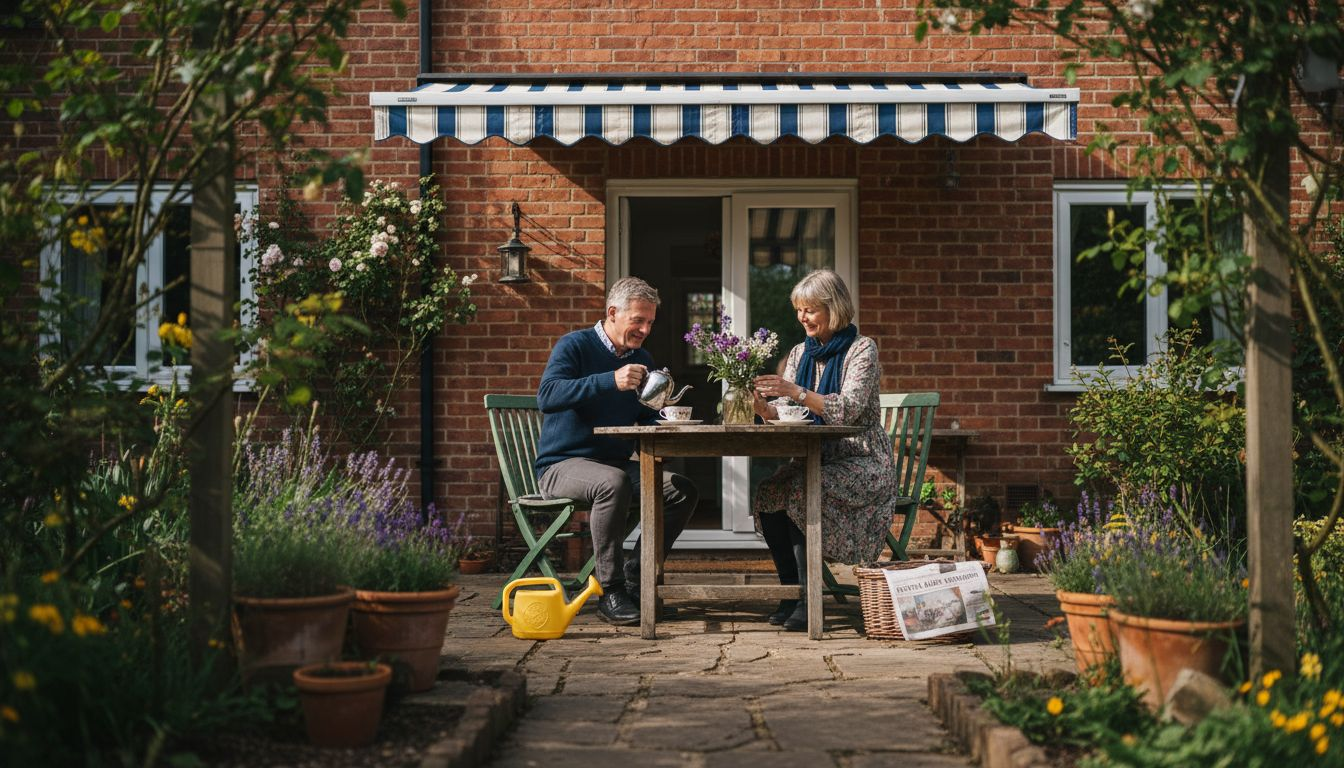
Long afternoons in a Yorkshire garden can quickly turn uncomfortable when the sun is at its strongest. As unpredictable British weather brings both intense sunlight and sudden showers, homeowners are finding that thoughtfully chosen awnings can transform outdoor spaces into stylish, usable retreats. With guidance highlighting how integrated shading design improves both comfort and energy efficiency, you will discover how to select an awning that matches your home’s character and shields your patio from harsh elements.
Table of Contents
Quick Summary
Key Message | Explanation |
1. Assess patio sunlight exposure | Understand how sunlight interacts with your patio to choose the right awning solution. Track sunlight throughout the day for effective shading. |
2. Choose style and functionality | Select an awning that complements your home’s aesthetic while meeting practical needs, such as UV protection and temperature regulation. |
3. Compare fabric durability options | Different materials offer various weather resistance and aesthetic appeal. Choose wisely to enhance longevity and style. |
4. Evaluate operation mechanisms | Decide between manual, motorised, or smart operations based on convenience and lifestyle preferences for maximum usability. |
5. Ensure proper installation | Focus on structural integrity and regulatory compliance to secure the awning’s safety and effectiveness for the long term. |
Step 1: Assess Your Patio’s Exposure and Shading Needs
Understanding your patio’s specific sunlight and environmental conditions is crucial for selecting the perfect outdoor awning. Every Yorkshire garden has unique solar exposure patterns that directly impact comfort and usability.
To effectively evaluate your patio’s shading requirements, you’ll want to consider several key factors. The shading design recommendations highlight critical aspects of outdoor space management, particularly as UK climate patterns become increasingly unpredictable. Start by observing your patio’s orientation and tracking sunlight throughout different times of day:
Measure direct sunlight duration during peak summer hours
Note which areas receive intense afternoon heat
Identify zones of natural shade from existing structures or trees
Consider the patio’s primary usage times
Your geographic location plays a significant role in determining appropriate shading. South-facing patios typically receive more direct sunlight and will require more comprehensive awning solutions compared to north-facing spaces. Pay attention to:
Solar exposure intensity
Wind patterns in your specific garden
Surrounding landscape features
Potential heat reflection from nearby surfaces
Careful assessment now prevents future discomfort and ensures your awning investment provides maximum functional value.
Consider sketching a simple diagram of your patio, marking sunlight zones and potential awning placement. This visual approach helps crystallise your specific shading needs and will prove invaluable when consulting with outdoor structure professionals.
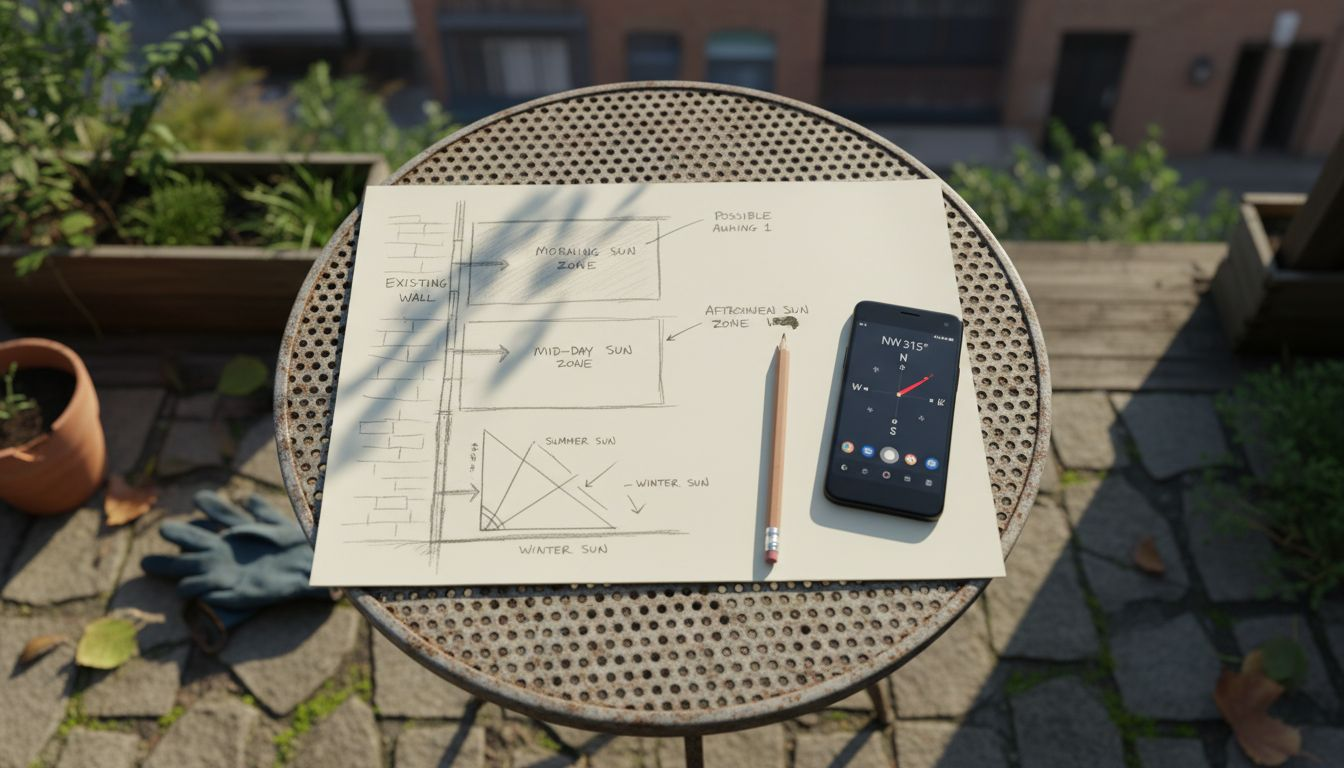
Pro tip: Use a smartphone compass app to precisely track your patio’s solar orientation and capture detailed sunlight movement patterns throughout the day.
Step 2: Define Your Desired Style and Functional Features
Selecting the right awning involves more than just sun protection - it’s about creating a seamless extension of your outdoor living space. Your awning should complement your home’s architectural style while delivering practical benefits tailored to your lifestyle.
The shading design approach emphasises the importance of matching shading solutions to both aesthetic preferences and functional requirements. Consider these key style and feature dimensions:
Material Aesthetics
Fabric textures matching exterior decor
Colour palettes harmonising with your home
Weather-resistant fabrics
Functional Performance
Manual or motorised operation
Wind resistance capabilities
UV protection levels
Temperature regulation
Evaluate your primary usage scenarios
Assess desired level of technological integration
Consider maintenance requirements
Determine budget constraints
Your awning should be both a visual statement and a practical solution for outdoor comfort.
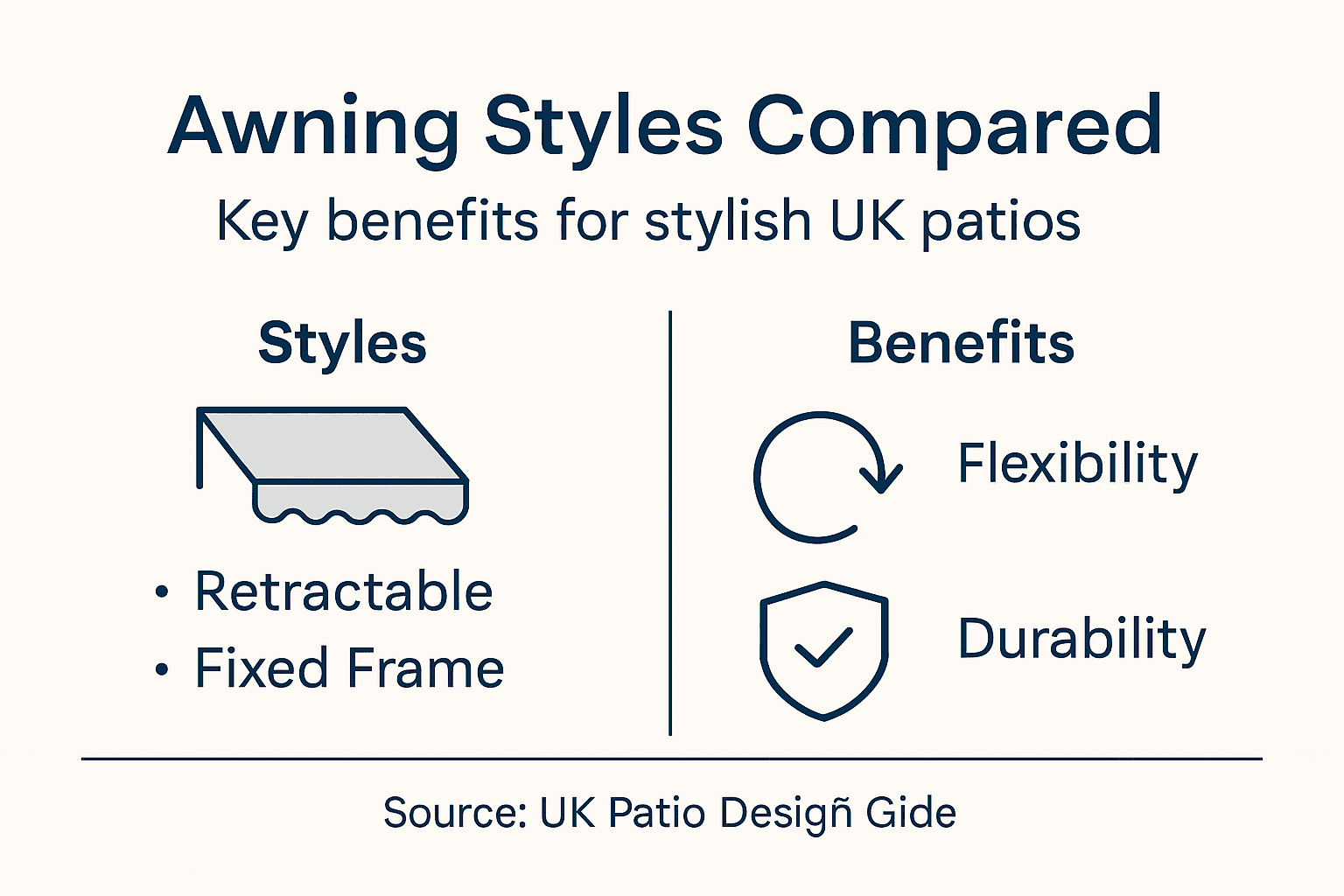
Different awning styles offer unique benefits. Retractable models provide flexibility, while fixed structures offer consistent shade. Think about how the awning will interact with your existing patio furniture and overall landscape design.
Pro tip: Request fabric samples to visualise how different materials and colours will look against your home’s exterior before making a final selection.
Step 3: Compare Awning Materials and Fabric Options
Choosing the right awning material is crucial for ensuring durability, performance, and aesthetic appeal in your outdoor space. Your fabric selection will directly impact how well your awning withstands Yorkshire’s unpredictable weather while maintaining its visual charm.
When exploring awning fabric options, consider the types of awning fabrics that best suit your specific requirements. Different materials offer unique advantages and challenges:
Polyester Fabrics
Lightweight and affordable
Quick-drying properties
Moderate UV resistance
Acrylic Fabrics
Excellent colour retention
Superior water repellence
High UV protection
Vinyl-Coated Polyester
Maximum water resistance
Heavy-duty performance
Ideal for challenging weather conditions
Assess fabric weight and thickness
Check UV protection ratings
Evaluate water-resistance levels
Consider colour fastness
The right fabric transforms your awning from a simple shade provider to a stylish outdoor living solution.
Professional-grade fabrics often incorporate advanced technologies like water-resistant coatings and mildew prevention. Consider factors such as your local climate, maintenance capabilities, and aesthetic preferences when making your selection.
Pro tip: Always request fabric samples and examine them in natural daylight to truly understand their colour, texture, and performance characteristics.
Step 4: Evaluate Operation Types and Optional Extras
Choosing the right operation mechanism can transform your awning from a simple shade provider to a sophisticated outdoor living solution. Understanding the various options will help you select a system that matches your lifestyle and technological preferences.
The external shading systems offer multiple operation types to suit different needs and comfort levels. Consider these primary options:
Manual Operation
Most affordable option
Simple hand-crank mechanism
No electrical requirements
Motorised Operation
Remote-controlled functionality
Electric motor for smooth deployment
Minimal physical effort required
Smart Automated Systems
Integrated wind and sun sensors
Programmable settings
Mobile app control
Assess your technical comfort level
Consider installation complexity
Evaluate long-term maintenance needs
Check compatibility with existing home systems
Intelligent awning systems can dramatically improve your outdoor living experience while providing effortless comfort.
Optional extras can significantly enhance your awning’s performance and convenience. From LED lighting to integrated heating elements, these additions can transform your patio into a year-round entertainment space.
Here is a quick comparison of common awning operation methods and their distinct advantages:
Operation Type | Ease of Use | Suitability |
Manual (Hand-Crank) | Simple and reliable | Traditional patios, low-tech |
Motorised (Remote/Electric) | Convenient, effortless | Family use, daily adjustments |
Smart Automated (Sensors/App) | Highly customisable | Tech-friendly, frequent changes |
Pro tip: Consult with professional installers to understand how different operation types might interact with your specific architectural layout and personal usage patterns.
Step 5: Check Installation Requirements and Quality Standards
Installing an awning isn’t just about aesthetics - it’s a critical process that requires careful planning and adherence to professional standards. Your awning’s performance and longevity depend entirely on proper installation and compliance with regulatory requirements.
The external shading installation guidelines provide essential insights into structural and regulatory considerations. Key installation factors include:
Structural Preparation
Wall mounting strength
Surface compatibility
Load-bearing capacity
Regulatory Compliance
Building regulations assessment
Part O overheating mitigation
Safety standard verification
Professional Assessment
Site survey requirements
Precise measurements
Technical feasibility evaluation
Verify wall or mounting surface integrity
Confirm structural support capabilities
Check local building regulation requirements
Assess potential environmental constraints
Precision in installation determines not just appearance, but the entire functional lifecycle of your awning.
Quality standards extend beyond initial installation. Consider the long-term maintenance implications, warranty provisions, and potential future adjustments that might be necessary for your specific outdoor environment.
Below is a summary of key considerations for proper awning installation and aftercare:
Aspect | Why It Matters | Typical Best Practice |
Structural Integrity | Ensures safety and stability | Check wall/load rating |
Regulation Compliance | Avoids fines or rework | Verify with local authorities |
Maintenance Planning | Extends lifespan, preserves looks | Schedule annual check-ups |
Warranty Provision | Protects investment | Obtain written documentation |
Pro tip: Request detailed installation documentation and ensure your chosen professional provides a comprehensive site survey before any actual installation work begins.
Transform Your Patio with Expertly Designed Outdoor Awnings
Choosing the perfect outdoor awning for your patio involves understanding specific shading needs, material performance, and operation types. If you have struggled with finding a solution that balances style, functionality, and durability for your Yorkshire, Derbyshire, Nottinghamshire, or Lincolnshire outdoor space, Infinity Awnings specialises in delivering tailored shading systems that address these exact challenges. From assessing your patio’s sun exposure to selecting premium fabrics and efficient motorised options, our expertise brings your outdoor vision to life.
Discover a wide range of high-quality retractable awnings and complementary shading products designed to enhance your outdoor living area. Act now to benefit from personalised consultations, expert installation, and premium brands like Weinor and Llaza. Visit Infinity Awnings to explore options and request a free quote. Let us help you create a stylish, comfortable, and practical patio you will enjoy all year round.
Frequently Asked Questions
How can I assess my patio’s sunlight exposure for awning selection?
Understanding your patio’s sunlight exposure is essential for selecting the right awning. To assess this, measure the duration of direct sunlight during peak summer hours and observe the areas that receive intense afternoon heat. Additionally, identify any natural shade provided by surrounding structures or trees.
What style features should I consider when choosing an awning?
When selecting an awning, consider both style and functionality. Evaluate material aesthetics, such as fabric texture and colour compatibility with your home, along with functional features like UV protection levels and operational methods. Aim for an awning that enhances the visual appeal of your patio while meeting your practical needs.
What types of awning materials are best for the UK weather?
The best awning materials for UK weather include acrylic fabrics for high UV protection, polyester fabrics for lightweight options, and vinyl-coated polyester for maximum water resistance. Choose a fabric that balances durability with aesthetic considerations, ensuring it can withstand unpredictable weather conditions.
How do I determine the best operation type for my awning?
Determine the best operation type for your awning by assessing your comfort with technology and the complexity of installation. Options include manual, motorised, and smart automated systems, each offering varying levels of ease of use. Choose a type that aligns with your lifestyle preferences, such as remote control for convenience.
What installation requirements should I be aware of for outdoor awnings?
Be aware of installation requirements like structural integrity and regulatory compliance. Ensure your mounting surface can support the awning and check local building regulations to prevent future complications. Plan for a detailed site survey to confirm these specifications before installation begins.
How can I enhance my awning’s functionality with optional features?
You can enhance your awning’s functionality by adding features such as LED lighting or integrated heating elements. These additions can transform your patio into an attractive area for year-round use, increasing its usability significantly with just a few upgrades.
Recommended
Comments