
Essential awnings maintenance checklist: last 15 years

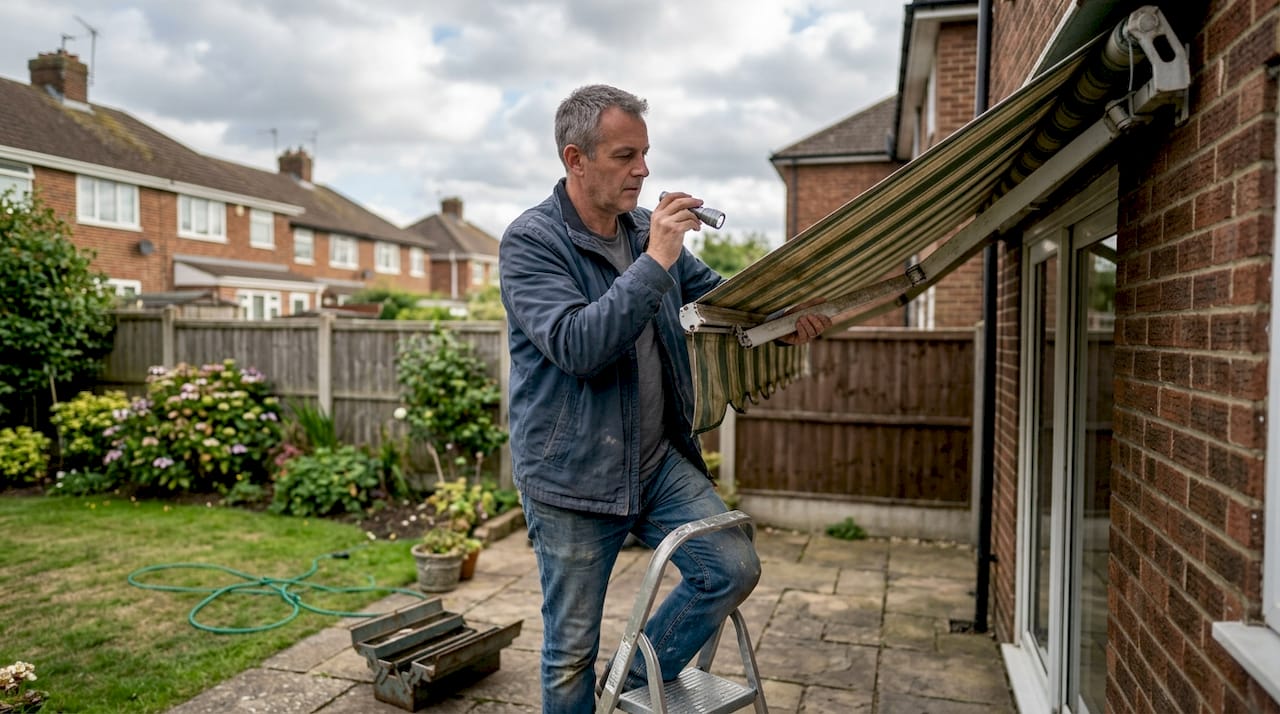
An awning is one of those investments that quietly earns its keep every single day, shading your patio, protecting your furniture, and extending your outdoor living space. But neglect it for even one season and the British weather will make you pay. Rain, UV exposure, and the unpredictable winds that sweep across Yorkshire, Derbyshire, Nottinghamshire, and Lincolnshire can turn a pristine awning into a mouldy, faded, structurally compromised eyesore within a couple of years. The good news? Well-maintained awnings last 5 to 15 years, and the steps to get there are simpler than most homeowners expect.
Table of Contents
Key Takeaways
Point | Details |
Regular checks save money | Awnings maintained with monthly inspections and cleaning last years longer and avoid costly repairs. |
Clean and dry is best | Use mild soap, rinse well, and always let fabric dry before retracting to prevent mould and staining. |
Lubrication matters | A quick spray of silicone lubricant keeps joints and mechanisms running smoothly through the seasons. |
Adapt for UK weather | Retract your awning during storms and perform seasonal care to handle Britain’s changing conditions. |
Why regular maintenance matters for awnings
British weather is relentless. One week you have blazing sun baking the fabric, the next you have horizontal rain and gusts strong enough to stress the frame. This cycle of UV exposure, moisture, and wind loading is the single biggest threat to your awning’s lifespan. Without routine care, the damage compounds quickly.
Neglected awnings develop mould and mildew in the fabric folds, rust on metal joints and brackets, and micro-tears along the edges where the material is under the most tension. These issues start small and invisible, then escalate into expensive repairs or full replacement. When you are choosing outdoor awnings for a Yorkshire home or a Lincolnshire business, you are making a significant investment. Protecting that investment with a consistent maintenance routine is simply common sense.
“Regular care prevents mould, fading, and tears caused by UV exposure, rain, and wind in UK climates, and can extend awning lifespan to 15 years or more.”
The financial case is straightforward. A quality retractable awning can cost anywhere from £1,500 to over £5,000 installed. A bottle of silicone spray and an afternoon of cleaning costs almost nothing by comparison. Our full repair and maintenance guide covers what to do when things do go wrong, but prevention is always cheaper than the cure.
Key risks of neglected awnings:
Mould and mildew growth in fabric folds and seams
Rust and corrosion on arms, brackets, and fixings
UV fading that weakens fabric fibres over time
Tears and fraying at stress points along the edges
Seized or stiff mechanisms that strain the motor or manual crank
Awnings maintenance checklist: simple steps for lasting performance
Here is the practical checklist you can follow right now. These steps apply whether you have a manual cassette awning or a fully motorised electric model from a brand like Weinor or Selt.
Inspect the structure monthly. Check arms, brackets, and joints for signs of rust, corrosion, or loose fittings. Tighten any bolts that have worked loose and address any visible damage before it worsens.
Clean the fabric quarterly. Use mild soap and lukewarm water with a soft brush. Rinse thoroughly and allow the fabric to air dry completely before retracting.
Lubricate moving parts monthly during summer. Silicone spray on joints and arms keeps the mechanism running smoothly and prevents metal-on-metal wear.
Retract during high winds and storms. Never leave an awning extended in winds above 15 mph. Most awnings are not designed to withstand sustained gusts, and the stress can bend arms or tear fabric instantly.
Never use a pressure washer. The force strips waterproof coatings from the fabric and can force water into sealed seams, causing internal mould growth.
Apply a reproofing spray after deep cleans. This restores the fabric’s water-repellent finish and UV resistance, which diminishes over time with washing and sun exposure.
Pro Tip: Keep a simple maintenance log on your phone or in a notebook. Note the date of each clean, lubrication, and inspection. This makes it easy to spot if you have missed a cycle and gives you useful information if you ever need a professional service.
How to clean and care for awning fabric
Fabric care is where most homeowners either get it right or make costly mistakes. The temptation to grab a strong household cleaner is understandable, but harsh chemicals strip the protective coatings that make your awning waterproof and UV resistant.
Use mild soap and lukewarm water with a soft-bristled brush, working in gentle circular motions across the fabric surface. Rinse thoroughly until no soap residue remains, then leave the awning fully extended to air dry in the sun before retracting. Retracting a damp awning is the fastest route to mildew.
Interestingly, some specialists recommend detergent-free cleaning entirely, using only clean water and a brush for routine maintenance. This approach is gentler on the fabric’s protective finish and works well for light soiling. For heavier grime, a small amount of mild soap is acceptable.
A simple quarterly cleaning schedule:
March (spring): Light clean to remove winter grime and check for any damage from cold weather
June (early summer): Rinse and inspect before the peak season begins
September (early autumn): Deep clean before the wet season, apply reproofing spray
December (winter): Clean before storage or retraction for the coldest months
For mildew spots, white vinegar is your best friend. Spray it directly onto the affected area, leave it for 20 minutes, then rinse with clean water. It kills the mildew spores without damaging the awning fabric materials the way bleach would. If you are unsure which fabric type your awning uses, our guide on selecting awning fabric explains the differences clearly.
Frame, joints, and moving parts: inspection and lubrication
The frame is the skeleton of your awning. If it fails, the whole structure fails. Monthly checks take less than ten minutes and can catch problems before they become serious.
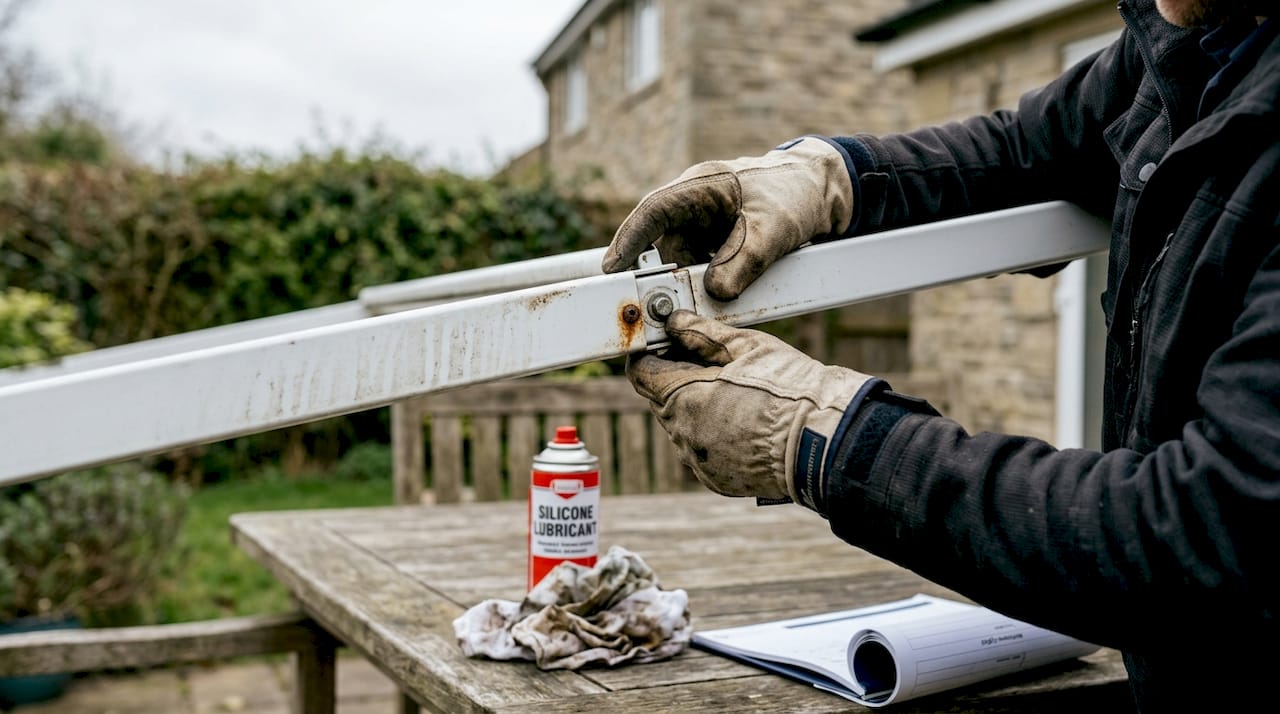
Inspect arms, brackets, and mechanisms for any signs of rust, corrosion, or physical damage. Pay particular attention to the wall fixings, as these bear the full load of the awning when extended. Tighten any loose bolts with the correct spanner and replace any fittings that show significant corrosion.
Lubricate joints and moving parts with a silicone-based spray rather than an oil-based product. Oil attracts dust and grime, which can clog the mechanism over time. Silicone spray stays clean and is safe to use near fabric without leaving stains.
Component | Check frequency | Action required |
Wall fixings and brackets | Monthly | Tighten bolts, check for rust |
Articulated arms | Monthly | Lubricate joints, check for bends |
Fabric tension | Monthly | Adjust if sagging or over-tight |
Cassette housing | Quarterly | Clean interior, check seals |
Motor or crank mechanism | Seasonally | Test full operation, service if stiff |
Pro Tip: Every time you carry out a check, run the awning through a full extension and retraction cycle. Listen for grinding, clicking, or resistance. These sounds are early warnings of a developing mechanical issue, and catching them early means a simple fix rather than a full replacement of the retractable awning mechanism.
Seasonal maintenance routines for Yorkshire and the Midlands
The seasons in the north and midlands of England are distinct enough to warrant a tailored approach to awning care. What you do in March is very different from what you need to do in November.
Seasonal maintenance follows a logical rhythm: spring is about recovery from winter, summer is about keeping up with heavy use, autumn is about preparing for the wet season, and winter is about protection and storage.
Season | Priority tasks | Notes for local climate |
Spring | Clean fabric, check for winter damage, lubricate arms | Yorkshire frosts can crack seals; check fixings carefully |
Summer | Increase cleaning frequency, lubricate monthly, monitor forecasts | UV is strongest; check fabric tension regularly |
Autumn | Deep clean, inspect for rust, apply reproofing spray | Lincolnshire and Nottinghamshire get significant autumn rain |
Winter | Retract if not in use, store dry, check for leaks | Derbyshire hills see heavy snow; never leave extended in snow |
For homeowners in the Yorkshire and Midlands region, the autumn deep clean is arguably the most important task of the year. Getting the awning clean, dry, and reproofed before the long wet season protects it through the months when it faces the most moisture exposure.
Seasonal checklist highlights:
Spring: Remove any debris caught in the cassette or along the arms
Summer: Wipe down the frame after dusty or pollen-heavy periods
Autumn: Check all seals and replace any that have cracked or shrunk
Winter: If the awning remains extended, check it after every storm
Advanced care: reproofing, storage, and edge cases
Once you have the basics covered, there are a few advanced steps that make a real difference to long-term performance. These are the tasks that separate awnings that last 5 years from those that last 15.
Apply a fabric protector or reproofing spray every one to two years, or after any deep clean that involves soap. The simplest test is to flick a few drops of water onto the fabric. If the water beads and rolls off, the coating is intact. If it soaks in, it is time to reproof. This single step dramatically extends fabric life and maintains weatherproofing performance.
Storage is equally important. Never retract or store an awning when the fabric is damp. Even a small amount of trapped moisture will cause mildew to develop within days, and once mildew is established in the folds of a cassette awning, it is very difficult to remove completely.
For those with campervan or drive-away awnings, the care requirements have some specific differences. Secure Kador strips and storm straps properly, pitch on a slight slope to encourage rain runoff, and deflate air beams slightly in high heat to prevent over-pressure. These awnings face more varied conditions than fixed domestic installations and need correspondingly more attention.
Advanced care checklist:
Test water beading on fabric every six months
Reproof after every deep clean using soap
Store fully dry, ideally in a breathable cover
Check cassette seals annually and replace if cracked
Book a professional service for motorised awnings every two to three years
Pro Tip: If your awning has a motor and it starts behaving erratically, do not attempt to dismantle the mechanism yourself. Our guide on maintaining retractable awnings covers what you can safely do at home, but motor faults and complex mechanical issues are best left to a qualified technician.
Need help with awning maintenance or repairs?
Sometimes a problem goes beyond what a brush, a bottle of silicone spray, and a Saturday afternoon can fix. Whether you have noticed rust on the frame, a motor that is not responding, or fabric that has seen better days, professional support makes all the difference.

Infinity Awnings provides expert maintenance and repair services across Yorkshire, Derbyshire, Nottinghamshire, and Lincolnshire. With over 15 years of experience installing and servicing premium awnings from brands like Weinor, Selt, and Tarasola, our team knows exactly what to look for and how to fix it. From routine service checks that catch problems early to full awnings repairs and servicing, we keep your investment performing at its best. Get in touch for a tailored quote or to discuss any concerns about your current awning.
Frequently asked questions
How often should I clean my awning fabric?
Clean awning fabric at least quarterly and after any heavy soiling, using mild soap and lukewarm water followed by thorough rinsing and air drying.
What’s the best way to remove mildew from my awning?
Spray white vinegar directly onto the mildew, leave it for 20 minutes, then rinse thoroughly with clean water and allow the fabric to dry completely before retracting.
When should I retract my awning due to weather?
Retract during high winds above 15 mph, storms, heavy rain, or snow. Most domestic awnings are not rated for sustained wind loading and can be damaged quickly.
How long should a properly maintained awning last?
A well-maintained awning lasts between 5 and 15 years depending on product quality, exposure levels, and how consistently it is cared for.
What routine maintenance prevents the most common awning damage?
Regular cleaning, monthly frame and mechanism inspections, prompt bolt tightening, and always retracting the awning dry are the four most effective habits for preventing common damage.
Recommended
Comments