
How to Maintain Retractable Awnings for Lasting Performance
- Andrew Crookes

- Jan 30
- 7 min read
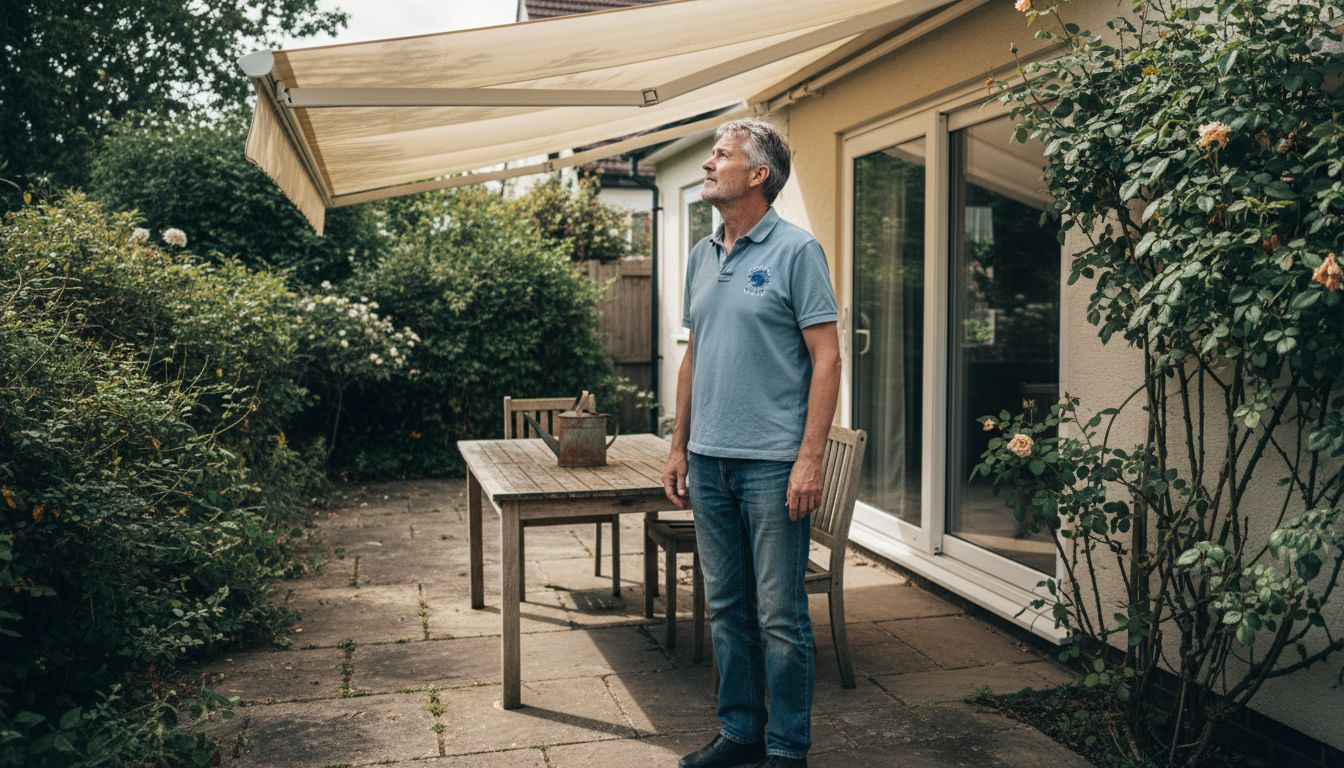
A retractable awning makes every garden gathering in Yorkshire or Derbyshire just that bit more enjoyable, but keeping it performing well can feel like a challenge as the seasons turn. Regular care helps your awning withstand wet weather, wind, and heavy use, protecting both your investment and your peace of mind. With methodical preparation and structured maintenance routines, you can keep your awning strong, safe, and ready to use year after year.
Table of Contents
Quick Summary
Key Point | Explanation |
1. Clear the area around your awning | Remove obstacles to create a safe workspace for thorough inspection and assessment of the awning’s condition. |
2. Regularly clean fabric and frames | Use mild soap solutions and appropriate cleaners to maintain your awning’s appearance and prevent long-term damage. |
3. Inspect mechanical components regularly | Check arms, motors, and connectors for wear or misalignment to ensure smooth operation and avoid costly repairs. |
4. Lubricate moving parts effectively | Apply silicone-based or lightweight machine oil sparingly to critical areas to reduce friction and prevent wear. |
5. Conduct a thorough functionality test | After maintenance, test the awning’s extension and retraction to ensure smooth operation before regular use. |
Step 1: Prepare your awning for safe inspection
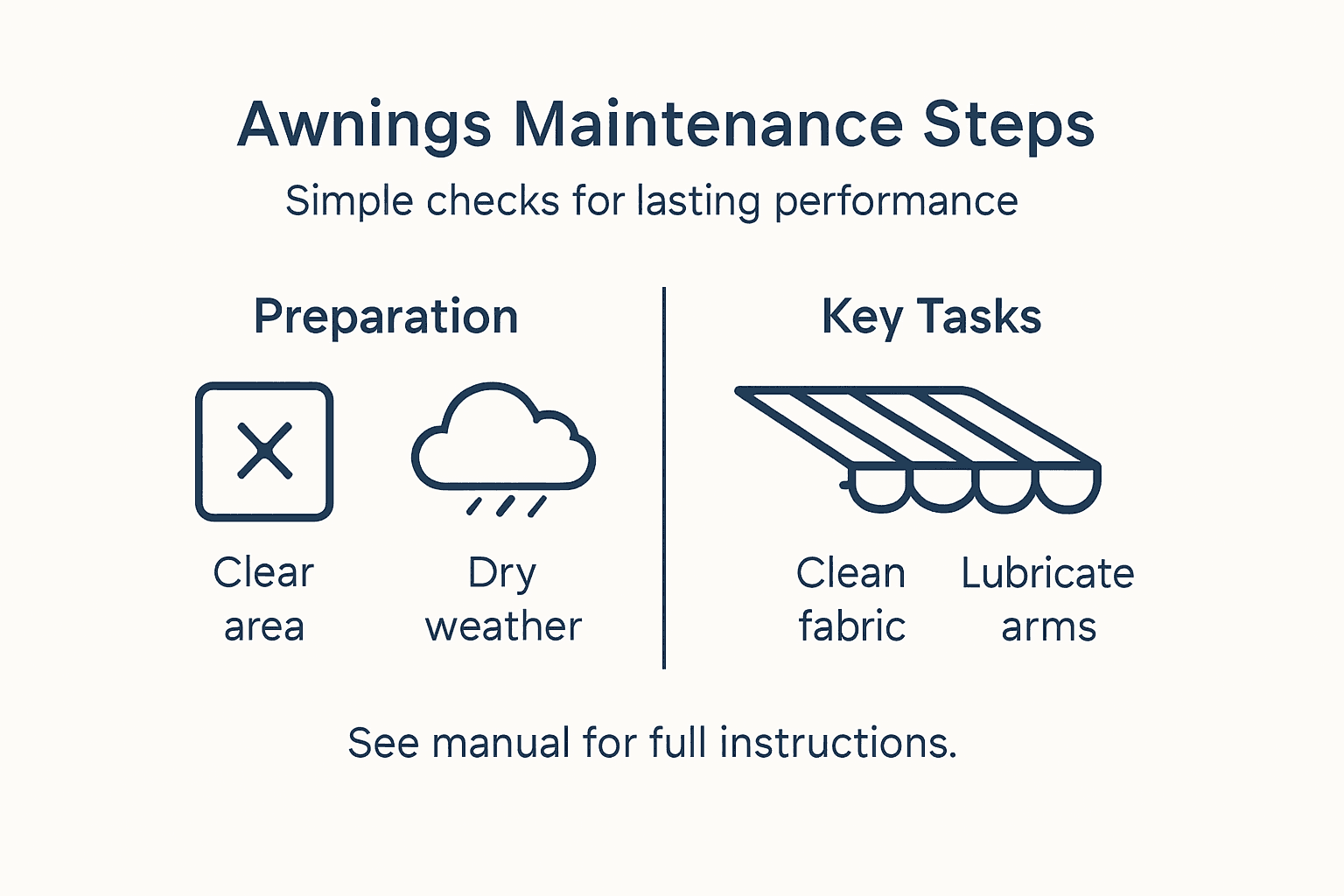
Inspecting your retractable awning requires methodical preparation to ensure a thorough and safe assessment of its condition. By taking time to properly set up for the inspection, you’ll protect both yourself and your valuable outdoor investment.
Start by clearing the area around your awning, removing any furniture, plant pots, or obstacles that might impede your movement or access. This creates a safe workspace and allows you to examine the entire awning structure without hindrance. The systematic inspection process emphasises creating an environment conducive to detailed examination.
Prepare the necessary equipment for a comprehensive assessment:
Sturdy ladder (if required)
Work gloves
Tape measure
Torch or good lighting
Notebook for recording observations
Camera or smartphone for documenting any issues
Ensure you have appropriate clothing that allows free movement and won’t get caught in the awning mechanism. Wear closed-toe shoes with good grip, and consider wearing safety glasses if you’ll be looking closely at mechanical components.
Careful preparation is the foundation of an effective awning inspection.
Pro tip: Always conduct your awning inspection during daylight hours and when weather conditions are dry and calm to ensure maximum safety and visibility.
Step 2: Clean fabric and frames thoroughly
Maintaining the cleanliness of your retractable awning is crucial for preserving its appearance, functionality, and longevity. Regular cleaning prevents dirt build-up, potential fabric degradation, and ensures your awning continues to look and perform at its best.
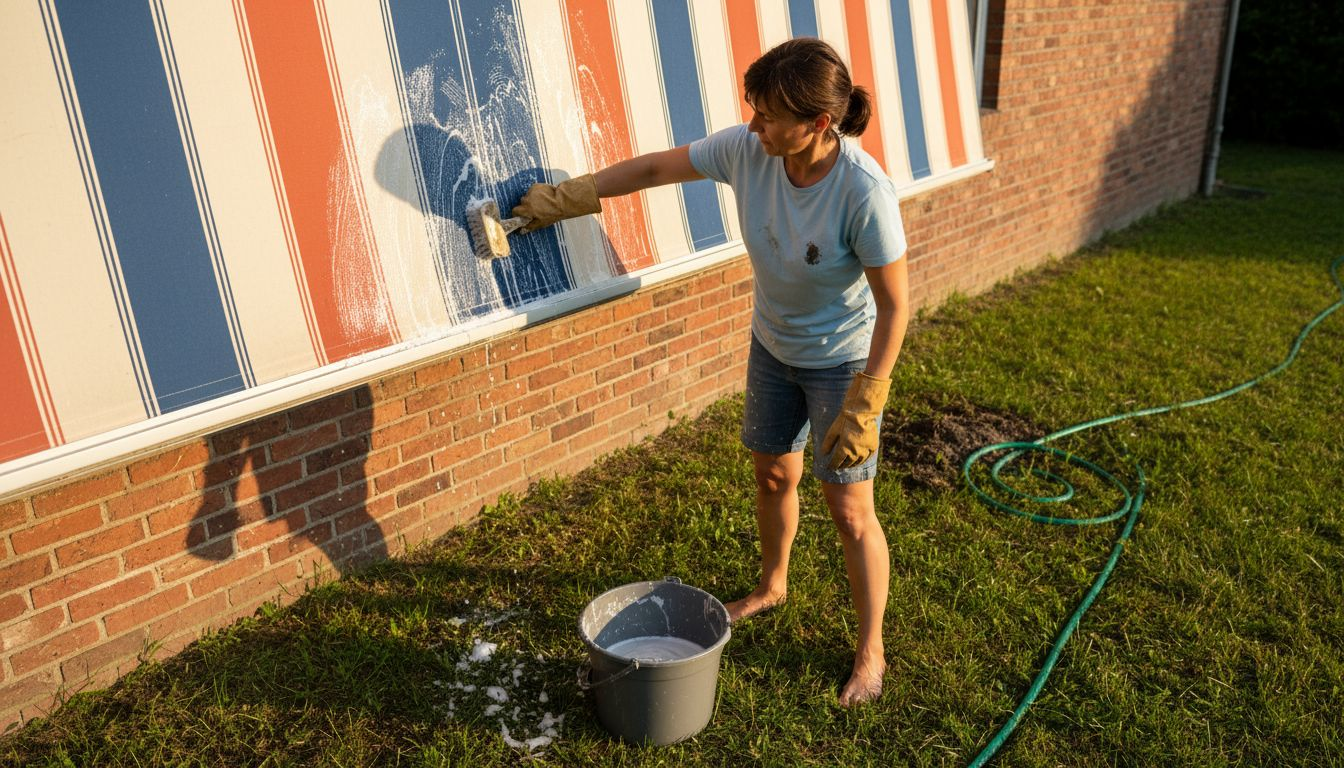
Begin by addressing the fabric, using a soft-bristled brush to gently remove loose dirt, dust, and debris. For routine maintenance of structural components, a mild cleaning solution works best. Mix a gentle soap with lukewarm water - avoid harsh chemicals that might damage the fabric’s protective coating.
Cleaning process for awning fabric and frames:
Remove surface dust with a soft brush
Prepare a mild soap solution
Use a soft cloth or sponge for cleaning
Rinse thoroughly with clean water
Allow complete air drying before retracting
For metal frames, use a non-abrasive cloth and specialised metal cleaner appropriate to the frame’s material. Aluminium frames require different treatment compared to steel or powder-coated surfaces. Wipe down the entire frame, paying special attention to joints and moving mechanisms where dirt can accumulate.
The table below compares cleaning techniques for different awning frame materials:
Frame Type | Recommended Cleaner | Key Precaution |
Aluminium | Mild metal cleaner | Avoid abrasive pads |
Steel | Specialist steel cleaner | Dry thoroughly to prevent rust |
Powder-coated | Neutral soap solution | Do not use solvents |
Consistent cleaning prevents long-term damage and maintains your awning’s aesthetic appeal.
Pro tip: Always test your cleaning solution on a small, inconspicuous area first to ensure it doesn’t cause discolouration or damage to the fabric.
Step 3: Inspect moving parts and fix minor issues
Ensuring the smooth operation of your retractable awning requires careful examination of its mechanical components. Regular inspection of moving parts helps prevent potential failures and maintains optimal performance.
Focus your inspection on critical mechanical elements:
Retraction and extension arms
Motor and gearing mechanisms
Mounting brackets
Pivot points and hinges
Tension springs and cables
Check each component methodically for signs of wear, rust, or misalignment. Look for subtle indicators such as unusual sounds during operation, stiffness in movement, or visible surface damage. Pay particular attention to mounting points and connection joints, as these areas often experience the most stress.
Here’s a quick overview of typical issues found during awning inspection and their possible long-term effects:
Issue Detected | Possible Cause | Long-Term Impact |
Rust on metal parts | Moisture exposure | Weakens joints, shortens lifespan |
Fabric discolouration | UV exposure, harsh cleansers | Reduces appearance, risk of tears |
Unusual noises | Lack of lubrication, wear | Operational failure, costly repairs |
Stiff movement | Dirt build-up, mechanism aging | Reduced usability, early replacement |
Motor hesitation | Electrical fault, poor upkeep | System malfunction, expensive repair |
For electric awnings, examine the motor and electrical connections carefully. Ensure all wiring is intact, without fraying or exposed sections. For manual awnings, test the smoothness of the retraction mechanism, looking for any resistance or uneven movement that might indicate underlying mechanical issues.
Minor issues addressed promptly can prevent costly repairs and extend your awning’s operational life.
Pro tip: Keep a small bottle of lightweight machine oil handy to lubricate moving joints and pivot points during your inspection, which can significantly reduce friction and wear.
Step 4: Lubricate mechanisms for smooth operation
Proper lubrication is crucial for maintaining your retractable awning’s performance and extending its operational lifespan. Mechanical component maintenance requires careful application of appropriate lubricants to prevent wear and ensure smooth movement.
Lubrication steps for awning mechanisms:
Select a silicone-based or lightweight machine oil
Clean joints and pivot points before applying lubricant
Use a precision applicator or small brush
Apply thin, even layers to moving parts
Wipe away excess lubricant to prevent dirt accumulation
Focus on critical movement points such as:
Retraction arm hinges
Motor mechanism joints
Tension spring connection points
Bracket and mounting interfaces
Roller tube and side channel interfaces
Be mindful of the quantity - over-lubrication can attract dirt and potentially damage delicate mechanical components. Use sparingly and precisely, targeting only the specific moving parts that require reduced friction.
A little lubrication goes a long way in preventing mechanical wear and maintaining optimal awning performance.
Pro tip: Keep a clean microfibre cloth handy to remove any excess lubricant and prevent dust accumulation during the process.
Step 5: Test awning functionality after maintenance
After completing maintenance, a comprehensive functionality test ensures your retractable awning operates smoothly and safely. Systematic post-maintenance testing helps identify any potential issues before regular use.
Testing procedure for retractable awnings:
Perform full extension and retraction cycles
Check for smooth, uninterrupted movement
Listen for unusual sounds during operation
Verify motor response (for electric awnings)
Inspect alignment and fabric tension
Test remote control or manual mechanism
Electric awning specific checks:
Ensure motor starts and stops without hesitation
Verify remote control range and responsiveness
Check for consistent speed during extension and retraction
Confirm emergency stop functionality works correctly
For manual awnings, pay close attention to resistance during movement. The awning should extend and retract with minimal effort, without sticking or requiring excessive force. Any signs of difficulty might indicate that previous maintenance steps need revisiting.
A thorough functionality test is your final assurance of a well-maintained awning.
Pro tip: Conduct your functionality test during daylight and in mild weather conditions to ensure the most accurate assessment of your awning’s performance.
Protect Your Investment with Expert Retractable Awning Solutions
Proper maintenance of your retractable awning is key to ensuring lasting performance and avoiding costly repairs caused by rust, fabric damage, or mechanical wear. If you find the upkeep process challenging or want to guarantee your awning operates smoothly season after season, Infinity Awnings offers bespoke design, supply, and installation services tailored to your needs. We specialise in premium-quality retractable awnings with manual or electric operation and a wide selection of durable fabrics that resist discolouration and wear.
Take the next step towards stress-free outdoor comfort. Explore our comprehensive range of outdoor shading solutions and benefit from over 15 years of expertise serving Yorkshire, Derbyshire, Nottinghamshire, and Lincolnshire clients. Whether upgrading your home or business, visit Infinity Awnings today for a free quote and expert advice on stylish, durable awnings that reduce maintenance hassles and enhance your outdoor living space.
Discover how our premium products from trusted brands like Weinor and Morvelle deliver smooth operation and elegant design at Infinity Awnings. Ready to transform your outdoor area with reliable shade and effortless functionality? Contact us now to schedule your personalised consultation and enjoy worry-free awning performance all year round.
Frequently Asked Questions
How often should I clean my retractable awning?
Regularly clean your retractable awning, ideally every 4–6 weeks during usage periods. Start by removing surface dirt with a soft brush and follow up with a mild soap solution for a thorough clean.
What should I inspect when maintaining my retractable awning?
Inspect critical elements like the retraction arms, motor, and mounting brackets for wear or misalignment. Focus on areas prone to stress, such as pivot points and hinges, addressing any signs of damage or rust promptly.
How can I lubricate the moving parts of my retractable awning?
Use a silicone-based or lightweight machine oil to lubricate the moving parts. Apply it sparingly at joints and pivot points, ensuring you wipe away any excess to prevent dirt accumulation and maintain smooth operation.
What are the signs that my retractable awning needs maintenance?
Look for unusual noises, stiffness in movement, or rust on metal parts as key indicators that maintenance is needed. Addressing these issues early can prevent further damage and extend your awning’s lifespan.
How can I test if my retractable awning is functioning properly after maintenance?
Conduct a full extension and retraction cycle to ensure smooth, uninterrupted movement. Listen for any unusual sounds and check for proper alignment and fabric tension during the operation.
What is the best time to inspect my retractable awning?
Inspect your retractable awning during daylight hours and in dry, calm weather for optimal visibility and safety. This ensures you can thoroughly assess its condition without distractions from poor visibility.
Recommended
Comments