
Role of fabric in awnings: best materials for outdoors

Most homeowners assume awning fabric is simply about picking a colour that matches their patio furniture. In reality, the fabric you choose determines whether your awning delivers effective UV protection, withstands regional weather patterns, and lasts a decade or needs replacing in just a few years. From blocking up to 98% of harmful UV rays to resisting Yorkshire’s unpredictable rain and wind, fabric choice directly impacts comfort, durability, and long-term value. This guide explains how different fabrics perform in outdoor spaces across Yorkshire, Derbyshire, Nottinghamshire, and Lincolnshire, helping you make an informed decision that protects your investment.
Table of Contents
Key Takeaways
Point | Details |
UV protection and cooling | High quality fabric blocks up to 98 per cent of UV rays and can reduce temperatures under the awning by 8 to 15 degrees Fahrenheit. |
Solution dyed acrylic longevity | Solution dyed acrylic provides superior fade resistance and typically lasts ten to fifteen years with proper maintenance. |
Fabric weight matters | Heavier fabrics resist higher winds and improve retractability. |
Maintenance extends life | Regular cleaning, inspection and timely repairs can significantly extend the fabric’s lifespan and preserve performance. |
Climate suited fabrics | Different climates and uses favour different fabrics, ensuring you choose one designed for your local weather patterns and projected usage. |
How fabric influences awning performance
The fabric covering your awning serves multiple critical functions beyond simple shade provision. Understanding these roles helps you appreciate why material selection matters far more than aesthetics alone.
First, quality awning fabric blocks harmful ultraviolet radiation that damages skin and fades outdoor furniture. Solution-dyed acrylic blocks up to 98% of UV rays whilst simultaneously reducing temperatures beneath the awning by 8 to 15 degrees Fahrenheit. This temperature reduction translates to measurable energy savings, with properly positioned awnings cutting cooling costs by up to 25% during summer months. The role of awnings in home design extends beyond function to architectural enhancement, making fabric choice a design decision as much as a practical one.
Water resistance represents another crucial fabric property. Whilst awnings primarily provide shade, water-resistant fabrics protect outdoor spaces during light rain and prevent moisture absorption that leads to mildew growth. The fabric’s weave density and any applied coatings determine how effectively water beads and runs off rather than soaking through. Breathability works alongside water resistance, allowing air circulation that prevents heat buildup underneath whilst reducing condensation and mildew formation on the fabric itself.
“The right awning fabric transforms an outdoor space from occasionally usable to a comfortable extension of your home, regardless of weather conditions. Fabric performance directly determines how often you actually enjoy that investment.”
Fabric appearance impacts your property’s kerb appeal and outdoor ambience. Modern awning fabrics offer hundreds of colours, patterns, and textures that complement architectural styles from traditional Yorkshire stone cottages to contemporary commercial premises. Fade resistance ensures these aesthetic benefits persist throughout the fabric’s lifespan rather than degrading within a few seasons. The combination of functional performance and lasting visual appeal makes fabric selection one of the most important decisions in awning specification.
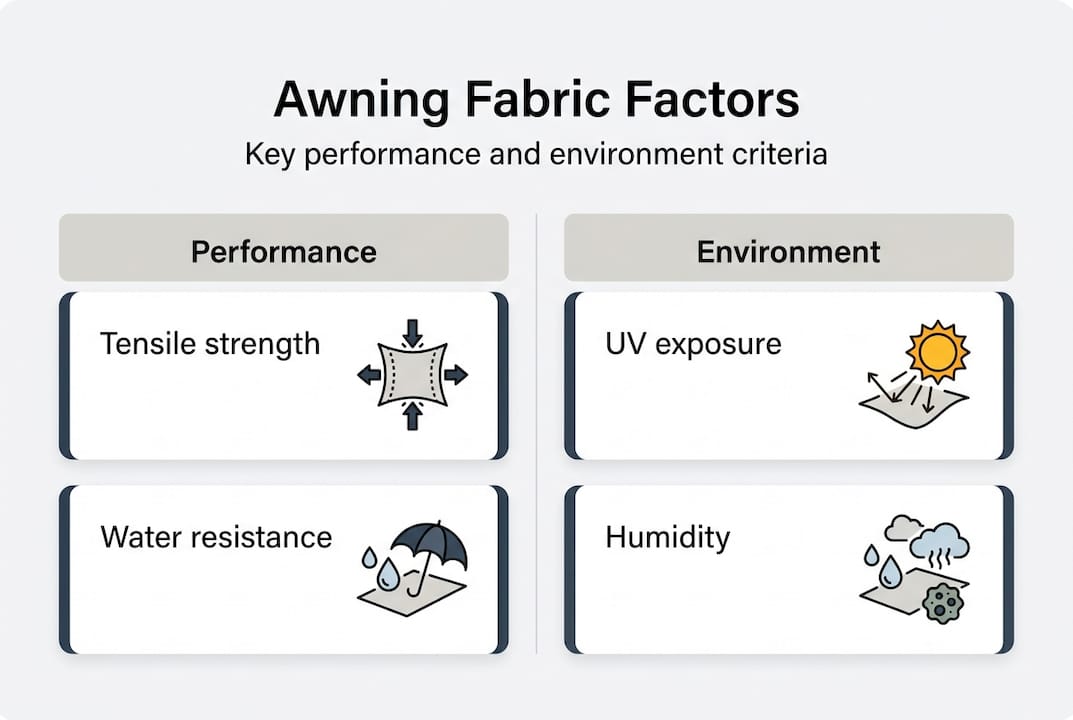
Key fabric performance factors include:
UV protection rating determining how much harmful radiation reaches people and furnishings below
Water resistance measured by hydrostatic head pressure, indicating rain protection capability
Breathability allowing air movement to prevent heat and moisture accumulation
Colour fastness ensuring patterns and hues resist fading from sun exposure
Tensile strength preventing tearing and sagging under wind loads and mechanical stress
Popular fabric types for residential awnings
Homeowners and small businesses typically choose between several established fabric types, each offering distinct advantages and limitations for outdoor awning applications.
Solution-dyed acrylic represents the gold standard for residential and commercial awnings. This material achieves its colour through a dyeing process that saturates individual fibres before weaving, creating exceptional fade resistance. Solution-dyed acrylic is breathable, mildew-resistant, UV fade-resistant, and lasts 10 to 15 years when properly maintained. The fabric’s open weave allows air circulation whilst blocking harmful UV radiation, preventing the stuffy greenhouse effect that occurs under non-breathable materials. Water-resistant treatments applied during manufacturing help moisture bead and run off, though acrylic isn’t completely waterproof. This fabric type dominates the market for types of awning fabrics specified across the UK due to its balanced performance.
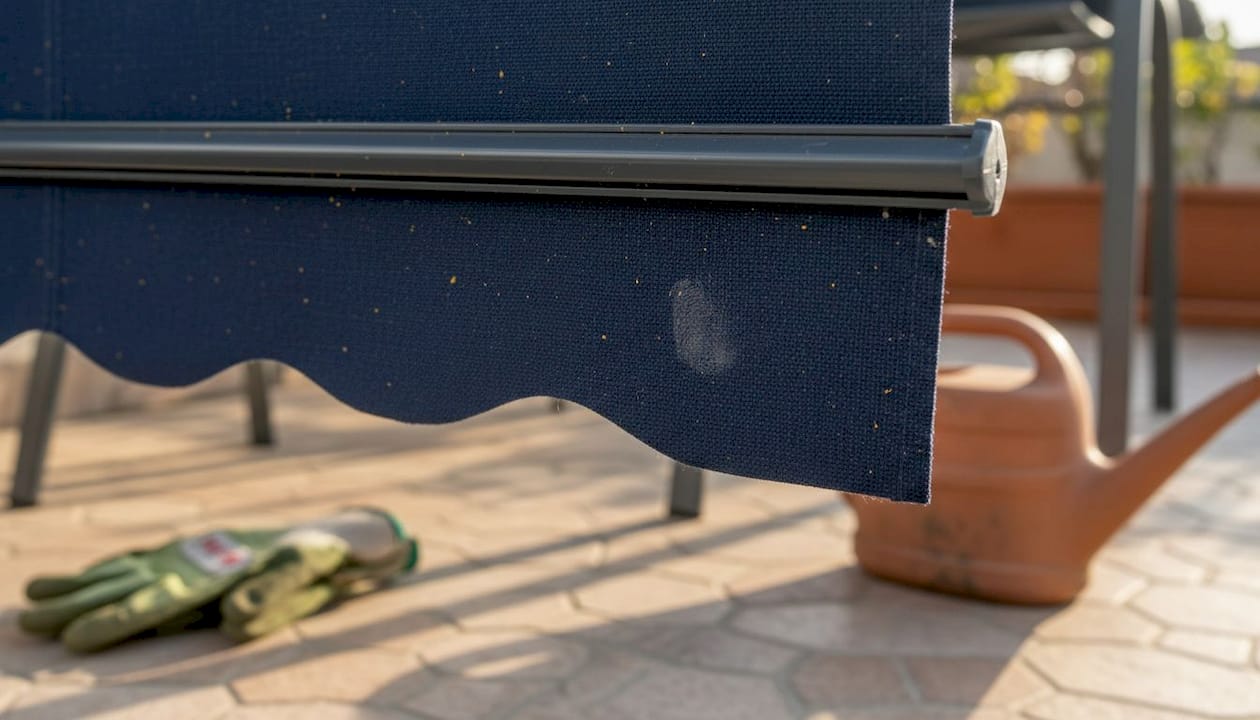
Canvas offers a traditional aesthetic and excellent breathability but requires more maintenance than modern synthetics. Natural cotton canvas provides a classic appearance that suits period properties and heritage buildings. However, canvas is breathable but prone to mildew, fading, with shorter lifespan of 8 to 12 years compared to acrylic alternatives. Canvas absorbs moisture more readily, making it less suitable for regions with frequent rain unless treated with water-repellent coatings that require periodic reapplication. The material’s natural fibres also fade more quickly under UV exposure, limiting colour choices to earth tones that disguise gradual colour loss.
Fabric type | Lifespan | UV resistance | Mildew resistance | Maintenance needs | Best applications |
Solution-dyed acrylic | 10-15 years | Excellent (98% block) | Excellent | Low (clean 2x yearly) | Most residential and commercial uses |
Canvas | 8-12 years | Moderate | Poor without treatment | High (clean 3-4x yearly, recoat) | Heritage properties, temporary installations |
Polyester | 7-10 years | Good with coating | Moderate | Moderate (clean 2-3x yearly) | Budget-conscious projects |
Vinyl-laminated | 5-8 years | Good | Excellent | Low (wipe clean) | Full waterproof coverage needed |
Polyester fabrics offer a middle ground between acrylic performance and canvas affordability. Modern polyester awning fabrics receive UV-resistant coatings and water-repellent treatments that improve durability, though these coatings degrade over time and require the fabric to be replaced sooner than solution-dyed alternatives. Vinyl-laminated fabrics provide complete waterproofing for applications requiring full rain protection, but their non-breathable nature creates heat buildup and condensation issues in many residential settings.
Pro Tip: For Yorkshire’s variable climate with moderate humidity and occasional strong winds, solution-dyed acrylic in weights between 280 and 340 grams per square metre provides the best balance of durability, weather resistance, and retractability for most residential awnings.
Mechanical and environmental factors affecting fabric choice
Beyond material type, specific fabric properties and regional environmental conditions determine which fabrics perform best in your location and application.
Tensile strength measures how much force fabric withstands before tearing, critical for awnings exposed to wind gusts. High tensile strength exceeding 200 Newtons per 5 centimetres prevents fabric damage when wind catches the extended awning. Reinforced edges and professionally sewn seams distribute stress across the fabric rather than concentrating force at weak points. The warp and weft directions of woven fabrics have different strength characteristics, requiring proper orientation during installation to maximise wind resistance.
Fabric weight directly affects both wind resistance and retractability in mechanical awning systems. Heavier fabrics resist wind flutter and provide more substantial shade, but add stress to retraction motors and require more robust mounting hardware. Windy areas benefit from reinforced stitching and heavier gauge fabrics typically ranging from 300 to 400 grams per square metre. Conversely, large retractable awnings in sheltered locations perform better with lighter fabrics that reduce motor strain and allow smoother operation. Finding the optimal weight for your specific awning size, exposure, and mechanism type ensures reliable long-term performance.
Water resistance depends on both fabric weave tightness and applied treatments. Hydrostatic head pressure ratings indicate how much water column the fabric resists before leaking, with 400 millimetres head pressure representing good rain protection for awning applications. Proper awning pitch allows water runoff even with moderately water-resistant fabrics, whilst flat or low-angle installations require more waterproof materials to prevent pooling. Seam sealing and welded rather than sewn edges improve water resistance in fabrics specified for maximum rain protection.
Regional climate considerations significantly influence optimal fabric selection. Yorkshire, Derbyshire, Nottinghamshire, and Lincolnshire experience moderate humidity with periodic heavy rain and occasional strong winds. Humid areas require mildew resistance making solution-dyed acrylic with antimicrobial treatments the preferred choice over natural canvas. Coastal locations face salt spray requiring fabrics with corrosion-resistant hardware and fade-resistant dyes. Urban environments with pollution benefit from fabrics with soil-resistant treatments that prevent grime accumulation.
Environmental factors to consider include:
Average wind speeds and gust frequency determining required fabric weight and tensile strength
Annual rainfall and humidity levels indicating necessary water resistance and mildew protection
Sun exposure hours affecting UV protection requirements and fade resistance needs
Temperature extremes influencing fabric expansion, contraction, and mechanical system stress
Proximity to trees requiring more frequent cleaning and potentially darker colours hiding debris
Pro Tip: For awnings in exposed positions facing prevailing winds, specify fabrics with reinforced hems and request additional stitching at stress points where the fabric attaches to the awning frame, extending fabric life by preventing edge tears that often initiate failure.
Understanding how to select awning fabric for lasting appeal requires balancing these mechanical and environmental factors against aesthetic preferences and budget constraints.
Maintaining awning fabric for durability and performance
Proper maintenance dramatically extends fabric lifespan and preserves appearance, protecting your awning investment and ensuring consistent performance throughout its service life.
Establish a regular cleaning schedule appropriate for your environment and fabric type. Cleaning every 3 to 6 months prevents dirt accumulation that degrades fabric and creates staining. Follow these steps for effective awning fabric cleaning:
Brush loose debris from the fabric surface using a soft bristle brush, working from the centre outward to avoid pushing dirt into the weave.
Mix mild soap (never detergent containing bleach or harsh chemicals) with lukewarm water, creating a gentle cleaning solution.
Apply the solution with a soft sponge or cloth, working in small sections and avoiding excessive saturation that stresses seams.
Rinse thoroughly with clean water from a garden hose, ensuring all soap residue is removed to prevent attracting dirt.
Allow the fabric to air dry completely in the extended position before retracting to prevent mildew growth from trapped moisture.
Inspect fabric tension and structural condition during each cleaning session. Loose fabric flutters in wind, creating stress that leads to premature failure. Checking tension and seams allows you to identify and address minor issues before they require costly repairs. Look for pulled stitching, small tears, or areas where the fabric has separated from mounting hardware. Most retractable awnings include tension adjustment mechanisms that restore proper tautness as fabric naturally relaxes over time.
Protective coatings enhance fabric performance and longevity. Water-repellent treatments like Teflon create a barrier that helps moisture bead and roll off whilst preventing stain absorption. Applying coatings like Teflon extends awning fabric life by reducing how deeply dirt, pollen, and pollutants penetrate the weave. Reapply these treatments every two to three years following manufacturer instructions, as UV exposure and cleaning gradually reduce their effectiveness. Some professional awning services offer recoating as part of maintenance packages.
Common pitfalls causing premature fabric failure include retracting wet awnings, leaving them extended during storms, using harsh cleaning chemicals, and neglecting minor damage that spreads. Wet fabric develops mildew when rolled tightly against itself, creating permanent staining and odour. Storm damage from high winds tears fabric and bends frames, whilst bleach-based cleaners break down synthetic fibres and fade colours. Small tears expand rapidly when subjected to wind stress, turning minor repairs into full fabric replacement.
Pro Tip: During Yorkshire’s autumn and winter months when awning use decreases, retract and cover your awning or remove the fabric entirely for indoor storage, preventing unnecessary weathering and extending overall lifespan by several years compared to leaving it exposed year-round.
Regular professional inspections complement homeowner maintenance. Specialists identify mechanical issues, adjust tension properly, and spot fabric wear patterns indicating frame misalignment or other problems. Learning how to maintain retractable awnings through both DIY care and professional service maximises your investment’s value and performance.
Explore premium fabric awnings for your home or business
Selecting the right fabric transforms your outdoor space into a comfortable, protected area you’ll use throughout the warmer months. Infinity Awnings offers custom fabric awnings specifically designed for Yorkshire, Derbyshire, Nottinghamshire, and Lincolnshire weather patterns, with expert guidance helping you choose materials suited to your exact requirements.
Our range includes solution-dyed acrylic fabrics in hundreds of colours and patterns, professionally installed with proper tensioning and weatherproofing. We provide detailed advice on fabric weight, water resistance, and maintenance requirements based on your property’s exposure and intended use. From residential patios to commercial outdoor dining areas, our team ensures your awning fabric delivers lasting protection and visual appeal. Explore our comprehensive guide to selecting awning fabric or contact us for a free consultation and quote tailored to your outdoor space.
Frequently asked questions about awning fabric
What fabric lasts longest in humid UK climates?
Solution-dyed acrylic with antimicrobial treatments provides the longest lifespan in humid conditions, typically 10 to 15 years. This material resists mildew growth that degrades natural fabrics like canvas whilst maintaining colour and structural integrity throughout its service life.
How does fabric weight affect retractable awnings?
Heavier fabrics resist wind better but increase motor strain and require stronger mounting hardware. Most residential retractable awnings perform optimally with fabrics between 280 and 340 grams per square metre, balancing wind resistance with smooth mechanical operation.
Can I use canvas awnings in rainy areas?
Canvas requires water-repellent treatments and more frequent maintenance in rainy climates. Solution-dyed acrylic offers better rain performance with less upkeep, making it the preferred choice for regions with regular precipitation like Yorkshire and surrounding counties.
How often should awning fabric be cleaned?
Clean awning fabric every 3 to 6 months depending on environmental exposure. Properties near trees, in urban areas with pollution, or coastal locations require more frequent cleaning, whilst sheltered suburban installations may need only biannual maintenance to preserve appearance and performance.
Do darker awning fabrics provide better UV protection?
Colour has minimal impact on UV protection compared to fabric density and composition. Quality solution-dyed acrylic blocks up to 98% of UV radiation regardless of colour, allowing you to choose hues based on aesthetic preferences rather than protection concerns. Review awning fabric types available in the UK to understand how different materials and weights affect both appearance and performance.
Recommended
Comments