
How to create covered play areas: a parent's guide
- Andrew Crookes
- 22 hours ago
- 8 min read
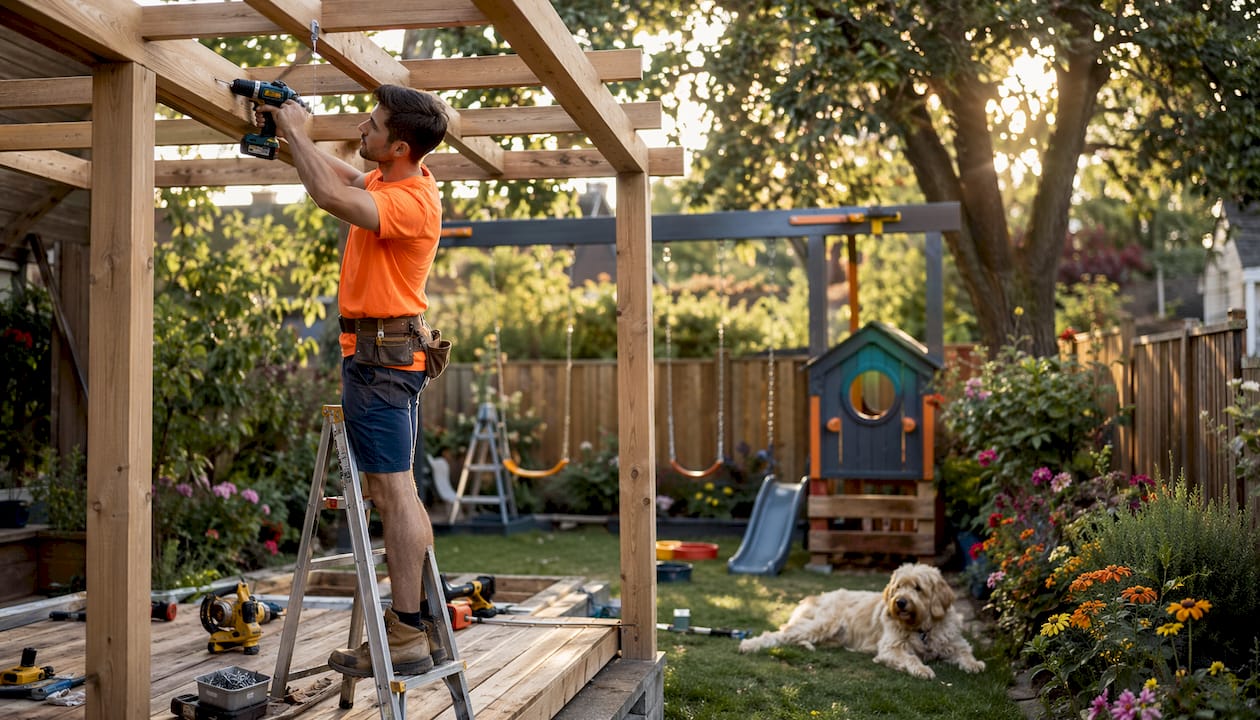
TL;DR:
A covered play area provides essential sun, rain, and wind protection for children in outdoor spaces. Proper site selection, safety assessments, and regular inspections ensure safety and longevity of the structure. The most durable options include pergolas, while shade sails and fabric canopies require careful management for weather and safety.
A covered play area is a dedicated outdoor space for children that includes an overhead shade structure to protect against sun, rain, and wind. Getting this right matters more than most parents realise. Shading is a health and safety requirement, not simply a comfort feature, and it must be planned, inspected, and maintained as part of your overall safety approach. Whether you are building a simple canopy over a sandpit or a full pergola covering a garden play zone, the process follows the same core principles: site carefully, choose the right structure, install it safely, and inspect it regularly.
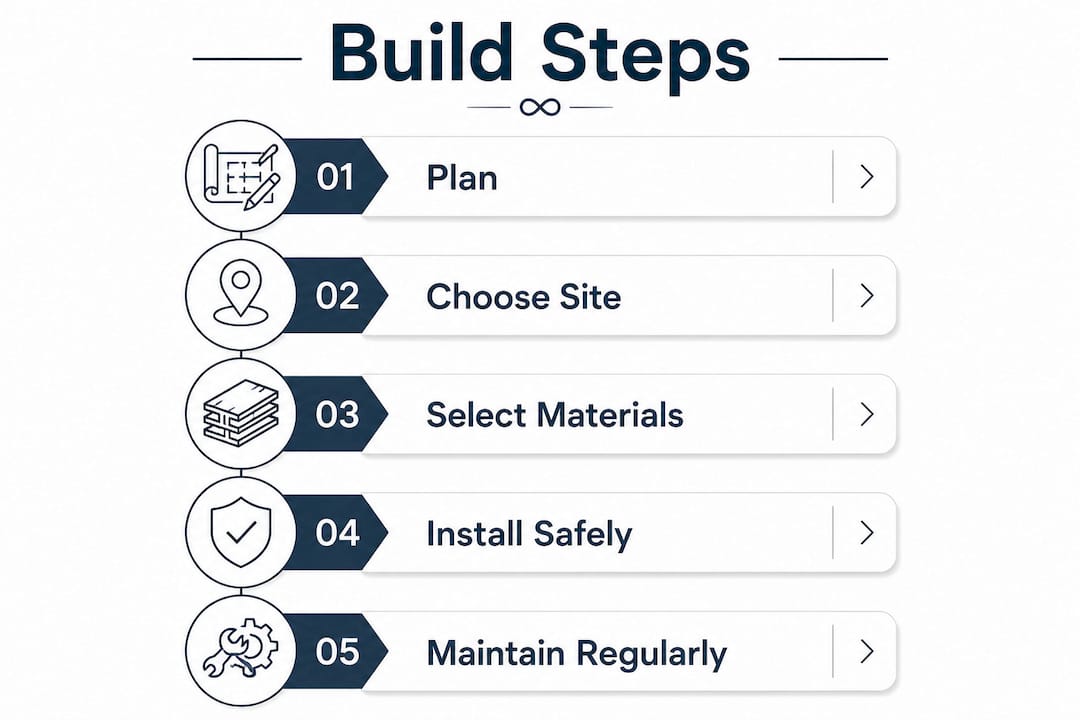
How to create covered play areas: planning before you build
The single most important step in designing outdoor play spaces is choosing the right location. A poorly sited cover creates new hazards even as it solves old ones. Pick a spot that is visible from the house, free from overhead cables or overhanging branches, and accessible for children of all abilities.
Before any structure goes up, carry out a formal site risk assessment. RoSPA’s system approach to risk assessment focuses on removing or protecting against surrounding dangers and confirming safe access routes. This is not bureaucratic box-ticking. It is the process that tells you whether your chosen location is genuinely safe before you commit to digging post holes.
Community and family engagement also shapes better outcomes. Asking children what they want from the space produces designs they actually use. GOV.UK playground funding guidance stresses that inclusive design and community engagement lead to more sustainable play areas. The same principle applies at home: a play zone designed with children in mind gets used far more than one designed purely for adult convenience.
Use this checklist before breaking ground:
Location: visible from the house, level ground, away from fences and walls by at least 1 metre
Access: clear, unobstructed entry and exit points suitable for all children
Overhead clearance: no cables, branches, or guttering within the structure’s footprint
Drainage: ground slopes gently away to prevent waterlogging under the cover
Surfacing: impact-absorbing material planned for the area beneath and around the structure
Site requirement | Why it matters |
Visibility from the house | Adults can supervise without being present inside the zone |
Level, stable ground | Prevents post movement and uneven surfacing over time |
Safe access routes | Reduces trip and collision hazards at entry and exit points |
Adequate drainage | Stops standing water, which creates slip hazards and accelerates rot |
Clearance from boundaries | Reduces entrapment and impact risks at the perimeter |
Which materials and structures work best for building shade structures for kids?
The three most common structures for covered play zones are pergolas, canopy frames, and shade sails. Each suits different budgets, garden sizes, and aesthetic preferences.
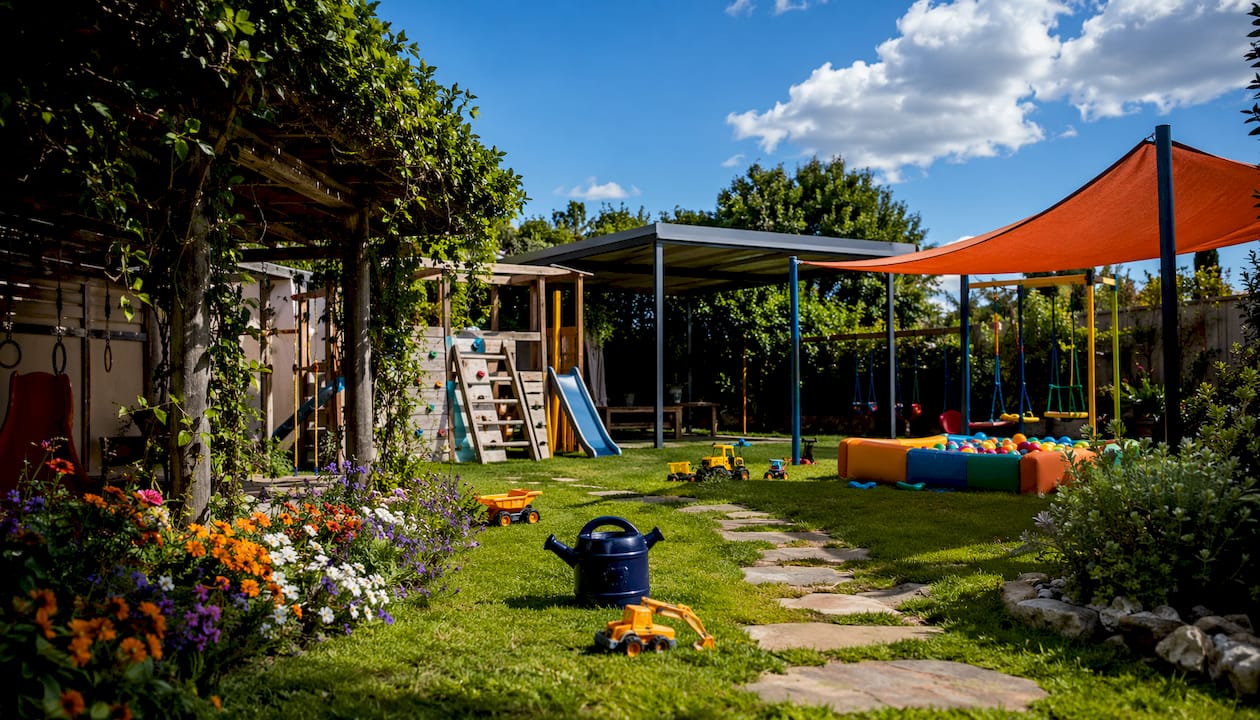
Pergolas offer the most permanent solution. Timber or aluminium frames support either solid roofing panels or retractable fabric. They handle wind well, look attractive, and can be fitted with lighting for year-round use. Infinityawnings supplies pergola systems designed specifically for outdoor living, with options that suit garden play spaces as well as adult entertaining areas.
Canopy frames are mid-range in cost and permanence. A steel or aluminium frame supports a fabric canopy that can often be removed in winter. They are quicker to install than a pergola and easier to reposition if your garden layout changes.
Shade sails are the most affordable option. Tensioned fabric panels attach to posts or existing walls. They provide excellent UV protection but perform poorly in high winds and require careful tensioning to avoid pooling water.
Material durability matters significantly when children are involved. Powder-coated aluminium resists rust and requires minimal upkeep. Pressure-treated timber is strong but needs annual treatment to prevent rot. Fabric canopies should carry a UV protection rating and be made from materials that do not leach chemicals when wet.
Key safety points for materials and fixings:
Choose posts with rounded or capped tops to eliminate impalement hazards
Use stainless steel or hot-dip galvanised fixings to prevent corrosion-related failure
Avoid exposed bolt ends at child head height
Select fabrics that are non-toxic and tested for outdoor use
Check that safety considerations for awning installations apply equally to home play structures
Natural shade from trees can complement a built structure, but never rely on it alone. Trees drop branches, harbour insects, and provide inconsistent coverage as seasons change.
Pro Tip: Always ask your supplier for the material safety data sheet for any fabric used in a children’s play area. Non-toxic certification is not always standard, so request written confirmation before purchasing.
How to safely install and maintain a covered play area
Installation done correctly takes longer than most parents expect. Rushing the anchoring stage is the most common mistake, and it is also the most dangerous.
Follow these steps for a safe installation:
Mark out the footprint using string lines and pegs. Confirm clearances from boundaries and equipment before digging.
Dig post holes to the depth specified by your structure’s manufacturer. For most garden pergolas, this is at least 600mm. Shallower holes allow movement in wind.
Set posts in concrete and allow full curing time before attaching any overhead components. Premature loading causes lean and instability.
Attach the overhead frame with the fixings supplied. Do not substitute fixings with cheaper alternatives. Corrosion-resistant hardware is specified for a reason.
Fit the canopy or roofing panels according to the manufacturer’s sequence. Overhead components fitted out of order create uneven load distribution.
Conduct a pre-use safety check before children access the area. Test every fixing point, check for sharp edges, and confirm the surface beneath is impact-absorbing.
BS EN 1176 sets the standard for playground equipment installation and ongoing safety management. Compliance with this standard is the baseline, not the ceiling. RoSPA is clear that meeting a standard does not remove your duty to actively manage risk.
Ongoing inspection is where most parents fall short. RoSPA recommends weekly inspections by a competent person and an annual inspection by an independent specialist, with written records kept for every check. That applies to home play areas as much as public ones.
Inspection checkpoint | Frequency | What to look for |
Overhead structure and fixings | Weekly | Corrosion, loosening, fabric tears, pooled water |
Posts and ground anchors | Weekly | Movement, cracking at base, exposed concrete edges |
Canopy fabric | Weekly | UV degradation, tears, mould, sagging |
Ground surface beneath cover | Weekly | Wear, displacement, waterlogging |
Full structural integrity check | Annually | Independent specialist assessment with written report |
Pro Tip: Keep a simple inspection log on your phone or in a notebook near the play area. A dated record of checks protects you legally and makes it far easier to spot gradual deterioration before it becomes a safety failure.
What common challenges arise when building a covered play area?
Posts and fixings introduce hazards that the open play area did not have. RoSPA identifies impact and entanglement as the primary new risks that covered zones add to a playground’s risk profile. Treat the covered structure as a separate safety subsystem with its own hazard map.
Common challenges and how to address them:
Wind uplift on canopies: Shade sails and fabric canopies are vulnerable in storms. Install wind-rated fixings and remove or retract fabric covers when wind speeds exceed the manufacturer’s limit.
Water pooling: A flat canopy collects rainwater, which adds weight and stress to fixings. Specify a minimum pitch of 5 degrees on any fabric roof to allow run-off.
Post impact hazards: Children run into posts. Fit post padding at child height and position posts outside the main play zone where possible.
Seasonal sun angles: A cover designed for summer shade may leave children exposed in spring and autumn when the sun sits lower. Adjustable or retractable structures handle this far better than fixed ones.
Entanglement risks: Loose fabric edges, exposed ropes, and dangling fixings all create entanglement hazards. Trim all excess material and cap every exposed fixing point.
The risk assessment sequence covers hazard identification, likelihood evaluation, control assessment, and specification for further action. Running through this sequence specifically for the covered structure, separate from the wider play area assessment, catches hazards that a general check misses. When in doubt about structural integrity after a storm or heavy use, call a specialist before allowing children back into the space. Explore weather protection methods for playgrounds to understand which structures perform best under British weather conditions.
Key takeaways
A covered play area is only as safe as its weakest inspection cycle. Planning, materials, and installation all matter, but consistent weekly checks and annual specialist reviews are what sustain safety over time.
Point | Details |
Plan before you build | Carry out a site risk assessment and choose a visible, accessible, well-drained location. |
Match structure to conditions | Pergolas suit permanent use; shade sails suit smaller budgets but need wind management. |
Follow BS EN 1176 as a baseline | Compliance with the standard is the starting point, not a substitute for active risk management. |
Inspect weekly, assess annually | RoSPA recommends weekly competent checks and an annual independent specialist inspection with written records. |
Treat the cover as its own subsystem | Posts, fixings, and overhead fabric introduce new hazards that need a separate hazard map and inspection checklist. |
What I have learned from years of covered play area projects
The parents who get this right share one habit: they treat the covered structure as a living part of the garden, not a one-off installation. The ones who struggle tend to install a canopy, feel satisfied, and then forget about it until something breaks.
The most underrated step in the whole process is involving children in the design. A child who helped choose the colour of the canopy fabric or the position of the posts feels ownership over the space. That ownership translates into better behaviour around the structure and, oddly, earlier reporting of damage. Children notice when something looks wrong before adults do.
I have also seen parents over-invest in aesthetics and under-invest in fixings. A beautiful timber pergola with inadequate post anchoring is a liability. Spend the money where it counts: ground anchors, corrosion-resistant hardware, and a proper concrete base. The visual finish can be improved later. A structural failure cannot be undone.
Finally, do not skip the annual specialist inspection because the structure looks fine. Gradual corrosion and UV degradation are invisible until they are not. A qualified inspector sees what a weekly visual check misses. The cost of an annual inspection is trivial compared to the cost of a structural failure involving a child.
— Andrew
Add a pergola that works as hard as your children play
A well-chosen pergola does more than shade a play area. It defines the space, handles British weather, and lasts for years without constant upkeep. Infinityawnings designs and installs pergola systems built for exactly this kind of outdoor use, with structures that meet the durability and safety demands of active family gardens across Yorkshire, Derbyshire, Nottinghamshire, and Lincolnshire. With over 15 years of experience fitting outdoor shading solutions for homes and schools, Infinityawnings understands what parents need from a covered outdoor space. Browse the full range of garden pergola options and request a free quote to get started. You can also review the full list of playground shading options to compare structures before committing.
FAQ
What safety standard applies to covered play areas?
BS EN 1176 is the British Standard governing playground equipment, including covered structures. Meeting this standard is the legal baseline, but RoSPA is clear that active risk management remains your ongoing duty.
How often should a home covered play area be inspected?
RoSPA recommends a weekly inspection by a competent person and a formal annual inspection by an independent specialist. Written records should be kept for every check.
What are the biggest hazards introduced by a covered structure?
Posts, fixings, and overhead fabric add impact and entanglement risks that an open play area does not have. RoSPA advises treating the covered zone as a separate safety subsystem with its own hazard map and inspection checklist.
Which shade structure is best for a family garden?
A pergola offers the most durable and weather-resistant solution for permanent use. Shade sails suit smaller budgets but require careful tensioning and should be removed in high winds.
Do I need planning permission to build a covered play area?
Planning permission requirements depend on the size and permanence of the structure. Permanent pergolas over a certain height or footprint may require consent. Check with your local planning authority before installation.
Recommended