
The role of outdoor classrooms in UK schools: 2026 guide

TL;DR:
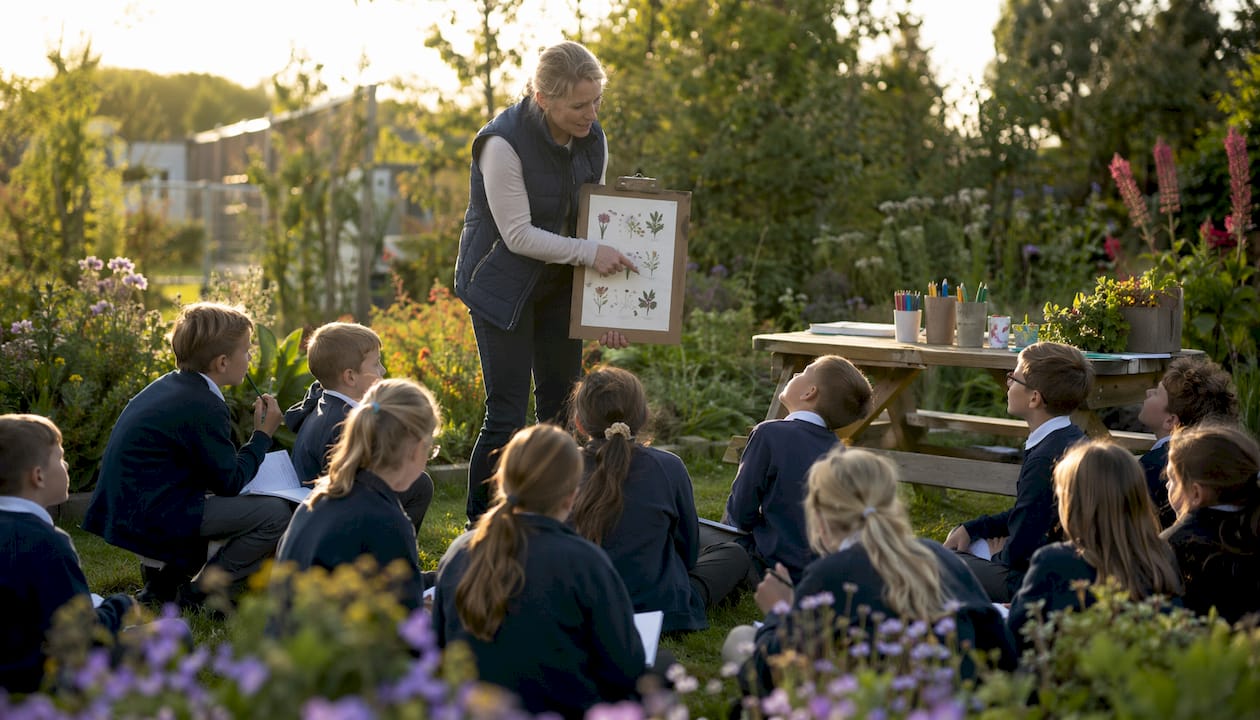
Outdoor classrooms are designed outdoor learning environments that extend education beyond indoor settings. They provide academic, developmental, and wellbeing benefits, supported by research linking nature exposure to improved grades and executive function. Schools must embed outdoor learning into their systems, supported by leadership, infrastructure, and professional development, to ensure sustainable long-term use.
Outdoor classrooms are defined as purposefully designed outdoor learning environments that extend formal education beyond the four walls of a traditional classroom. The role of outdoor classrooms goes well beyond fresh air and exercise. Longitudinal research from the SCAMP cohort study found that woodland exposure mediates between 12.5% and 25.1% of higher GCSE grades in adolescents, with improvements in executive function driving that link. The Education Endowment Foundation and the Department for Education both recognise outdoor learning as a credible approach to raising attainment and supporting pupil wellbeing. For educators and school administrators, the evidence is no longer tentative.
What are the educational and developmental benefits of outdoor classrooms?
Outdoor classrooms produce measurable gains in academic achievement. Well-structured outdoor learning interventions have a positive impact on primary school attainment in maths and literacy, according to longitudinal analysis. That finding matters because it positions outdoor learning not as a reward or enrichment activity, but as a direct contributor to core subject performance.
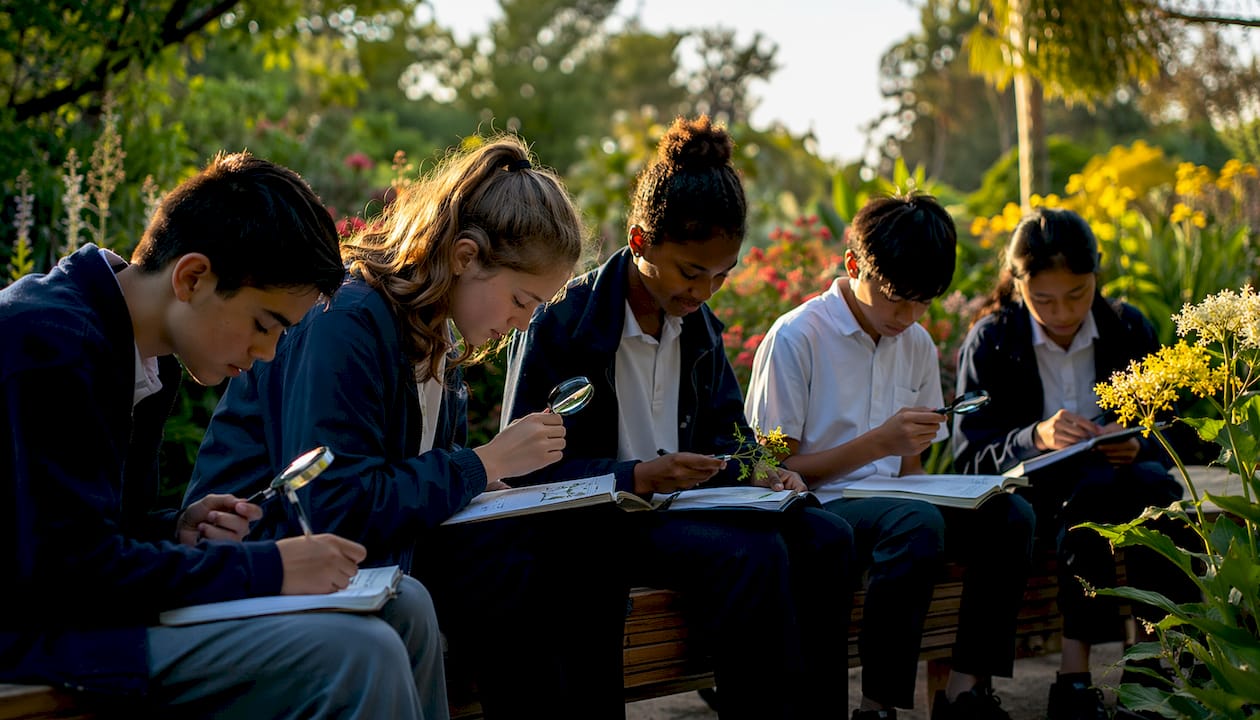
The cognitive benefits extend beyond grades. Exposure to natural environments strengthens problem-solving, creativity, and sustained attention. The SCAMP cohort study demonstrates that woodland exposure improves executive function, the cluster of mental skills that governs planning, focus, and self-regulation. Those are precisely the skills that underpin performance across every subject on the curriculum.
Physical development is another clear gain. Active outdoor learning builds gross motor skills and coordination in ways that seated, indoor instruction simply cannot replicate. Children who regularly use outdoor classrooms develop stronger spatial awareness and body confidence, which feeds back into classroom confidence too.
The social and emotional benefits are equally well documented:
Collaboration: Group outdoor tasks require pupils to negotiate, delegate, and communicate in real time.
Resilience: Managed outdoor risk-taking builds confidence through real-world physical challenges and judgement development.
Emotional regulation: Nature-based settings reduce cortisol levels and give pupils space to process emotions before returning to structured learning.
Inclusivity: Multi-sensory outdoor settings enhance learning for pupils with SEND and kinaesthetic learners by offering active, contextualised experiences beyond traditional classroom methods.
Each of these benefits compounds the others. A pupil who feels calmer, more confident, and more connected to peers is a pupil who learns more effectively.
How do outdoor classrooms support pupil wellbeing and mental health?
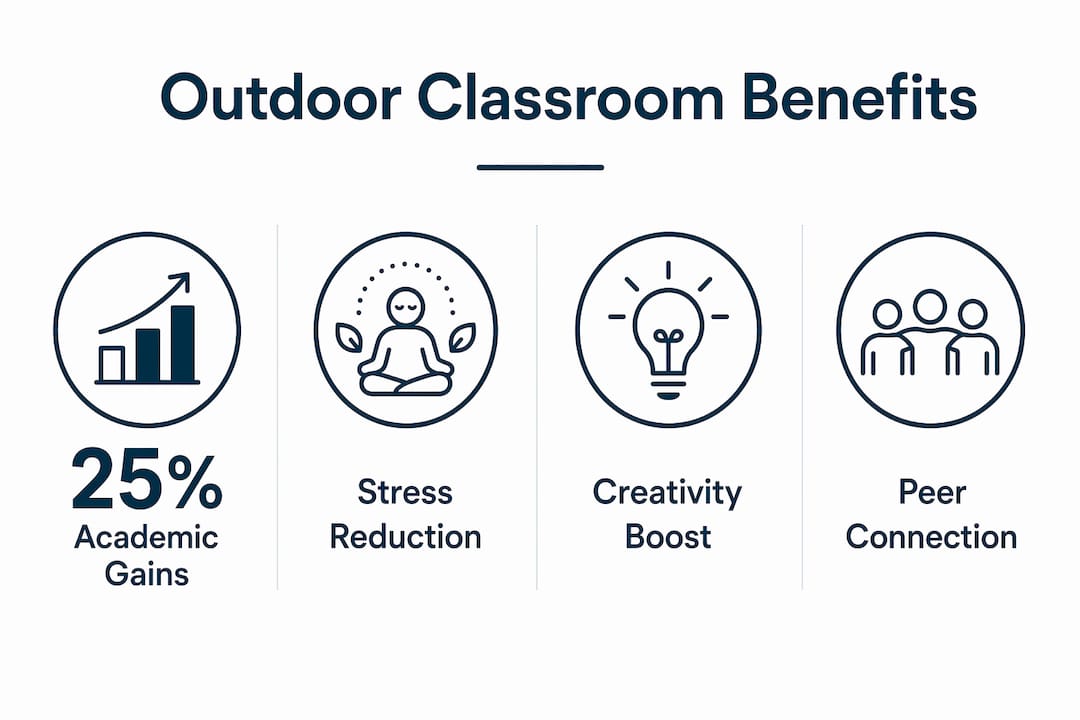
Nature functions as a therapeutic tool for pupils. Outdoor classrooms act as a natural antidote to sedentary school life, helping regulate the stress and anxiety that impede academic focus. That observation carries particular weight in a post-pandemic context, where rates of pupil anxiety and emotional dysregulation remain elevated across UK schools.
The biophilia hypothesis offers a useful framework here. Humans are biologically predisposed to respond positively to natural environments. For pupils, that means time outdoors is not simply pleasant. It actively restores attentional capacity, lowers physiological stress markers, and improves mood. Schools that treat outdoor time as expendable are working against that biology.
“Nature is a therapeutic tool helping regulate pupil stress and anxiety, supporting academic engagement post-pandemic. Outdoor exposure improves mood, reduces behavioural difficulties, and supports the development of emotional intelligence in pupils across all age groups.”
Self-determination theory adds another layer of explanation. Outdoor classrooms satisfy three core psychological needs: relatedness (connection with peers and the natural world), autonomy (freedom to explore and make choices), and competence (mastering real-world challenges). When all three are met, intrinsic motivation rises and behavioural difficulties fall.
Vulnerable pupils benefit most. Those with SEND, anxiety disorders, or social communication difficulties often find the sensory richness and reduced social pressure of outdoor settings more accessible than a traditional classroom. The outdoor environment removes some of the triggers that indoor settings create, giving these pupils a genuine route into learning.
What are the key enablers and challenges for integrating outdoor classrooms?
Successful outdoor learning does not happen by accident. Strong school leadership, access to suitable outdoor spaces, and flexible curriculum approaches are the primary enablers that teachers themselves identify. Leadership is the most critical of the three. Without a headteacher or senior leadership team that actively champions outdoor learning, it remains a peripheral activity dependent on individual teacher enthusiasm.
Formal legitimisation of outdoor learning by school systems is crucial for sustained adoption. Embedding outdoor learning in school development plans, curriculum maps, and Ofsted self-evaluation documents signals to staff, parents, and inspectors that it is a serious pedagogical choice, not an optional extra.
The challenges are real and worth naming directly:
Funding constraints: Outdoor spaces require investment in shelter, surfacing, and resources. Schools with tight budgets often deprioritise infrastructure that feels non-urgent.
Teacher confidence: Many teachers feel underprepared to deliver curriculum content outdoors. Without training, they default to indoor methods even when outside.
Risk assessment burden: Perceived liability around outdoor activities creates hesitation. Clear, proportionate risk assessment frameworks reduce this barrier significantly.
Curriculum pressure: High-stakes testing culture pushes teachers towards desk-based delivery. Outdoor learning must be framed as curriculum delivery, not time away from it.
Parental concerns: Some parents worry about safety or lost learning time. Schools that communicate the evidence base clearly tend to build parental support quickly.
Pro Tip: Start with one subject and one outdoor space. A science teacher who delivers a single unit outdoors each term builds confidence faster than a whole-school initiative launched without preparation.
Ongoing teacher professional development and leadership support matter more than physical space alone. Teachers report that confidence and curriculum flexibility are bigger enablers than simply having an outdoor area available. Investing in CPD before investing in infrastructure produces better long-term outcomes.
How can outdoor classrooms be integrated into everyday teaching?
The most effective approach treats outdoor learning as integration, not addition. The goal is to deliver existing curriculum content outdoors, not to create a separate outdoor curriculum that competes for timetable space. A geography lesson on erosion works better beside a stream than beside a whiteboard. A maths lesson on measurement gains meaning when pupils are measuring real trees and paths.
Practical subject examples include:
Science: Plant life cycles, soil composition, weather observation, and food chains all have direct outdoor analogues.
Maths: Geometry through shape-finding in nature, data collection through wildlife surveys, and estimation through distance and area tasks.
English: Descriptive writing inspired by direct sensory observation outdoors produces richer language than writing from a photograph.
PSHE: Outdoor group challenges build the social and emotional skills that PSHE lessons aim to teach in the abstract.
Design matters as much as pedagogy. An outdoor classroom that lacks shelter becomes unusable in wet weather, which is a significant constraint in the UK climate. All-weather outdoor shelter solutions allow schools to use outdoor spaces year-round rather than reserving them for dry summer days. Pergolas and canopy structures create defined learning zones that signal to pupils that the outdoor space is a serious place for work, not just play.
Safety and managed risk sit alongside each other, not in opposition. Pupils benefit from encountering natural hazards in a controlled way. The role of the teacher is to set clear boundaries, conduct proportionate risk assessments, and then step back enough to allow genuine exploration. Schools that pair school outdoor space ideas with clear safety protocols find that pupil engagement rises sharply. Giving pupils ownership of the outdoor space, through planting, designing, or maintaining it, builds the sense of belonging that makes outdoor learning stick.
Pro Tip: Involve pupils in designing the outdoor classroom layout. When pupils choose where the reading corner or science station goes, they use the space more purposefully and treat it with greater care.
Purpose-built storage for outdoor resources, combined with weather protection for playgrounds, removes the logistical friction that discourages teachers from going outside. Schools that also invest in school lockers and storage solutions for outdoor equipment find that teachers are far more likely to use outdoor spaces regularly when kit is accessible and secure.
Key takeaways
Outdoor classrooms deliver academic, developmental, and wellbeing benefits that are strongest when school leadership actively embeds them into curriculum planning, professional development, and physical infrastructure.
Point | Details |
Academic impact is measurable | Woodland exposure mediates 12.5%–25.1% of higher GCSE grades, linked to executive function gains. |
Wellbeing benefits are biological | Nature reduces cortisol, restores attention, and satisfies core psychological needs identified by self-determination theory. |
Leadership drives adoption | Strong headteacher support and formal policy embedding sustain outdoor learning beyond individual teacher enthusiasm. |
Teacher confidence is the real barrier | CPD and curriculum flexibility matter more than physical space when embedding outdoor learning long-term. |
Shelter enables year-round use | All-weather structures turn outdoor classrooms from seasonal spaces into permanent learning environments. |
Why outdoor classrooms deserve equal status, not supplementary status
Schools that treat outdoor classrooms as a bonus, something to use when the weather is fine and the timetable allows, miss the point entirely. The research is clear: long-term sustainability of outdoor classrooms depends on their recognition as equal to indoor classrooms within school systems. That is not a philosophical position. It is a practical one.
In my experience working with educational institutions across the UK, the schools that get the most from outdoor learning are not the ones with the most elaborate outdoor spaces. They are the ones where the headteacher talks about outdoor learning in the same breath as reading recovery or maths mastery. That legitimacy changes how teachers plan, how parents respond, and how pupils behave outdoors.
The biggest mistake I see is treating outdoor learning as a confidence problem for individual teachers. It is a systems problem. One enthusiastic teacher can run brilliant outdoor sessions for years, but when they leave, the practice often leaves with them. The schools that sustain it have written it into their curriculum maps, their CPD plans, and their Ofsted evidence folders. That is what makes it stick.
The future of outdoor learning in UK schools is genuinely promising. Policy interest is growing, the evidence base is strengthening, and the post-pandemic focus on pupil wellbeing has created a cultural opening that did not exist five years ago. The question for school leaders is not whether outdoor classrooms work. The question is whether your school has the structures in place to make them work consistently.
— Andrew
How Infinityawnings supports outdoor learning environments
Creating an outdoor classroom that works in all weathers requires more than enthusiasm. It requires the right physical infrastructure.

Infinityawnings designs and installs pergolas, canopies, and shelters specifically suited to educational settings across Yorkshire, Derbyshire, Nottinghamshire, and Lincolnshire. A well-designed pergola creates a defined, sheltered learning zone that pupils and teachers can use throughout the academic year, not just in june and july. Infinityawnings products are built to withstand the UK climate, with options for side panels, integrated lighting, and weatherproof fabrics that keep outdoor classrooms functional whatever the forecast. Explore school pergola solutions to see how the right structure transforms an underused outdoor area into a genuine teaching space.
FAQ
What is the role of outdoor classrooms in UK schools?
Outdoor classrooms extend formal education into natural settings, improving academic attainment, pupil wellbeing, and social development. Longitudinal research links regular outdoor learning to higher GCSE grades and stronger executive function in adolescents.
How do outdoor classrooms benefit pupils with SEND?
Multi-sensory outdoor environments offer active, contextualised experiences that reach diverse learning styles more effectively than traditional classroom methods. Reduced sensory triggers and greater autonomy make outdoor settings particularly accessible for pupils with SEND or anxiety.
What are the biggest barriers to outdoor classroom adoption?
Teacher confidence and curriculum pressure are the most commonly cited barriers, ahead of physical space or funding. Schools that invest in professional development and embed outdoor learning in formal curriculum planning overcome these barriers most effectively.
How can schools use outdoor classrooms in all weather?
Permanent shelter structures such as pergolas and canopies allow schools to use outdoor spaces year-round. All-weather infrastructure removes the logistical barrier that limits outdoor learning to dry days in the summer term.
Does outdoor learning improve GCSE results?
Yes. The SCAMP cohort longitudinal study found that woodland exposure mediates between 12.5% and 25.1% of higher GCSE grades, with improvements in executive function identified as the key mechanism linking nature exposure to academic achievement.
Recommended
Comments