
Outdoor comfort improvement guide for homeowners
- Andrew Crookes

- Jun 24
- 8 min read
TL;DR:
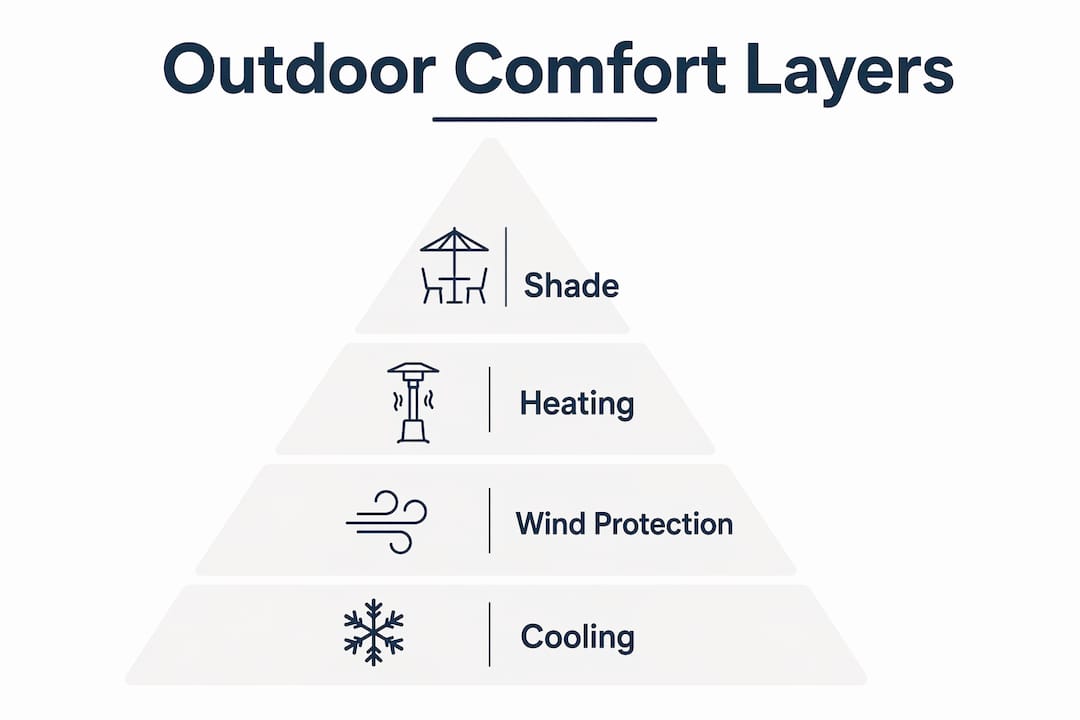
Outdoor comfort can be improved by layering shade, heating, and wind protection to extend usability throughout the year.
Louvered pergolas, retractable awnings, and infrared heaters are key options for flexible shading and heating in UK gardens.
Outdoor comfort improvement is the practice of combining shade structures, heating, and wind protection to make external spaces usable across more of the year. The right mix of solutions, from retractable awnings and louvered pergolas to infrared heaters and outdoor curtains, can transform a neglected patio into a genuinely liveable extension of your home. This guide covers the essential shading and shelter options you need, alongside heating and cooling strategies suited to the UK’s unpredictable climate. Whether you have a compact courtyard in Yorkshire or a sprawling garden in Lincolnshire, the principles are the same: layer your solutions and build up gradually.
What are the best shading and shelter options for outdoor comfort?
Shading is the single most impactful change you can make to an outdoor space. It reduces radiant heat, protects furniture, and makes sitting outside bearable on bright summer days. The three main categories are awnings, shade sails, and pergolas, and each suits a different situation.
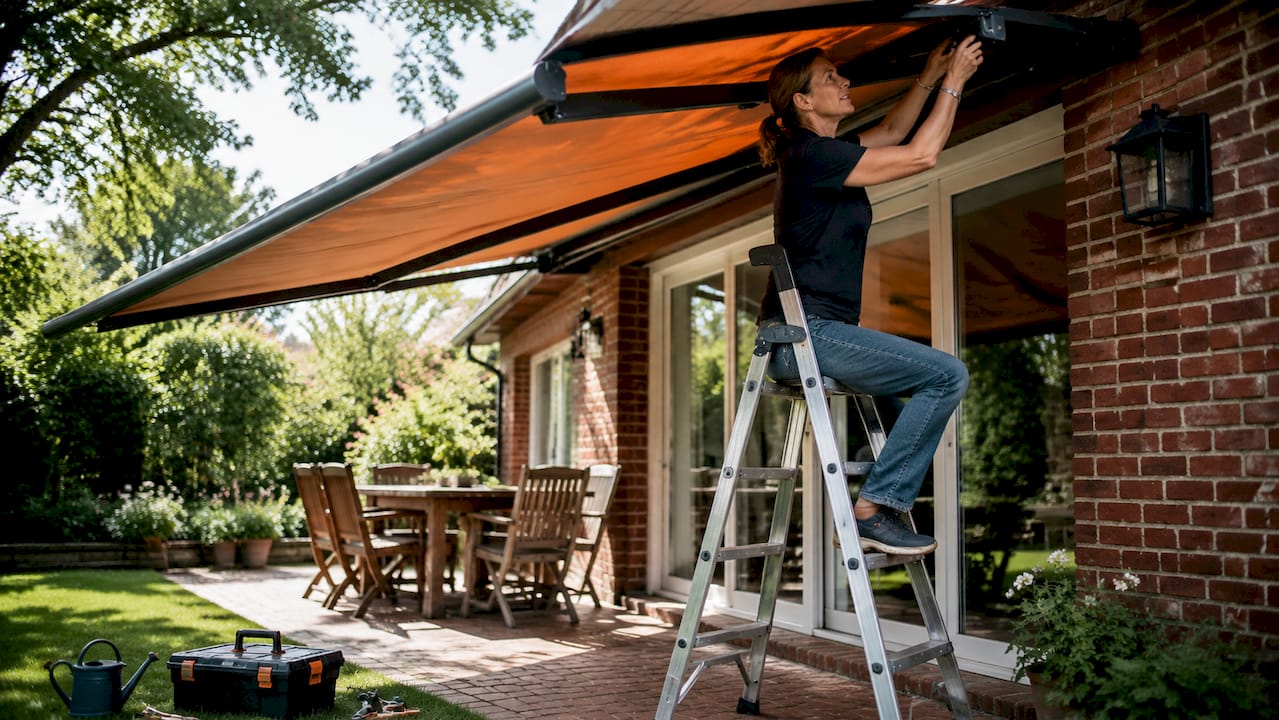
Awnings attach directly to the house wall and extend outward over a patio or decking area. Retractable models from brands like Weinor and Llaza give you full control: pull them out on sunny afternoons and retract them before a storm. Shade sails are tensioned fabric panels fixed between anchor points. They are cheaper to install but offer less precise coverage and no weather protection from rain. Louvered pergolas are the most capable option. Adjustable louvered pergolas give precise control over shade and weather protection, enabling longer outdoor usability across spring, summer, and autumn.
Comparing shading structures at a glance
Structure | Best for | Weather protection | Adjustability |
Retractable awning | Patios, terraces | Rain and sun | High |
Shade sail | Budget installs | Sun only | Low |
Louvered pergola | Year-round use | Rain, sun, and wind | High |
Fixed veranda | Permanent shelter | Rain and sun | None |
Material choice matters as much as structure type. For the UK’s wet and variable climate, look for solution-dyed acrylic fabrics. Outdoor cushions and fabrics made with solution-dyed acrylic resist fading and mildew, which means your investment lasts far longer than standard polyester alternatives. Brands such as Sunbrella produce fabrics specifically engineered for this purpose.
Choose UV-resistant, fade-proof fabric rated for at least 50+ UPF protection.
Check frame materials: powder-coated aluminium outlasts timber in wet climates.
Confirm wind ratings before purchasing, particularly for exposed gardens.
Consider motorised operation for ease of use and automatic wind-sensor retraction.
Pro Tip: Ask your installer for a fabric swatch and leave it in direct sunlight for a week before committing. Cheap fabrics show colour shift within days; quality solution-dyed acrylic does not.
For more ideas on shaded dining areas, the principles above apply whether you are covering a small bistro table or a full outdoor kitchen.
How can heating solutions extend outdoor living seasons?
The UK outdoor season runs naturally from late april through september. The right heating solution pushes that window to ten or eleven months. The choice of heater type makes a significant difference to both comfort and running costs.
Infrared heaters warm people and surfaces directly and are more effective for outdoor use than convection heaters, being less affected by wind. Convection heaters warm the air around them, which is largely pointless outdoors because that warm air disperses immediately. Infrared heaters, by contrast, work like sunlight: the warmth reaches you regardless of a breeze.
Choosing the right heat source
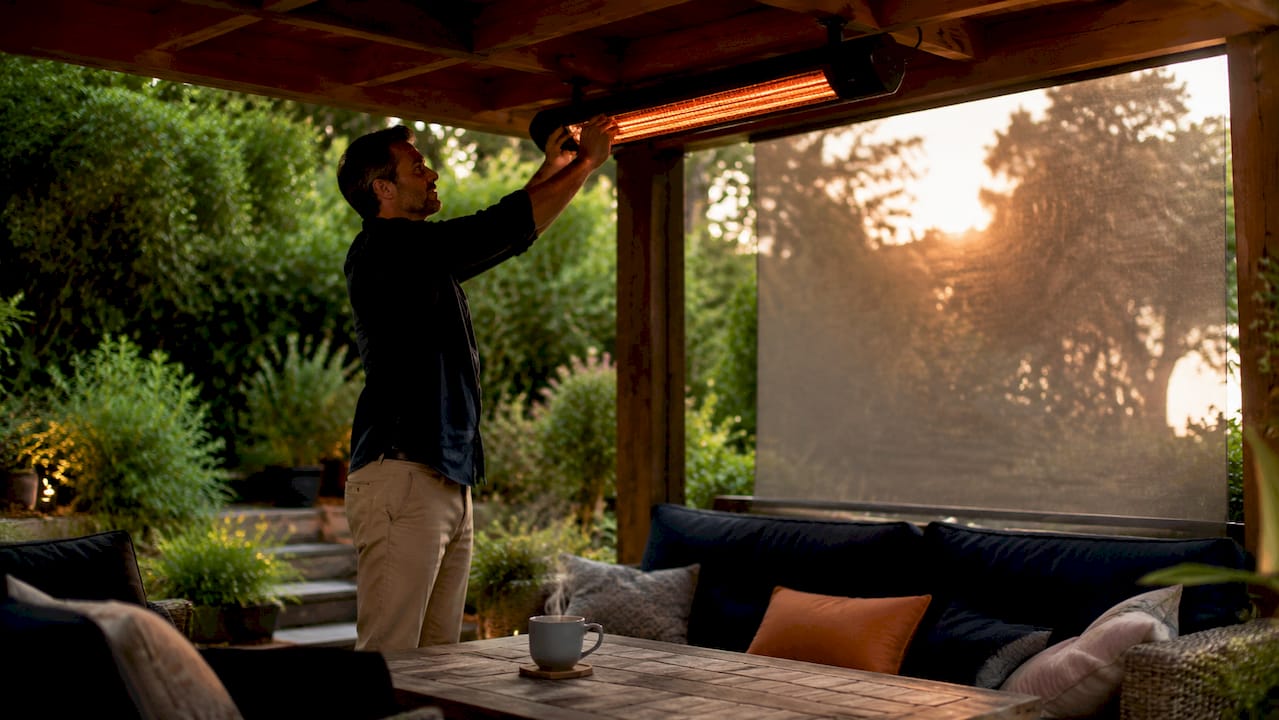
Wall-mounted infrared panels: ideal for covered patios and verandas; position them overhead and angled slightly downward for even coverage.
Freestanding electric heaters: flexible placement, no installation required, but need a weatherproof outdoor socket.
Gas patio heaters: high heat output, but running costs are higher and they require LPG cylinder management.
Fire pits: create atmosphere and warmth, but output is inconsistent and they need clear overhead space.
Strategic placement matters as much as heater type. Mount infrared units at a height of around 2.1–2.4 metres, angled at roughly 30–45 degrees toward the seating area. This covers the maximum number of people without wasting energy on empty space. For more detail on outdoor heating options suited to UK conditions, the principles of placement and coverage apply across all heater types.
Wind protection amplifies the effect of any heater significantly. Layering shade, heat, and wind screening is the key to multi-season outdoor comfort without structural intrusion or high energy use. A pergola with side curtains and an overhead infrared heater creates a microclimate that stays comfortable well into november.
Pro Tip: Combine your heater with a wind screen or outdoor curtain on the prevailing wind side. You will feel the difference immediately, and your heater will use noticeably less energy.
Which cooling techniques work best during warmer months?
Shade is the foundation of outdoor cooling, but it is not the whole picture. On humid summer days, shade alone reduces radiant heat but does not move air. Mechanical and natural cooling methods work alongside shade to keep temperatures genuinely comfortable.
Ceiling fans and misting systems provide effective cooling by increasing air movement and evaporative cooling respectively. A ceiling fan mounted inside a pergola or veranda creates a consistent breeze that makes 28°C feel like 22°C. Misting systems spray a fine water vapour that evaporates instantly, dropping the immediate air temperature by several degrees. Both are low-cost to run and easy to retrofit.
Vegetation is the most underrated cooling tool available to homeowners. Combining trees and lawns significantly reduces both air and surface temperatures, making it the most effective natural cooling combination. A mature tree positioned to shade a patio from the west and south provides passive cooling with zero running costs. Climbing plants on a pergola or trellis add insulation and reduce the heat absorbed by hard surfaces nearby.
Surface materials also affect temperature. High reflectivity paving reduces surface temperature but can increase radiant heat bouncing upward. Optimal tree placement helps balance these effects. Light-coloured porcelain or limestone paving reflects sunlight rather than absorbing it, but pair it with overhead shade to prevent glare.
Install a ceiling fan rated for outdoor or damp locations inside any covered structure.
Position misting lines along the perimeter of a pergola or awning frame.
Plant deciduous trees on the south and west sides to block summer sun while allowing winter light.
Avoid large areas of dark tarmac or black rubber decking adjacent to seating zones.
Pro Tip: Combine overhead shade with a ceiling fan and a misting line along one edge. The fan distributes the cooled mist air across the whole seating area rather than just the perimeter.
How do you protect against wind to maintain year-round comfort?
Wind is the most overlooked factor in outdoor comfort. A temperature of 15°C feels pleasant in still air but genuinely cold in a 20 mph breeze. Effective wind management does not mean sealing your garden off completely. It means reducing wind speed at seated height while keeping the space feeling open.
Outdoor curtains made from solution-dyed acrylic resist UV and dry quickly, offering durable wind protection without looking institutional. They hang from pergola beams or fixed rails and can be tied back when not needed. This gives you full flexibility: open the space on calm days and close it down when the wind picks up.
For a more permanent solution, architectural options offer better performance. Louvered privacy screens and retractable glass wind walls balance wind protection with airflow and openness for outdoor areas. Glass panels in particular maintain sightlines and natural light while cutting wind speed dramatically at ground level.
Use curtains on the two or three sides most exposed to prevailing winds, leaving one side open.
Fix curtain tracks to pergola beams rather than walls to avoid drilling into brickwork.
Choose louvered screens over solid panels where airflow matters, such as near a barbecue.
Glass wind walls suit contemporary gardens and work particularly well on elevated decks or roof terraces.
Balancing protection with openness is the key design principle. A fully enclosed space stops feeling like an outdoor area. Aim to reduce wind speed rather than eliminate it entirely, and your space will feel sheltered without feeling claustrophobic.
Key takeaways
Layering shade, heat, and wind protection is the most effective approach to outdoor comfort improvement, delivering year-round usability without major structural work.
Point | Details |
Shade structures first | Louvered pergolas and retractable awnings give the most flexible, year-round coverage. |
Choose infrared heating | Infrared heaters outperform convection models outdoors because wind does not disperse their warmth. |
Add natural cooling | Trees and lawns reduce air and surface temperatures more effectively than hard surfaces alone. |
Wind protection multiplies comfort | Curtains or glass screens on the windward side make heating far more effective and extend usable months. |
Build in phases | Start with shade, add heating, then address wind and cooling as budget allows. |
What I have learned from 15 years of outdoor shading projects
The biggest mistake homeowners make is treating outdoor comfort as a single purchase. They buy a patio heater, use it twice, and conclude that outdoor living in the UK is not worth the effort. The real problem is that one product cannot compensate for the absence of the others.
The most comfortable outdoor spaces I have seen share one characteristic: they were built in layers. A pergola went in first. Then curtains on the north and east sides. Then an infrared heater overhead. Then a ceiling fan for july and august. Each addition cost a fraction of what a full renovation would, and the cumulative effect was dramatic.
I also think homeowners underestimate the value of quality materials. A cheap shade sail that fades and sags within two seasons is not a saving. A Weinor or Tarasola awning with a solution-dyed acrylic canopy will still look good in ten years. The upfront cost is higher, but the cost per year of use is lower.
My practical advice for UK gardens specifically: start with the west and south sides. That is where your afternoon and evening sun comes from, and it is also where the prevailing wind tends to arrive. Get those two sides right and you will have solved 80% of your comfort problems before you spend a penny on heating.
— Andrew
Infinityawnings pergolas and shading solutions for your garden
Infinityawnings has supplied and installed shading structures across Yorkshire, Derbyshire, Nottinghamshire, and Lincolnshire for over 15 years. The product range includes retractable awnings from Weinor and Llaza, verandas, and adjustable louvered pergolas built for the UK climate.
The pergola range includes models with motorised louvered roofs, integrated LED lighting, and optional side screens, giving you a structure that adapts from a sunny june afternoon to a cool october evening. Every installation comes with a free consultation and a tailored quote. If you are ready to extend your outdoor season, the pergola product page is the right place to start.
FAQ
What is the most effective shading structure for a UK garden?
A louvered pergola offers the most flexibility for UK conditions, providing adjustable shade and rain protection across multiple seasons. Retractable awnings from brands like Weinor are a strong alternative for patios directly attached to the house.
Are infrared heaters worth it for outdoor use?
Infrared heaters are the best choice for outdoor spaces because they warm people and surfaces directly rather than heating the air, making them effective even in breezy conditions.
How do I cool an outdoor space without air conditioning?
Ceiling fans, misting systems, and deciduous trees are the most practical cooling options. Research confirms that combining trees with lawn surfaces reduces both air and surface temperatures more effectively than hard landscaping alone.
What materials last longest for outdoor curtains and fabrics?
Solution-dyed acrylic fabrics, such as those used in Sunbrella products, resist UV degradation, fading, and mildew. They are the most durable choice for outdoor curtains, awning canopies, and cushion covers in the UK climate.
Do I need planning permission for a pergola in the UK?
Most pergolas fall within permitted development rights for residential properties, but structures over a certain size or those attached to listed buildings may require planning permission. Always check with your local authority before installation.
Recommended
Comments