
Outdoor shading for food trucks: guide for UK property owners
- Andrew Crookes

- 7 hours ago
- 9 min read
TL;DR:
Permanent shading solutions like retractable awnings and louvred pergolas provide reliable weather protection and must comply with UK safety regulations.
Operators need documented risk assessments, structural calculations, and wind management measures to remain insurer and law compliant.
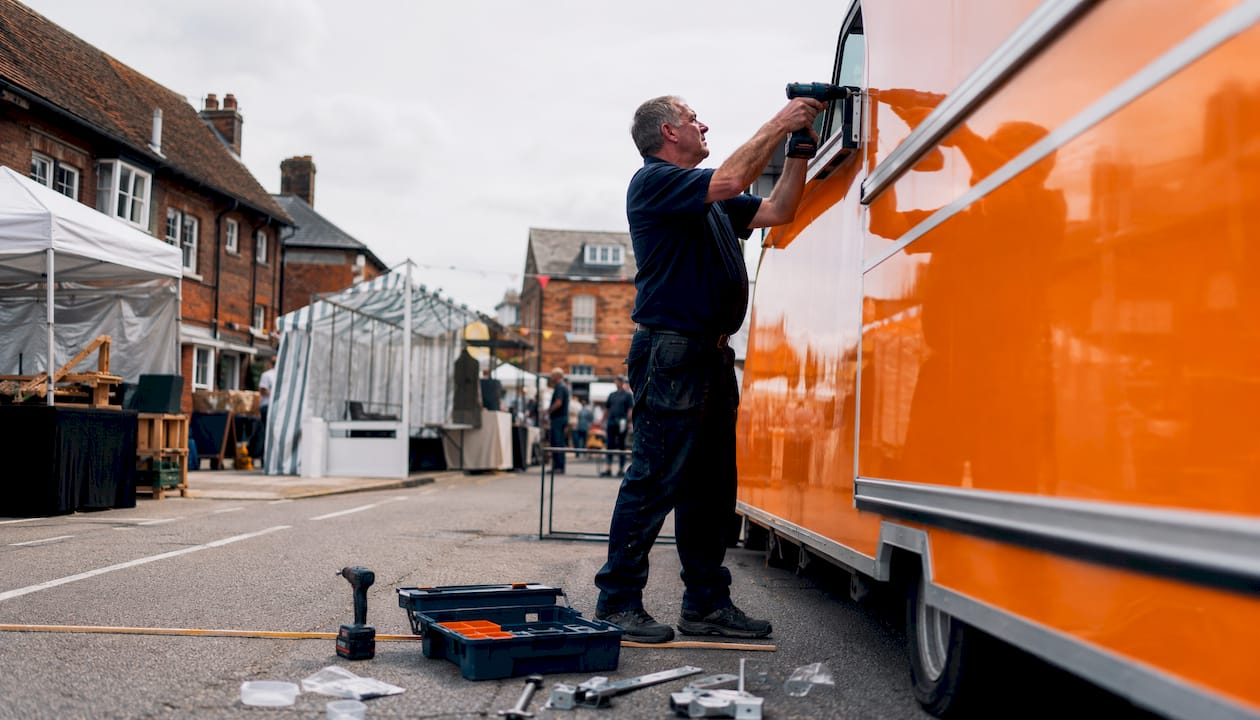
Permanently installed retractable awnings and louvred pergolas are the strongest shading solutions for food trucks in the UK. They deliver genuine weather protection, carry meaningful wind ratings, and can be tailored to almost any footprint. Cantilever canopies and modular shelters work well where wall fixings are not possible or where the trading pitch changes seasonally. Before committing to any system, UK Hospitality confirms that managing outdoor spaces is part of the legal duty of care requiring documented risk assessments and method statements. The Business and Planning Act 2020 draws a clear line between removable furniture covered by a pavement licence and fixed installations that typically need planning permission. Arrange a site survey before ordering anything.
Recommended systems at a glance:
Retractable awnings (motorised, wall-mounted): best all-round for mobile and semi-fixed pitches
Louvred pergolas: best for permanent, fixed trading areas with year-round use
Cantilever canopies: good where wall fixings are unavailable or the footprint is irregular
Modular shelters: suited to temporary or seasonal setups requiring easy demounting
Table of Contents
What are the best permanent shading options for food trucks?
Dimension | Retractable awning | Louvred pergola | Cantilever canopy | Modular shelter |
Best for | Mobile or semi-fixed pitch | Fixed trading area | Irregular footprint | Seasonal/temporary use |
Weather protection | Rain and sun; limited side wind | Rain, sun, side wind | Rain and sun | Rain and sun |
Wind rating | Typically Beaufort 5–6 with sensor | Beaufort 6 with louvres closed | Beaufort 5–6 | Beaufort 4–5 |
Installation complexity | Wall-mount; low groundwork | Free-standing foundations required | Ground anchors or footings | Minimal groundwork |
Mobility/flexibility | Fully retractable | Fixed; louvres adjustable | Semi-fixed | Demountable |
Maintenance | Annual service; fabric care | Annual service; louvre lubrication | Annual check; fabric care | Seasonal storage |
Extras available | LED, heaters, wind sensors | LED, heaters, sensors, glass sides | LED, heaters | LED, basic heaters |
When choosing between these systems, the key trade-off is between flexibility and structural robustness. A retractable awning retracts in high winds; a louvred pergola stays put and closes its louvres instead.
Retractable awnings suit operators who move pitches or need to comply with a pavement licence area
Louvred pergolas suit fixed trading areas where year-round cover and a premium appearance matter
Cantilever canopies work where a wall is not available for fixing
Modular shelters are the right call when planning permission for a permanent structure is not yet secured
Pro Tip: Always specify electric operation with an integrated wind sensor for any motorised awning. The sensor triggers automatic retraction before wind speeds reach the structure’s rated limit, removing the risk of human error during a busy service.
Selecting the right awning fabric matters as much as the frame: solution-dyed acrylic resists UV fading and mould far better than polyester, which is worth knowing before you specify.

What UK safety and legal duties apply to food-truck shading?
UK Hospitality guidance is unambiguous: outdoor shading at a food outlet is a workplace, and the operator carries a duty of care to staff and customers. Written risk assessments and method statements (RAMS) are not optional paperwork. Insurers commonly require documented RAMS and structural calculations to maintain business policy coverage.
The planning distinction matters enormously in practice. Under the Business and Planning Act 2020, a pavement licence covers only removable furniture. A fixed pergola or heavy-duty canopy sits outside that scope and usually needs formal planning permission, particularly in conservation areas. Check with your local authority before ordering.
Wind is the most underestimated hazard. Basildon Borough Council’s guidance recommends purchasing an anemometer to monitor local wind speeds and demounting structures before limits are reached. That limit must be recorded in your workplace risk assessment and communicated to staff.
Additional compliance points:
Electrical equipment: all outdoor electrical fittings must carry an appropriate IP rating for wet conditions; use a qualified NICEIC-accredited electrician
LPG and gas heaters: carry out a full risk assessment before installing; heaters must conform to relevant national standards and be sited away from flammable materials
Fire safety: follow Home Office fire safety guidance, as recommended in the MUTA best-practice guide; keep fire exits clear at all times
Street trading: you may need a street trading licence from your local council in addition to any planning consent
Pro Tip: Keep a printed copy of your RAMS, structural calculations and wind-limit record on site every trading day. Enforcement officers and insurers can ask for them without notice.
Installation checklist for permanent food-truck shading
A thorough site survey prevents the majority of installation problems. Work through these points before any fixings go in.
Survey and design:
Measure the full trading footprint including customer queuing and flow routes
Confirm wall or ground fixing points and assess their structural adequacy
Check drainage falls so water does not pool under the canopy
Identify nearby gas and electrical runs to avoid during groundwork
Confirm pedestrian clearances; Manchester’s pavement licence guidance recommends a minimum unobstructed footway of 2 metres
Documentation to obtain before installation starts:
Written RAMS from the installer
Site survey report and structural calculations
Proof of installer public liability insurance
Manufacturer warranties for all supplied components
Planning permission or written confirmation it is not required
Foundations and fixings:
Free-standing pergolas and cantilever canopies may need piled or reinforced footings depending on ground conditions and wind exposure
Never add DIY sides to a structure not designed for them; Basildon’s guidance confirms this significantly compromises stability
Operational items from day one:
Guy ropes and anchor weights highlighted and positioned to minimise trip hazards, with checks recorded daily
Adequate lighting for trading after dark
Non-slip surfacing under and around the shaded area
How do you choose a compliant installer for permanent shading?
The core answer: only appoint an installer who provides a full site survey, written RAMS, structural calculations and evidence of public liability insurance before work begins. Everything else follows from that.
Checklist to use at quote stage:
Does the installer offer a physical site visit before quoting?
Can they supply written RAMS and structural calculations as standard?
Are they authorised to install the brands you want (Weinor, Llaza, Selt, Tarasola, Morvelle)?
Do they offer wind sensors and motorised operation?
What warranty period applies to the frame, fabric and motor?
Do they offer a maintenance contract?
Red flags to walk away from:
Verbal assurances only, with no written documentation
No structural calculations for a fixed or free-standing installation
Pressure to skip planning checks
Unclear or absent warranty terms
No public liability insurance
Ask for sample RAMS, references or case studies from comparable commercial projects. Confirm manufacturer-authorised installer status directly with the brand where possible. A reputable installer working with retractable awning systems will have no hesitation providing this evidence.
What drives costs and timelines for food-truck shading?
Cost varies considerably depending on system type, size and site conditions. The main drivers:
System type: a motorised retractable awning costs less than a louvred pergola with glass sides
Size: larger spans require heavier frames and more substantial foundations
Fabric and materials: solution-dyed acrylic costs more than polyester but lasts significantly longer
Foundations: piled footings add cost and time where ground conditions demand them
Electrical work: motors, sensors, LED lighting and heaters all add to the electrical specification
Planning permission: fees and the time to obtain consent vary by local authority
A typical project timeline runs: site survey (1–2 days) → design and specification (1–2 weeks) → planning application if required (8–13 weeks) → manufacture (2–6 weeks) → installation (1–5 days) → commissioning and handover (1 day).
Ways to control costs without cutting safety corners: choose standard projection sizes, specify off-the-shelf fabric colours, and phase the installation (structure first, heaters and lighting in a second phase).
How do you maintain food-truck shading and manage wind safely?
Maintenance checklist:
Clean fabric with a soft brush and mild detergent every 4–6 weeks during trading season
Lubricate moving parts (hinges, louvre pivots, cassette arms) annually
Book an annual service with an authorised technician before peak trading season
Inspect all fixings after any period of adverse weather
Warranty items worth checking in a service contract: motor warranty period, fabric fade and stain guarantees, and call-out response times for urgent repairs.
Wind management is an operational discipline, not just a technical one. Set the wind-speed limit for your structure in your risk assessment, use a wind sensor to trigger auto-retraction, and have a written demounting policy for when speeds exceed the rated limit. An anemometer gives you a local reading rather than relying on a forecast.
Pro Tip: Book your annual service in February or March, before the spring trading season begins. Faults found in January cost far less to fix than faults discovered on a busy Saturday in May.
For ongoing guidance on keeping systems in good condition, the advice on maintaining retractable awnings covers the key operational steps in detail.
How Infinityawnings supports food-truck operators
Infinityawnings has over 15 years of experience designing, supplying and installing permanent shading solutions for commercial clients across Yorkshire, Derbyshire, Nottinghamshire and Lincolnshire. The company is an authorised installer of Weinor, Llaza, Selt, Tarasola and Morvelle, covering the full range of systems a food-truck operator is likely to need.
Every project includes:
A full physical site survey and written RAMS as standard
Structural calculations provided before installation
Public liability insurance throughout the project
Manufacturer warranties on frames, fabrics and motors
Options for LED lighting, infrared heaters, wind sensors and side screens
Maintenance contracts to keep trading uninterrupted
For food-truck operators specifically, Infinityawnings can design custom footprints that work around vehicle access, integrate branding colours into fabric choices, and automate retraction so the structure protects itself during service. The restaurant shading guide covers how covered trading areas translate directly into extended trading hours and increased capacity.
Key takeaways
Permanent, professionally installed shading is the most reliable and insurer-compliant solution for food trucks in the UK, with retractable awnings and louvred pergolas leading the options.
Point | Details |
Best system choices | Retractable awnings and louvred pergolas offer the strongest balance of weather protection, wind rating and flexibility. |
Planning and licensing | Fixed installations fall outside pavement licence scope and usually require planning permission under the Business and Planning Act 2020. |
RAMS are mandatory | UK Hospitality confirms documented risk assessments and method statements are a legal duty of care; insurers require them too. |
Wind management | Record your structure’s wind-speed limit in your risk assessment and use an anemometer or auto-retract sensor to monitor it daily. |
Infinityawnings | Infinityawnings provides free site surveys, written RAMS, structural calculations and authorised installation of Weinor, Llaza, Selt, Tarasola and Morvelle across Yorkshire and surrounding counties. |
The compliance gap nobody talks about
Most food-truck operators focus on the shading system itself and treat the paperwork as an afterthought. That is the wrong order. The RAMS, structural calculations and wind-limit record are what protect you when something goes wrong, and they are what your insurer will ask for first. A structure that looks solid but has no documented wind rating is a liability, not an asset.
The reassuring part is that none of this is complicated when you use a reputable installer. Visible certificates, clear timelines, warranty documentation and a planned maintenance schedule are entirely normal. Any installer who cannot produce these things quickly is telling you something important.
One point worth making for food-truck operators in particular: the shading design should work with your customer flow and your branding, not against it. Fabric colour, projection depth and lighting placement all affect how customers experience the space. Getting that right from the start costs nothing extra and makes a genuine difference to how the pitch performs.
Get a free site survey and quote from Infinityawnings
Infinityawnings offers a free site survey for food-truck operators and commercial property owners across Yorkshire, Derbyshire, Nottinghamshire and Lincolnshire. Every quote includes a written specification, RAMS documentation and structural calculations as standard, with no obligation to proceed.
The team supplies and installs Weinor, Llaza, Selt, Tarasola and Morvelle systems, with options for motorised operation, wind sensors, LED lighting, infrared heaters and maintenance contracts. Whether you need a retractable awning for a mobile pitch or a louvred pergola for a permanent trading area, the process starts with a site visit to assess your footprint, fixings and planning position. Request your free survey today and get a written quote with full documentation included.
Useful sources and further reading
The following official sources underpin the safety, planning and compliance guidance in this article. Keep copies of any relevant guidance alongside your RAMS and structural calculations for insurer and enforcement reference.
UK Hospitality: outdoor health and safety guidance: covers duty of care, RAMS requirements, electrical safety, heater safety and structural stability for outdoor hospitality spaces
Business and Planning Act 2020: sets out the distinction between removable furniture (pavement licence) and fixed installations requiring planning permission
Basildon Borough Council: outdoor hospitality safety advice: practical guidance on wind limits, anemometers, daily checks and temporary structure stability
Preston Council: gazebos, marquees and temporary structures leaflet: anchoring, lighting, trip-hazard management and daily check requirements
MUTA best-practice guide 2026: fabric structures, fire safety, lighting and workplace transport segregation for temporary and permanent outdoor structures
GOV.UK: street trading licence: confirms when a street trading licence is required and how to apply through your local council
Recommended
Comments