
Solar protection benefits explained for UK homes and businesses
- Andrew Crookes

- 1 day ago
- 8 min read
TL;DR:
External shading with retractable awnings and pergolas can reduce internal temperatures by up to 6°C and lower energy costs in UK properties. Proper design, early integration, and automation enhance their effectiveness and usability, providing comfort and protection from UV rays. Site surveys and tailored recommendations are essential for selecting the best shading solutions for specific needs.
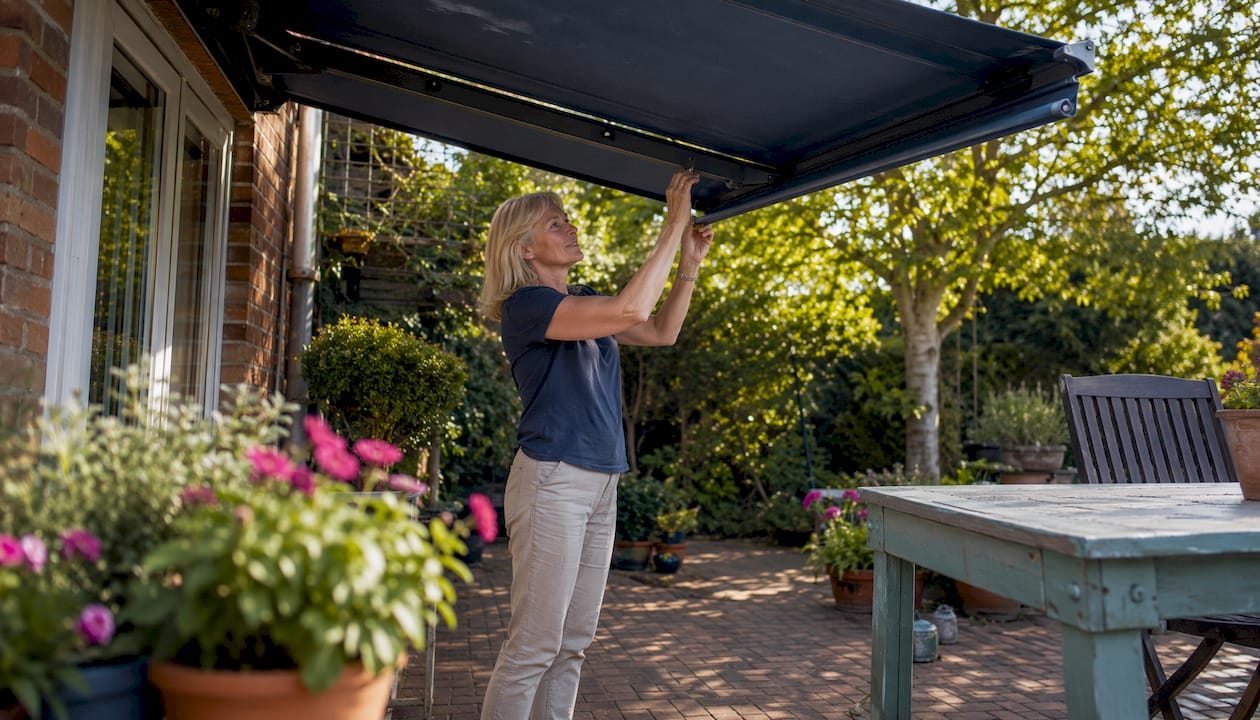
Yes, retractable awnings and pergolas deliver meaningful solar protection. Loughborough University field tests showed a shaded property stayed up to 6°C cooler than an identical unshaded house on hot test days. That is not a marginal gain. For a south-facing living room or a hospitality terrace that becomes unusable by midday in July, the difference is felt immediately.
Two things to take away now:
External shading cuts internal temperatures by up to 6°C and reduces peak cooling demand, protecting both comfort and energy bills.
The fastest next step is a site survey: orientation, glazing area, and use case all affect which product delivers the best outcome. Request a free quote to get a tailored recommendation.
Table of Contents
What are the real benefits of solar protection for UK properties?
How do retractable awnings and pergolas actually deliver those benefits?
Why integrating shading early in a project saves money downstream
How to choose the right solution and what to ask your installer
What does solar protection cost in the UK, and what is the payback?
A perspective on what actually matters in UK shading installations
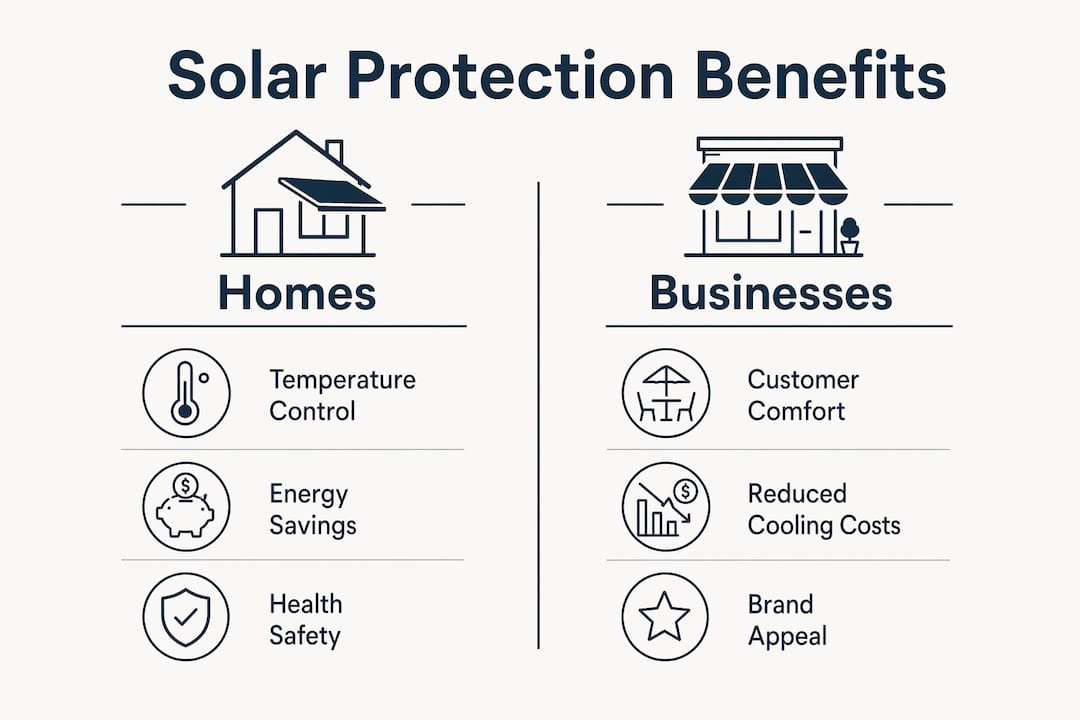
What are the real benefits of solar protection for UK properties?
Solar protection, in practical terms, means stopping solar energy before it passes through your glazing. Once sunlight enters through glass, it converts to heat that is difficult to shift. External shading intercepts that radiation at source, before it reaches the glass at all.
The measurable benefits stack up quickly. Internal temperature reductions of up to 6°C reduce overheating risk during heatwaves, which is increasingly relevant as UK summers intensify. BBSA guidance confirms that correctly specified and operated solar shading reduces energy consumption and can cut building running costs by up to 10% when installed equipment is used efficiently. That figure depends on orientation, glazing area, and how consistently the shading is deployed, so treat it as a ceiling rather than a guarantee.
Beyond temperature, UV blocking protects outdoor furniture, flooring, and fabrics from fading. Glare reduction extends the hours a space is genuinely usable, whether that is a home office with a south-facing window or a café terrace that would otherwise be blinding between noon and 3 PM. For hospitality businesses, those extra usable hours translate directly into covers served.
Pro Tip: Loughborough University recommends keeping windows closed during hot daytime hours and opening them at night when external shading is in use. Combining both habits amplifies the cooling effect significantly.
One practical health note: lower indoor temperatures during heatwaves reduce the risk of heat-related illness, particularly for older residents and young children. External shading is one of the lowest-cost, lowest-carbon interventions available for existing UK homes.
How do retractable awnings and pergolas actually deliver those benefits?
The core mechanism is straightforward. External shading stops shortwave solar radiation before it reaches glazing. Internal blinds and curtains absorb heat after it has already entered the room. LSBU research found external shading reduced internal temperature increases more effectively than internal shading in comparable tests.

What varies between products is how precisely you can control that shading. The table below maps key features to the benefits they deliver.
Feature | What it does for you |
High-UPF fabric (UPF 50+) | Blocks the majority of UV radiation; protects skin and prevents fabric fading |
Adjustable projection / pitch | Matches shading angle to sun position throughout the day |
Motorisation with sun sensor | Deploys automatically at a set lux level; removes the need to remember |
Wind sensor | Retracts the awning before wind loading causes damage |
Louvred pergola blades | Adjustable pitch lets you balance shade, ventilation, and winter light |
Waterproof roofing / canopy | Extends usable hours into rain; critical for hospitality and schools |
Side screens | Blocks low-angle morning and evening sun; adds wind shelter |
Motorisation is worth discussing honestly. Automated shading with well-specified sensors saves operational energy and reduces misuse, but LSBU lifecycle analysis notes the environmental payback depends on control strategy and product lifetime. A motor that runs the awning out every morning regardless of cloud cover is not saving energy. A sun-sensor-triggered system that responds to actual irradiance is. Specify the control logic, not just the motor.
Why integrating shading early in a project saves money downstream
The single most common mistake in shading projects is treating it as an afterthought. BBSA guidance advocates integrating shading early in design or retrofit so that daylight, glare control, and HVAC sizing can all be optimised together.
When shading is specified alongside glazing and ventilation, the knock-on savings are real. A well-shaded building needs less mechanical cooling capacity, which can reduce the size and cost of any air conditioning system. Cabling for motorised awnings is far cheaper to install during a build or renovation than to retrofit through finished walls. Aesthetic integration, mounting points, and structural fixings are all easier to plan before the brickwork is complete.
For a café or restaurant extending into an outdoor terrace, early planning also means the shading structure can be designed around the seating layout rather than squeezed around it afterwards. Architectural shading considered from the outset tends to look better and perform better.
How to choose the right solution and what to ask your installer
Start with three things: your site’s orientation, the primary use case, and whether you need weather protection or shade alone. A home patio used for leisure has different requirements from a school playground or a hotel terrace serving food.
Buyer checklist:
Coverage area and projection depth needed to shade the glazing at peak sun angles
Fabric UPF rating and fade resistance (look for UPF 50+ for maximum UV blocking)
Wind and waterproof ratings, particularly for exposed or coastal sites
Motorisation and sensor options (sun, wind, rain sensors each serve different needs)
Warranty length and what it covers (fabric, motor, frame separately)
Accessories: LED lighting, patio heaters, and side screens extend usability into evenings and cooler months
Questions to ask any installer:
Will you carry out a site survey before quoting?
What wind-load rating does the product carry, and how is it fixed to the building?
Which brands do you supply, and are you an authorised installer?
What is the maintenance schedule and what does it involve?
Can you provide references from similar local installations?
What does the warranty cover, and who handles claims?
Red flags: a quote with no site visit, vague warranty terms, no mention of wind loading or structural fixings, and no local references. Price alone is a poor guide. A cheaper awning installed without proper fixings is a liability in a Yorkshire gale.
What does solar protection cost in the UK, and what is the payback?
Costs vary considerably by size, fabric, and automation. The table below shows typical illustrative ranges for the UK market.
For a worked example: a homeowner with a south-facing conservatory spending roughly £400 per year running a portable air conditioning unit installs a large patio awning at £4,500. If the awning reduces cooling demand enough to cut that bill by half, the simple payback is around 22 years on energy savings alone. That is not the primary financial case. The real return comes from extended outdoor usability, property value, and for businesses, additional revenue from a covered terrace. Energy efficiency gains are a genuine benefit, but they work best as part of a broader case.
Expected lifespans vary: quality retractable awnings typically last 10–15 years with proper maintenance; louvred pergolas from premium brands can exceed 20 years. Fabric replacement is usually the first maintenance cost, typically at 7–10 years.
Key takeaways
External shading stops solar heat before it reaches glazing, cutting internal temperatures by up to 6°C and reducing energy costs when correctly specified and operated.
Point | Details |
Temperature reduction | External shading can cut internal temperatures by up to 6°C, reducing overheating risk and cooling demand. |
Energy cost savings | BBSA guidance indicates efficient use of shading can reduce building energy costs by up to 10%. |
UV and fabric protection | UPF 50+ fabrics block the majority of UV radiation, protecting people and preventing furniture fading. |
Integrate early | Specifying shading during design or renovation reduces HVAC costs and simplifies motorisation installation. |
Infinityawnings | Infinityawnings supplies and installs retractable awnings and pergolas from Weinor, Llaza, Selt, Tarasola, and Morvelle across Yorkshire, Derbyshire, Nottinghamshire, and Lincolnshire, with a free quote process to get started. |
A perspective on what actually matters in UK shading installations
The conversation around solar protection tends to focus on the headline temperature figure, and that 6°C reduction is genuinely significant. But in practice, the installations that perform best are not necessarily the ones with the highest-spec fabric or the most sensors. They are the ones where someone thought carefully about orientation, projection depth, and how the structure will actually be used day to day.
What gets underestimated is the behavioural element. A motorised awning with a sun sensor will outperform a manual one almost every time, not because the motor is magic, but because people forget to extend a manual awning before the room heats up. By the time you notice it is hot, the heat is already in. Automation removes that gap entirely.
The other thing worth saying plainly: pergolas and awnings are not interchangeable. An awning over a window or patio door directly reduces heat gain through glazing. A pergola shades the terrace but not the glass, unless it is positioned and sized to block the sun angle at the relevant time of day. For maximum energy efficiency, a retractable awning over glazing wins. For a permanent outdoor room that works in rain and wind, a louvred pergola is the better structure. Knowing which problem you are actually solving makes the choice straightforward.
How Infinityawnings can help you get this right
Infinityawnings designs, supplies, and installs retractable awnings, pergolas, verandas, and canopies for homes, restaurants, hotels, and schools across Yorkshire, Derbyshire, Nottinghamshire, and Lincolnshire. With over 15 years of experience and authorised partnerships with Weinor, Llaza, Selt, Tarasola, and Morvelle, the team brings both product knowledge and local installation experience to every project.
Every enquiry starts with a free site survey, so the recommendation you receive is based on your actual orientation, glazing, and use case, not a generic catalogue pick. Options include electric operation, LED lighting, patio heaters, weather sensors, and side screens, with warranty and maintenance support built in. Whether you are shading a home patio or fitting out a commercial terrace, the process is the same: survey, specification, installation, and ongoing support.
Explore pergola options or get a free quote to start the conversation.
Useful sources and further reading
The claims in this article draw on UK research and industry guidance. These sources are worth bookmarking if you want the technical detail or plan to discuss specification with an installer.
Loughborough University — external shading and heatwave resilience: The field-test research behind the 6°C temperature reduction finding, with practical household tips.
CIBSE Journal — external shading overheating research: Coverage of the Loughborough twin-house tests; useful for sharing with architects or building services engineers.
BBSA Guide to Low-Energy Shading: The industry standard reference for specification best practice, energy savings, and holistic integration guidance.
LSBU — solar shading products and overheating in UK buildings: Academic research on external vs internal shading effectiveness and motorisation lifecycle impacts.
Infinityawnings — shading and energy efficiency for UK homes: Practical overview of how external shading reduces energy use in UK residential properties.
Infinityawnings — UV protection and fabric selection guide: Detail on UPF ratings and fabric choices for outdoor furniture protection.
Recommended
Comments