
The role of heaters in awning systems explained

TL;DR:
Adding heaters transforms outdoor awnings from seasonal features into functional spaces usable year-round. Infrared electric heaters, with proper safety measures and professional installation, provide efficient, wind-resistant radiant warmth suitable for most residential and commercial settings. Correct clearance, weatherproofing, and maintenance are essential for safety, extending outdoor usability and increasing comfort while minimizing risks.
There is a common assumption that adding heat to an outdoor awning is either unsafe, ineffective, or simply not worth the effort. In practice, the opposite is true. The role of heaters in awning systems is to transform what would otherwise be a seasonal structure into a genuinely usable space for ten or even twelve months of the year. Whether you are a homeowner wanting to use your patio on a cold October evening, or a restaurant owner needing to seat guests outside in February, the right heating solution changes everything. This guide covers heater types, safety requirements, installation considerations, and the real-world benefits you can expect.
Table of Contents
Key takeaways
Point | Details |
IP rating matters enormously | Choose a minimum IP54 rating for semi-outdoor use; IP65 or above for exposed, rain-prone positions. |
Infrared leads for awning spaces | Infrared heaters outperform convection models in breezy, semi-open environments due to direct radiant heat. |
Clearance errors cause real hazards | Measuring clearance from the wrong reference point on radiant heaters is a leading cause of fire risk. |
Heaters extend seasonal usability | A well-heated awning space can comfortably extend outdoor use by three to four months per year. |
Professional installation is worth it | Wiring, sealing, and gas connections should be handled by qualified installers to meet safety standards. |
The role of heaters in awning systems
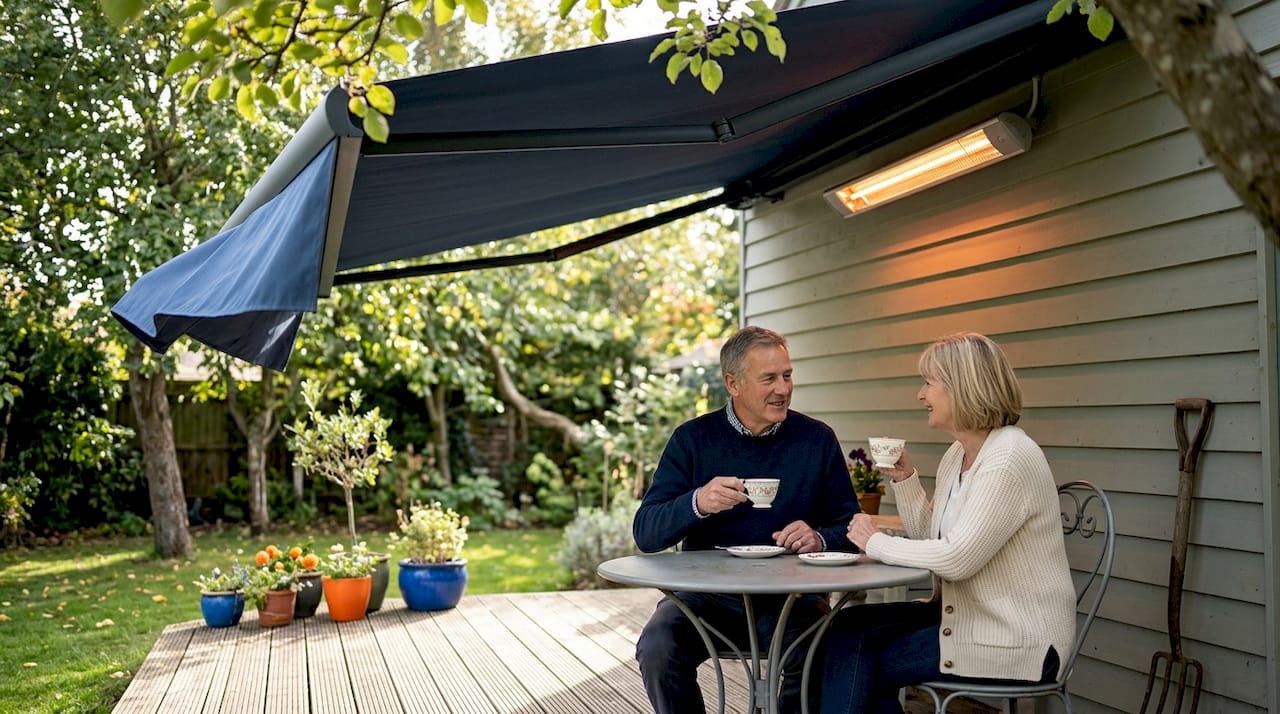
An awning without heating is fundamentally a fair-weather feature. Add the right heater, and you have a sheltered, warm environment that works through autumn, winter, and early spring. That shift in usability is significant, particularly for commercial spaces where outdoor capacity directly affects revenue.
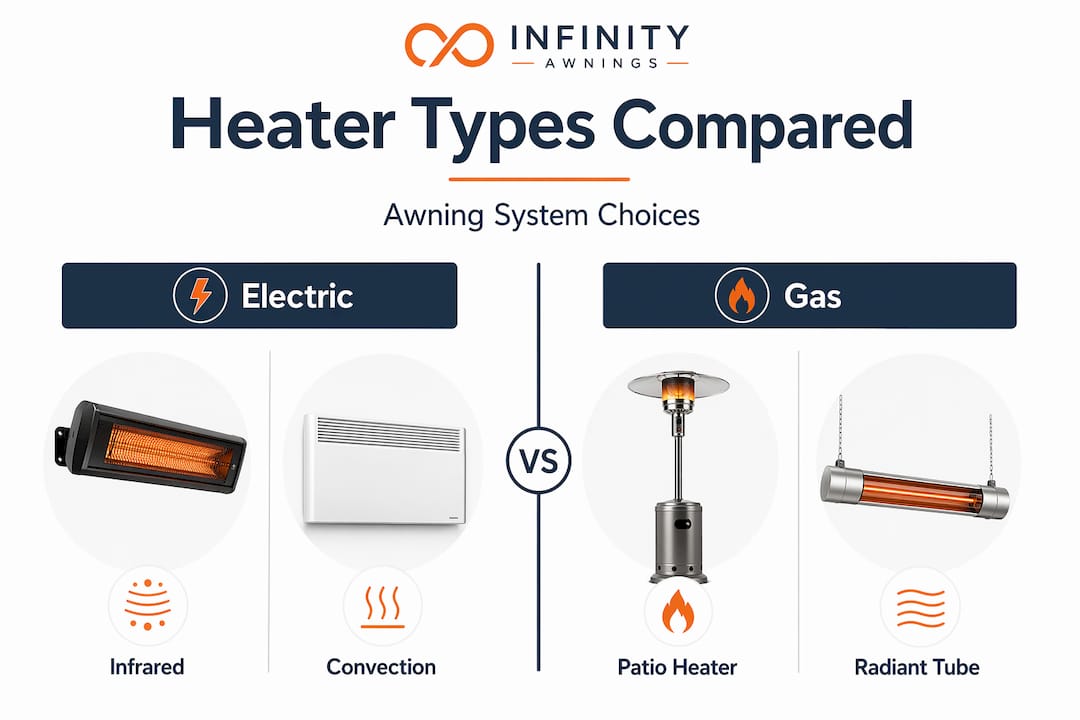
Heaters fitted beneath or within awning structures fall into four main categories: infrared (electric), gas, electric convection, and diesel. Each has a distinct role depending on the size of the space, the exposure level, and the available energy supply.
Infrared heaters
Infrared ceramic heaters are the preferred choice for most awning setups. They deliver radiant heat directly to people and surfaces rather than warming the air, which means wind and draughts have very little effect on their performance. For semi-outdoor spaces, this is a clear practical advantage. They are available in wall-mounted and ceiling-mounted configurations, they respond instantly, and modern models carry IP65 ratings with aluminium bodies and stainless steel grills designed for long outdoor service lives.
Gas heaters
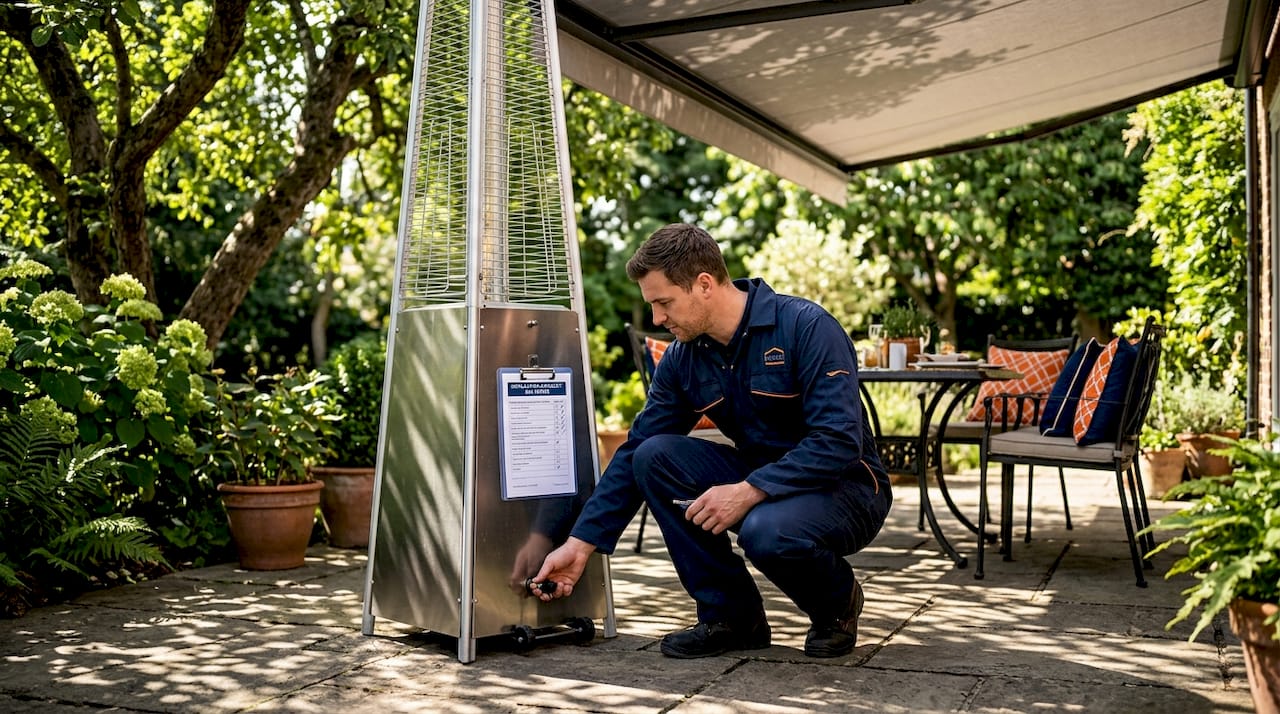
Gas heaters work well where electricity supply is limited or where very large heating outputs are needed. They generate significant warmth quickly. The trade-off is installation complexity: combustion air intake and exhaust venting both require careful planning. Gas combustion intake placement must keep the intake away from moisture, debris, and any exhaust outlets to prevent pressure imbalances and component damage. For a restaurant terrace or large commercial veranda, gas can be the right call. For a domestic patio awning, electric infrared is usually more practical.
Electric convection and diesel options
Standard electric convection heaters warm air rather than surfaces, which makes them less effective in open or draughty conditions. They are lower cost to purchase but less efficient in use outdoors. Diesel heaters are typically reserved for very large structures or mobile awning setups, such as those used at outdoor markets or events.
Here is a quick comparison to help you assess the options:
Heater type | Best suited for | Energy efficiency outdoors | IP rating availability |
Infrared (electric) | Domestic and commercial awnings | High (direct radiant heat) | IP54 to IP67 |
Gas radiant | Large commercial terraces | Medium (depends on setup) | Varies by model |
Electric convection | Enclosed or sheltered spaces | Low (loses heat to air) | IP44 to IP54 |
Diesel | Large or mobile structures | Low to medium | Limited |
The headline message is straightforward: for most patio awnings and pergola setups, infrared electric heaters offer the best balance of performance, safety, and installation simplicity.
Safety standards and installation requirements
Getting the safety side right is not optional. An incorrectly installed heater beneath a fabric awning or near timber structures is a genuine fire risk, and many problems stem from avoidable mistakes made during fitting.
IP ratings and weatherproofing
Every heater installed in a semi-outdoor position must carry at minimum an IP54 weatherproofing rating. IP54 offers protection against dust ingress and splashing water from any direction. If the position is regularly exposed to rain or the heater is mounted at the perimeter of the awning where it may get wet, an IP65 rating or above is the correct specification. IP65 protects against dust and low-pressure water jets, making it suitable for year-round outdoor use in the UK climate.
Clearance to combustibles
This is where many installations go wrong. Radiant tube heater clearances are not measured simply from the body of the heater. Manufacturers specify measurements from the reflector, from particular angles, and at varying distances depending on the mounting angle. Ignoring these specifics leads to paint degradation, melted plastics, and fire hazards. If your awning fabric, timber posts, or polycarbonate panels are too close, they will suffer. Always obtain the clearance chart specific to the heater model you are installing, not a generic estimate.
Pro Tip: When measuring clearances, use the reference point specified in the manufacturer’s documentation. This is almost always the reflector edge or tube face, not the outer casing. Getting this wrong by even a few centimetres can move you outside the safe zone.
Wiring and moisture sealing
Even heaters with high IP ratings have wiring entry points that are genuinely vulnerable. Wiring failures from moisture ingress are among the most common causes of outdoor heater faults. Sealed cable glands and waterproof junction boxes are non-negotiable. In coastal or particularly humid areas, connections should be checked at least annually. This is one of the strongest arguments for professional installation: a qualified electrician will seal and test these connections correctly from the start.
Key installation requirements to check before sign-off:
Heater carries the correct IP rating for its position
Clearances measured from the correct reference point and recorded
All wiring connections sealed with appropriate cable glands
Gas intake positioned away from exhaust vents and moisture sources
Mounting brackets rated for the heater weight and fixed into structural elements, not just the awning frame
Benefits of heating outdoor awning spaces
Once a heater is correctly installed, the practical gains are immediate and compound over time. Here is how heating solutions for awnings deliver value in practice:
Extended seasonal use. A heated awning space is genuinely usable from late February through to November in most parts of the UK. For homes in Yorkshire or Derbyshire where temperatures drop sharply in September, that is a significant addition to your outdoor living calendar.
Improved comfort for guests and customers. Restaurants, pubs, and hotels with year-round comfort in heated awnings can seat guests outside without asking them to wear coats. That directly affects customer satisfaction and dwell time.
Increased outdoor capacity for events. Whether it is a family gathering or a corporate hospitality evening, a warm, sheltered outdoor space accommodates more people without redirecting them indoors. For businesses, this means revenue from covers that would otherwise be lost on a cold evening.
Integration with lighting and design. Modern awning systems, including those available from Infinityawnings, combine LED lighting and heaters within a single, coherent installation. The result is an outdoor space that works visually and functionally after dark in any season.
Energy efficiency gains with modern heaters. Infrared heaters heat people directly, not the surrounding air, which means less energy is wasted in open or ventilated spaces. For businesses running outdoor heating for several hours per evening, this difference in running costs is meaningful.
Choosing and installing the right heater
The selection process starts with your specific awning. Measure the area you want to heat, consider how exposed it is, and think honestly about how often you will use it in cold or wet conditions.
Assessing your space
A compact domestic patio awning of around 12 to 15 square metres typically needs one or two 1,500W to 2,000W infrared heaters to maintain comfortable temperatures in autumn and spring. Larger commercial terraces may need multiple units arranged to cover heat zones without overlapping unnecessarily. Mounting height should sit between 1.8 and 2.2 metres above floor level for effective heat distribution. Adjustable brackets allow you to angle the output precisely across the area you use most.
Professional vs DIY installation
For electric infrared heaters running on standard circuits, a competent DIY installer can often manage the mounting and bracket work. However, the electrical connections should always be completed by a Part P registered electrician. Gas heater installation is not a DIY task under any circumstances, and any mistakes with combustion air intake carry serious safety consequences.
Pro Tip: Before committing to a heater model, check that the awning or pergola frame can structurally support the weight and the mounting bracket. Lightweight aluminium awning frames are not always designed to carry the load of a full-size wall heater.
Maintenance is straightforward but often skipped. Clean the reflector panels twice a year to maintain heat output. Check all wiring connections annually, particularly in coastal or humid locations. Inspect the mounting brackets for any signs of corrosion or loosening. Good awning maintenance practices extend to the heating components as much as the fabric and mechanism.
My honest take on heater choices for awnings
I have seen a lot of awning and pergola heating installations over the years, and the failures nearly always come down to two things: underestimated clearances and underrated IP specifications. People buy a heater that looks good in a showroom, fit it six inches below a timber beam, and wonder why there is scorching within a season. The clearance charts in manufacturer documentation are not conservative estimates. They are the minimum safe distances, and in many cases the 3D clearance safety zone is larger than people expect when you account for mounting angle.
My preference, without reservation, is infrared electric for semi-outdoor awning and pergola spaces. They are controllable, safe when correctly installed, and the running costs are predictable. Gas has its place in large commercial applications, but for a residential patio or a modest restaurant terrace, the added complexity of gas rarely justifies itself.
What I find works particularly well is combining a quality IP65 infrared heater with good LED lighting in a single installation. The ambience shifts entirely. Spaces that went unused after September suddenly become the most enjoyable part of the garden. Clients who have made that investment rarely regret it, and the ones who skipped it and went for a cheaper unrated heater often come back to us after the first wet winter.
Consult a professional for the installation. Not because the fitting itself is always complex, but because getting the wiring, sealing, and clearances right the first time protects the investment you have made in your outdoor space.
— Andrew
Transform your outdoor space with Infinityawnings
If you are ready to extend the usability of your outdoor space with a properly integrated heating solution, Infinityawnings has the products and expertise to make it happen.

Our garden pergola range is designed with heating and lighting integration in mind, built from premium-quality materials and available with professional installation across Yorkshire, Derbyshire, Nottinghamshire, and Lincolnshire. Whether you are upgrading a residential patio or outfitting a commercial terrace, we will help you choose the right structure and the right heating solution for your specific space. Get in touch for a free quote and let us show you what a properly heated outdoor structure can do for your property.
FAQ
What is the minimum IP rating for an awning heater?
Heaters installed in semi-outdoor awning positions require at least an IP54 rating. For positions regularly exposed to rain or high humidity, an IP65 rating or above is recommended for year-round reliability.
Are infrared heaters better than gas heaters for patio awnings?
For most domestic and mid-sized commercial awning setups, infrared electric heaters are the more practical choice. They deliver direct radiant heat unaffected by wind, require simpler installation, and carry predictable running costs.
How high should a heater be mounted under an awning?
Awning heaters should be mounted between 1.8 and 2.2 metres above floor level for effective heat coverage. Adjustable brackets allow you to fine-tune the angle and target specific zones within the space.
Can I install an awning heater myself?
Mounting and bracket work is manageable for a capable DIY installer, but all electrical connections must be completed by a qualified electrician. Gas heater installation requires a Gas Safe registered engineer and is not suitable for DIY.
How often should outdoor awning heaters be serviced?
Wiring connections and mounting brackets should be inspected annually. Reflector panels benefit from cleaning twice a year to maintain heat output. In coastal or humid climates, more frequent checks are advisable to catch moisture-related issues early.
Recommended
Comments