
The role of shading in energy efficiency for UK homes

TL;DR:
External shading reduces indoor temperatures by blocking solar heat gain before it enters a building. Properly installed external shading can cut cooling energy demand by nearly half and improve year-round energy efficiency. Integrating shading during design and conducting professional site assessments are crucial for optimal performance and safety.
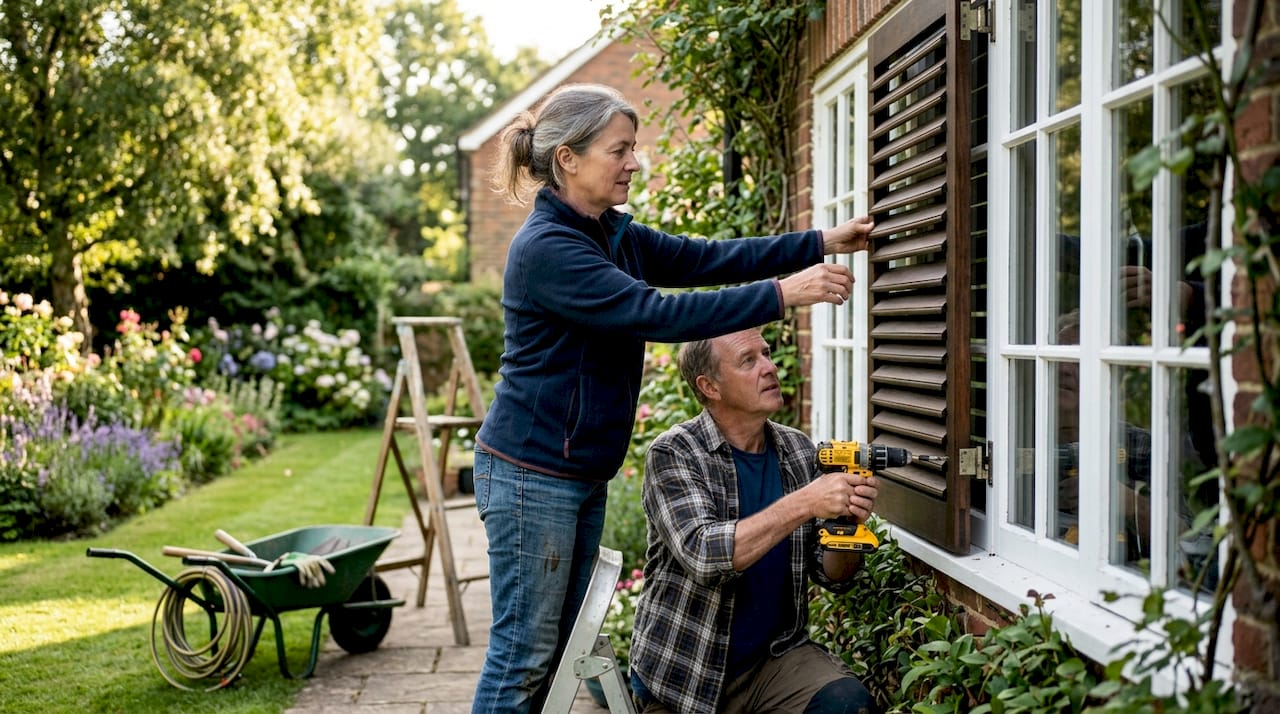
Shading is defined as the first line of defence against solar heat gain, and its role in energy efficiency is to block sunlight before it enters a building, directly cutting the energy demand for cooling and heating. The British Blinds and Shutter Association (BBSA) confirms that external shading reduces indoor temperatures by up to 18°C during peak conditions. That figure alone shows why passive solar control outperforms most other building envelope upgrades. For homeowners and environmental enthusiasts alike, understanding how shading works, which types perform best, and how to install it correctly is the fastest route to lower energy bills and a smaller carbon footprint.
How does shading reduce solar heat gain?
Solar radiation is the primary driver of indoor overheating in summer. When sunlight passes through glass, it converts to heat inside the room. That heat is then trapped by the building fabric, a process identical to the greenhouse effect. Modern insulation, which performs well in winter, traps solar heat inside in summer rather than releasing it. Shading manages the source of heat gain rather than trying to remove heat after it has already entered.
External shading intercepts solar radiation before it reaches the glass. Internal blinds, by contrast, allow sunlight to pass through the window first, converting it to heat inside the room before any reflection occurs. This distinction matters enormously for performance. External shading acts as a thermal barrier at the window exterior, preventing the greenhouse effect that internal blinds cannot fully stop.
The practical consequences are significant:
External shading devices reduce HVAC energy demand by 43–47%, compared to just 10–23% for internal shading alternatives.
Windows account for 18% of heat loss in homes, meaning shading contributes to year-round energy performance, not just summer cooling.
Buildings without external shading are far more vulnerable to overheating as UK summers intensify.
Shading reduces glare without sacrificing natural light, which cuts artificial lighting demand alongside cooling costs.
The impact of shade on building energy use is therefore dual: it reduces cooling demand in summer and, when correctly specified, limits heat loss through windows in winter.
What shading techniques work best for energy savings?
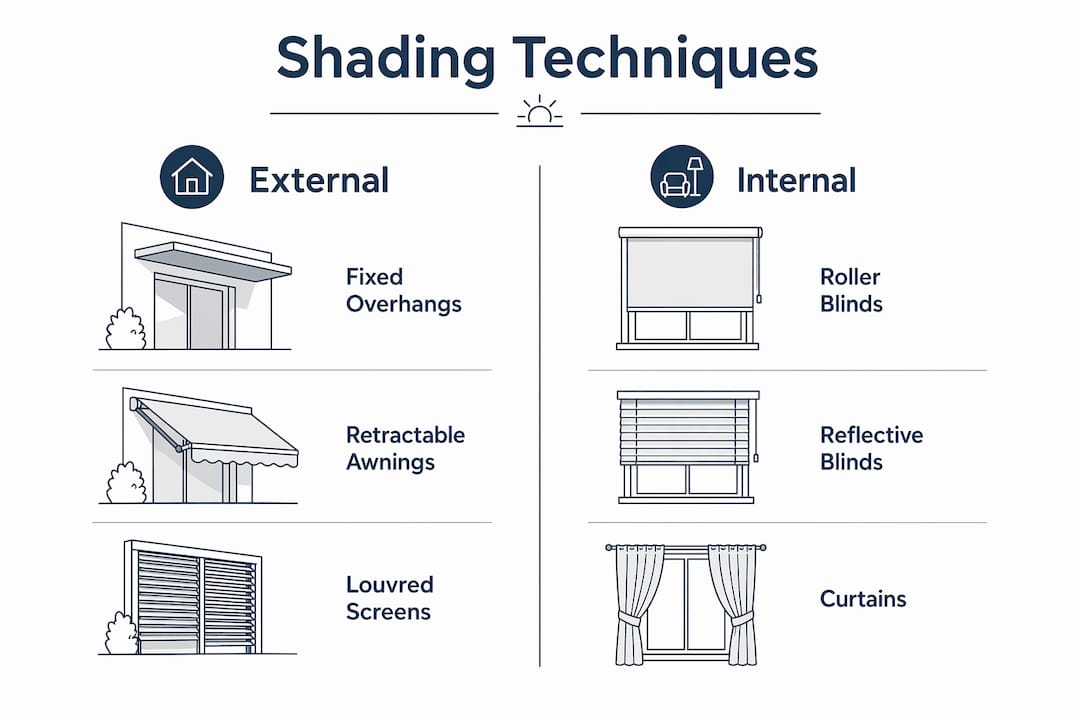
Shading techniques for energy efficiency fall into three categories: external, internal, and dynamic. Each delivers different levels of performance, and the right choice depends on the building type, orientation, and budget.
External shading
External shading devices include retractable awnings, fixed overhangs, external roller shutters, and louvred screens. These intercept sunlight before it reaches the glass, making them the most effective category. Retractable awnings are particularly well suited to UK homes because they can be deployed in summer and retracted in winter, allowing solar gain when it is actually wanted. External shading solutions of this type offer flexibility that fixed structures cannot match.
Internal shading
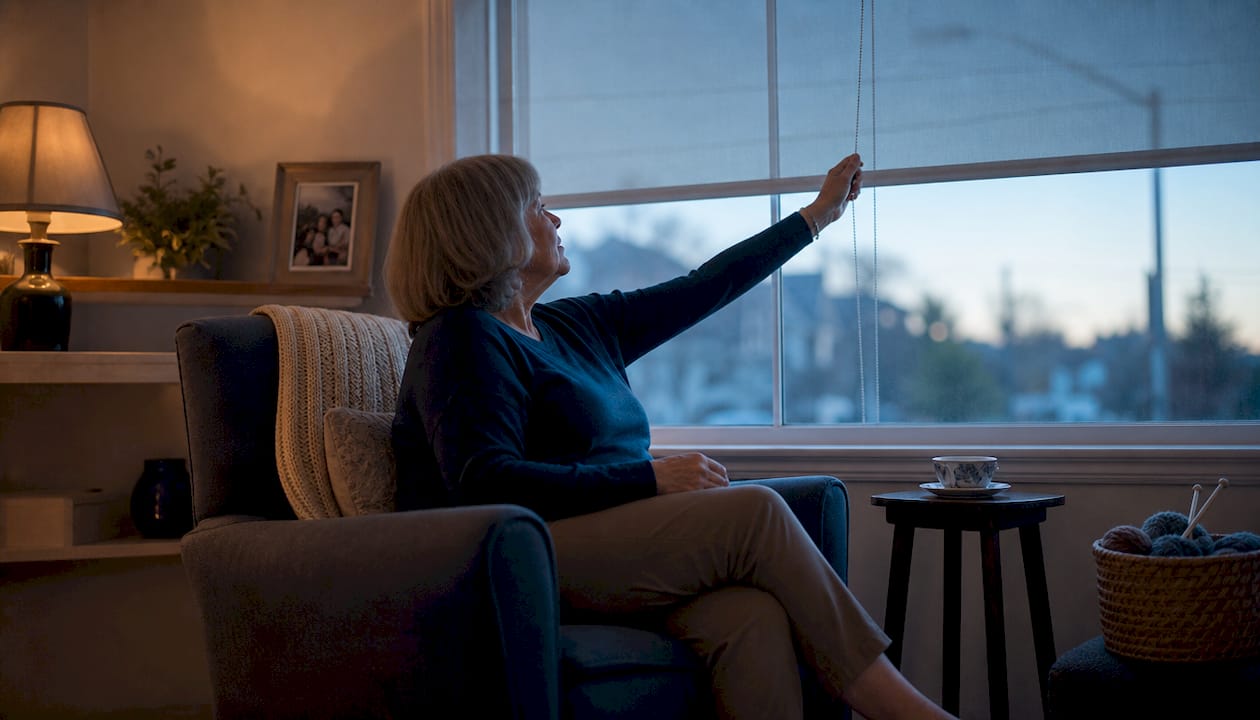
Internal options include reflective blinds, roller blinds, and curtains. They are cheaper to install and easier to retrofit, but they are less effective. Internal reflective blinds reduce solar energy entering a room, but sunlight has already passed through the glass by the time any reflection occurs. The result is a room that still heats up, just slightly less quickly.
Dynamic shading
Dynamic shading systems use sensors, timers, or building management controls to adjust shading automatically in response to sunlight intensity, temperature, or occupancy. Properly automated shading systems harvest daylight while avoiding overheating, balancing solar control with ventilation and lighting needs. This makes them the highest-performing category for commercial buildings and increasingly accessible for residential use.
Shading type | Energy reduction range | Best suited for | Key limitation |
External fixed | High | South-facing facades | Cannot adapt to changing conditions |
External retractable | High | Residential and commercial | Requires maintenance and wind rating |
Internal reflective blinds | Moderate | Retrofit situations | Less effective thermal barrier |
Dynamic automated systems | Highest | Commercial and new builds | Higher upfront cost |
Pro Tip: When choosing between shading types, prioritise external options for south and west-facing windows first. These orientations receive the most direct afternoon sun and deliver the greatest energy savings per pound spent.
What should homeowners consider before installing shading?
Effective shading does not begin with choosing a product. It begins with a proper assessment of the site, the structure, and the local environment.
Integrate shading at the design stage. Buildings designed with integrated shading from the outset are significantly less likely to suffer from overheating than those retrofitted later. Early integration is also more cost-effective, since structural fixings and electrical connections for motorised systems can be planned rather than added as an afterthought.
Commission a professional site survey. Neglecting site surveys and wind exposure is one of the most common pitfalls in external shading installation. Wind loading is a critical safety factor for awnings and shutters. A product rated for low-wind conditions will fail or become unsafe on an exposed elevation.
Account for neighbouring buildings and vegetation. Existing trees, fences, and adjacent structures already cast shade at certain times of day. A professional survey maps these shadows across the year, identifying where additional shading will have the most impact and where it may be redundant.
Check structural suitability. External awnings and pergolas require secure fixing points. Older masonry, timber-framed walls, and rendered surfaces each present different challenges. A structural assessment prevents costly remedial work after installation.
Pro Tip: Ask your installer for a wind exposure classification for your specific property before committing to any external shading product. This single step prevents the most common installation failures and ensures your shading performs as specified.
The Good Homes Alliance notes that UK Building Regulations and overheating protocols do not currently mandate detailed modelling for movable external shading systems. This gap means the responsibility for specifying shading correctly falls to the homeowner and their installer, making professional advice more important, not less.
How does shading support sustainability and reduce carbon emissions?
Shading is climate adaptation infrastructure. That is not a marketing claim. The Climate Change Committee’s ‘A Well Adapted UK’ report, backed by the BBSA, positions external shading as a structural response to rising temperatures rather than an optional comfort upgrade.
“Shading should be viewed as essential climate adaptation infrastructure, not an optional luxury. As UK summers become hotter and more frequent, the building sector must treat solar control as a fundamental design requirement alongside insulation and ventilation.” Lord Krebs, Climate Change Committee
The carbon arithmetic is straightforward. Shading reduces both heating and cooling costs across the year. Lower energy consumption means fewer carbon emissions from the grid. For homes still reliant on gas boilers or electric resistance heating, reducing the cooling load in summer directly cuts electricity demand during peak periods, when grid carbon intensity is often highest.
Shading also works in synergy with other low-carbon technologies. A well-shaded home requires a smaller heat pump to maintain comfort, reducing both capital cost and running cost. Daylighting strategies that use shading to control glare without blocking light reduce artificial lighting demand, which compounds the energy savings further. Shading transforms the outdoor space and the indoor environment simultaneously, making it one of the few upgrades that improves both occupant wellbeing and building performance.
The Shard in London demonstrates what high-performance shading achieves at scale. Its automated external blinds deliver 88% heat rejection on glass facades, achieving a solar heat gain coefficient of 0.12. That level of performance is not available to most homeowners, but it illustrates the ceiling of what external shading can achieve when specified correctly.
Key takeaways
Shading is the most direct method for reducing solar heat gain in buildings, cutting HVAC energy demand by up to 47% when external devices are correctly specified and installed.
Point | Details |
External shading outperforms internal | External devices reduce HVAC demand by 43–47%; internal blinds achieve only 10–23%. |
Temperature reductions are substantial | Correctly installed external shading can lower indoor operative temperatures by up to 18°C. |
Design integration beats retrofitting | Shading specified at the design stage is more cost-effective and more effective than retrofitting. |
Professional surveys are non-negotiable | Wind exposure and structural suitability must be assessed before any external shading is installed. |
Shading supports carbon reduction | Lower cooling and heating demand directly reduces grid electricity consumption and carbon emissions. |
Why I think shading is the most underrated upgrade in UK homes
After years of working in the outdoor shading sector, I find the gap between what shading delivers and how little attention it receives genuinely frustrating. Homeowners will spend thousands on loft insulation or a new boiler, yet overlook an awning that could cut their cooling costs by nearly half. The conversation in the UK has been dominated by insulation and glazing for so long that solar control barely registers as a priority.
The climate is changing that calculation fast. UK summers are hotter, longer, and more unpredictable than they were a decade ago. Modern, well-insulated homes that perform brilliantly in winter are now overheating in summer because nobody specified external shading at the design stage. The Good Homes Alliance has documented this problem clearly, yet UK Building Regulations still do not require detailed shading modelling for most residential projects.
My honest view is that shading should be specified at the same time as windows, not added as an afterthought when the building is already too hot. The benefits of custom shading extend well beyond comfort. They include measurable energy savings, reduced carbon emissions, and a home that remains liveable during heatwaves. Homeowners who act now, before retrofitting becomes the only option, will spend less and get better results. That is not a difficult argument to make. The challenge is getting people to hear it before the next heatwave makes it obvious.
— Andrew
Pergolas and outdoor shading from Infinityawnings
Infinityawnings has supplied and installed quality pergolas and shading solutions across Yorkshire, Derbyshire, Nottinghamshire, and Lincolnshire for over 15 years. A well-specified pergola reduces solar heat gain to adjacent rooms, extends the usable season of outdoor spaces, and complements the indoor energy efficiency measures described in this article.

Infinityawnings offers pergolas from premium brands including Weinor, Tarasola, and Morvelle, with options for manual or electric operation, integrated LED lighting, and heating. Every installation begins with a free site survey to assess wind exposure, structural suitability, and orientation. Request a free quote and find the right shading solution for your property.
FAQ
How much can external shading reduce my energy bills?
External shading devices reduce HVAC energy demand by 43–47%, according to BBSA research. The actual saving on energy bills depends on your property’s orientation, glazing area, and existing insulation.
Is external shading better than internal blinds?
External shading is significantly more effective than internal blinds. External devices intercept solar radiation before it passes through the glass, preventing the greenhouse effect that internal blinds cannot fully stop.
Does shading help in winter as well as summer?
Shading contributes to year-round energy performance. Windows account for 18% of heat loss in homes, and correctly specified shading, particularly retractable systems that can be opened in winter, helps manage both heat gain in summer and heat loss in winter.
What is the biggest mistake homeowners make with shading?
The most common mistake is skipping a professional site survey. Wind exposure and structural suitability must be assessed before installation. Shading fitted without this assessment is often unsafe or underperforms.
When is the best time to install shading?
The best time to specify shading is during the architectural design stage of a new build or extension. Retrofitting is possible but costs more and may involve structural compromises. For existing homes, spring installation before peak summer temperatures is the most practical timing.
Recommended
Comments