
Veranda structures explained for UK homeowners

TL;DR:
A veranda is a roofed, open-air platform attached to a house, designed for outdoor living and requiring proper structural components. The choice of roof style and materials significantly influences its durability, functionality, and aesthetic appeal. Planning, correct construction, and material selection are essential to ensure long-lasting performance and value.
A veranda is defined as a roofed, open-air platform attached to a house, designed primarily as an outdoor living space that often wraps around multiple sides of the building. Unlike a simple porch or a decorative addition, a veranda is a structural commitment. It requires proper foundations, load-bearing posts, and a weatherproof roof to function well over decades. Understanding veranda structures is the foundation of any successful outdoor living project, whether you are a homeowner wanting to extend your living space or a developer looking to add genuine value to a property. Get the structure right, and a veranda pays dividends in comfort, kerb appeal, and resale price.
What are the main structural components of a veranda?
Every durable veranda shares the same core anatomy. Understanding these components helps you ask the right questions before a single post goes into the ground.
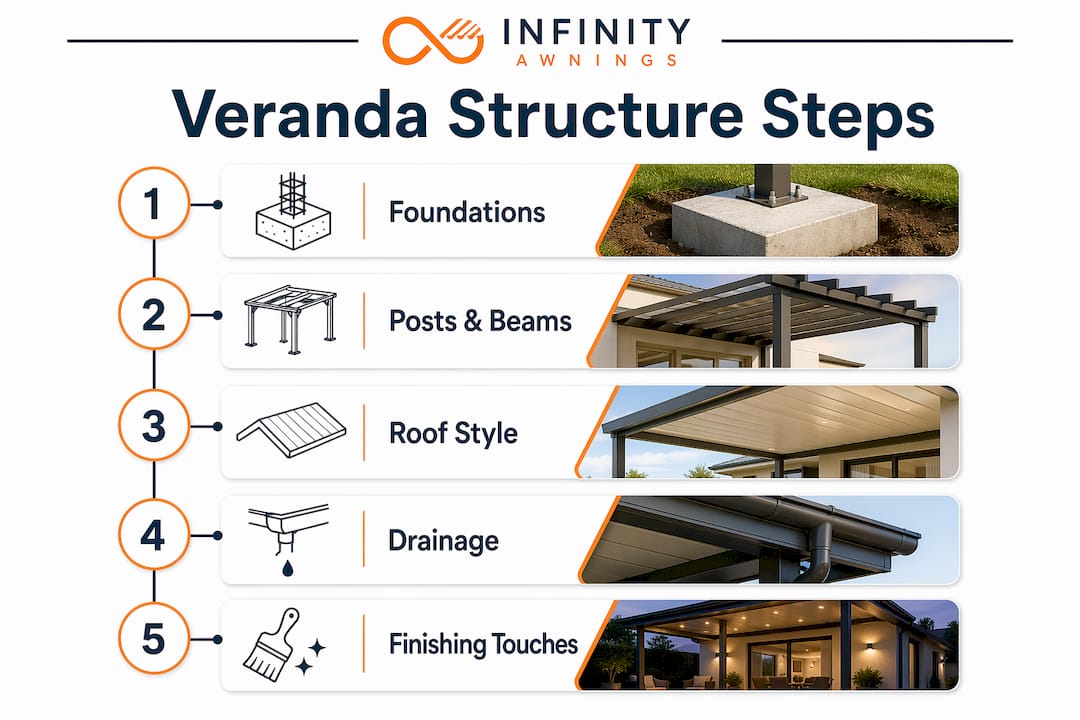
Foundations and footings are the starting point. Concrete pad footings or bolted post anchors are the standard for durable veranda construction. Even slight post movement distorts the roof line, causing sticking doors and broken water seals. Skimping on foundations is the single most common cause of long-term veranda failure.
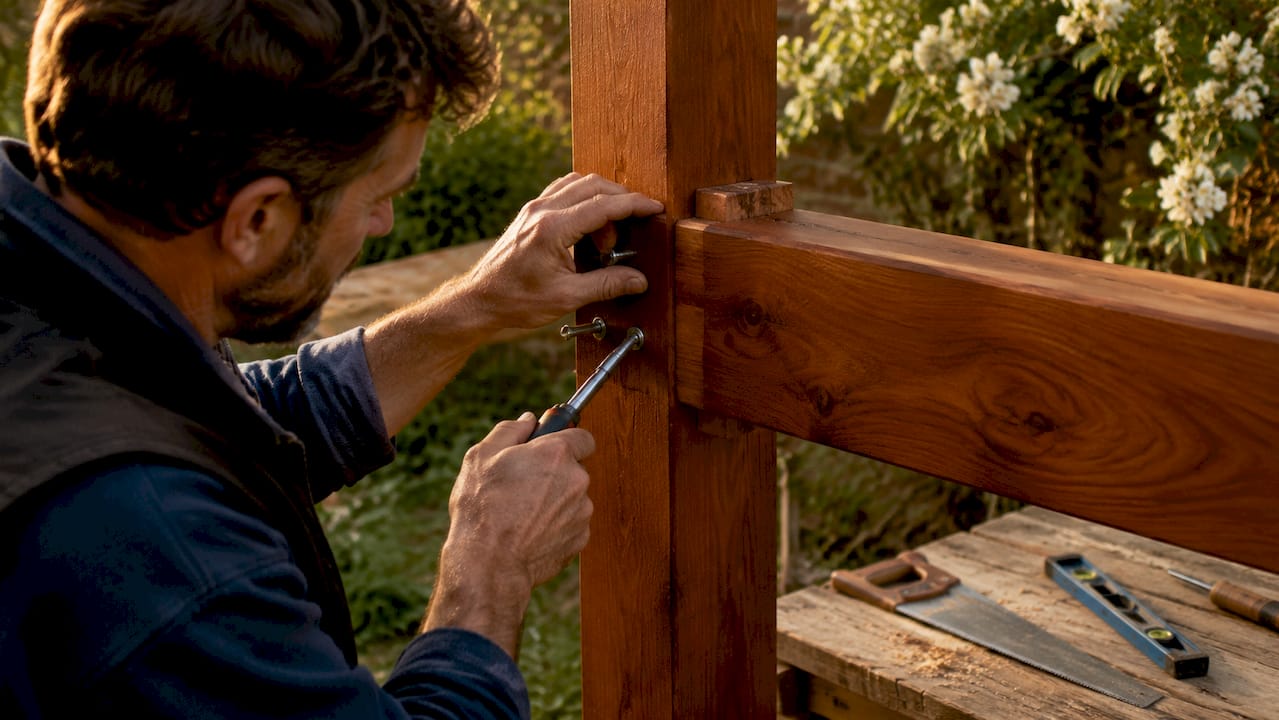
Posts, beams, and wall plates form the skeleton. Posts transfer roof loads down to the footings. Beams span between posts to carry the roof framing. The wall plate is the horizontal timber or steel section fixed directly to the house wall, and fixings must go into solid masonry, not decorative cladding. Incorrect fixing here causes structural weakness and leaks at the roof join.
Roof framing sits on top of the beams and wall plate. Rafters run from the wall plate out to the front beam, creating the slope that sheds rainwater. The pitch and span of the roof framing determine which roofing materials are suitable.
The three most common structural materials are timber, steel, and aluminium:
Timber offers natural warmth and is easy to work with on site, but requires regular treatment to resist rot and insect damage.
Steel provides high strength for longer spans and is suited to contemporary designs, though it needs protective coating to prevent corrosion.
Aluminium is lightweight, corrosion-resistant, and virtually maintenance-free, making it a popular choice for modern UK verandas.
Pro Tip: Plan your drainage before you finalise the roof design. Gutters and downpipes should be part of the structural drawing, not an afterthought. Insufficient roof overhangs accelerate timber degradation and invite water ingress at the base of posts.
Structural Element | Primary Material Options | Key Function |
Footings | Concrete pad, post anchors | Transfer loads to ground, prevent movement |
Posts | Timber, steel, aluminium | Vertical load bearing |
Wall plate | Timber, steel | Connects roof structure to house wall |
Beams and rafters | Timber, steel, aluminium | Span and roof load distribution |
Roofing | Glass, polycarbonate, tiles | Weatherproofing and light management |
How do different veranda roof styles affect structure?
The roof style you choose shapes every other structural decision. Each type carries different load requirements, drainage demands, and visual outcomes.
Flat roofs
Flat roofs offer a clean, contemporary look and are the most cost-effective option to build. They require a slight fall (typically 1–3 degrees) to drain water, and careful drainage planning is non-negotiable. Without it, pooling water accelerates membrane failure and puts unnecessary weight on the structure.
Gable roofs
A gable roof has two slopes meeting at a central ridge, forming a triangular end. This style suits traditional and Victorian properties and sheds water efficiently in both directions. The structural complexity is higher than a flat roof, requiring ridge boards and additional rafters, which increases both material costs and build time.
Lean-to roofs
The lean-to is the most common veranda roof in the UK. It slopes in a single direction away from the house wall. The build sequence is straightforward: wall plate, posts, front beam, then rafters running from high to low. It integrates naturally with most house styles and is well suited to the UK’s rainfall patterns.
Curved and cantilevered roofs
Curved roofs, often built with polycarbonate or glass panels over a steel or aluminium frame, create a contemporary aesthetic. Cantilevered designs extend the roof beyond the posts without visible front supports, which demands precise engineering calculations. Both styles are best handled by specialists with structural design experience.
Colonial verandas
Colonial-style verandas wrap around multiple sides of the house and typically feature a continuous hipped or gable roof. They are the most structurally demanding option, requiring careful corner detailing and coordinated drainage across multiple roof planes. The result, however, is a genuinely impressive outdoor living space that transforms the character of a property.
Key factors to weigh when choosing a roof style:
Local wind and snow load requirements (a professional structural assessment is recommended for large spans or exposed locations)
Compatibility with the existing roofline and architectural style of the house
Drainage efficiency in relation to the UK’s annual rainfall
Natural light requirements, which favour polycarbonate or glass over solid tiles
Veranda vs patio, pergola, porch, and balcony
These terms are used interchangeably in garden centre catalogues and property listings, but the structures are meaningfully different. Choosing the wrong one for your needs is an expensive mistake.
Veranda. A roofed, open-sided structure attached to the house at ground level. It typically extends living space outdoors across multiple sides of the building and is designed for active, regular use. It has a solid roof and a raised or flush floor platform.
Porch. A smaller covered entryway, usually positioned at the front door. A porch is singular in focus and rarely wraps around the building. It provides shelter at the threshold but does not function as a living space.
Pergola. An open lattice or beam structure with no solid roof. A pergola provides partial shade and a framework for climbing plants, but offers no weather protection. It is a garden feature rather than a structural extension of the home.
Patio. A paved or decked area at ground level with no roof or overhead structure. A patio is the simplest and least expensive outdoor option, but it offers no shelter from rain or direct sun.
Balcony. An elevated platform projecting from an upper floor, typically enclosed by a railing. Unlike a veranda, a balcony is not at ground level and is not designed to wrap around the building.
The right choice depends on your primary goal. If you want a sheltered, usable outdoor room that extends your home, a veranda is the correct structure. If you want shade without weather protection, a pergola suits better. If budget is the primary constraint, a patio is the starting point.
What should homeowners know before building a veranda?
Planning a veranda well before construction begins saves money, avoids planning disputes, and produces a structure that lasts. Here are the practical considerations that matter most.
Assess load, location, and size first. The size of the veranda determines the foundation specification, post spacing, and beam sizing. A larger span requires deeper footings and heavier beams. The location affects drainage direction, sun exposure, and proximity to boundaries, all of which may trigger planning conditions.
Check permitted development rights. In England, many verandas fall outside permitted development and require planning permission, particularly if they face a highway or exceed specific size thresholds. Always verify with your local planning authority before committing to a design. The UK veranda planning guide from Infinityawnings covers the key rules for UK homeowners.
Choose materials with long-term costs in mind. Higher-grade materials like hardwoods or composite decking reduce maintenance frequency and add long-term value compared to budget timber. Composite decking, for example, requires no annual treatment and resists moisture far better than treated pine. The upfront cost is higher, but the ten-year cost of ownership is typically lower.
Follow the correct build sequence. The order of operations matters: setting out, foundations, posts, wall plate, beams, rafters, then roofing. Deviating from this sequence creates compounding problems, from twisted roof lines to unstable posts. For a detailed walkthrough, the step-by-step installation guide from Infinityawnings is a practical reference.
Protect timber from the outset. All structural timber should be pressure-treated before installation. Apply end-grain preservative to any cuts made on site. Exposed end grain is the primary entry point for moisture and rot.
Pro Tip: Budget-conscious homeowners should weigh initial costs against long-term maintenance. A veranda built with quality materials and proper drainage costs more to build but far less to maintain over a decade.
Key takeaways
A veranda’s long-term performance depends on the quality of its foundations, the suitability of its roof style, and the durability of its materials.
Point | Details |
Foundations are non-negotiable | Concrete pad footings or bolted post anchors prevent the post movement that distorts roof lines and breaks water seals. |
Roof style drives structural complexity | Lean-to roofs suit most UK homes; colonial and cantilevered styles require specialist structural input. |
Material choice affects lifetime cost | Hardwoods and composites cost more upfront but reduce maintenance and deliver better long-term value than budget timber. |
Verandas differ from pergolas and patios | A veranda provides a solid roof and structural floor platform; pergolas offer only partial shade and patios offer no shelter at all. |
Planning permission is often required | Many UK verandas fall outside permitted development rights; always confirm with your local planning authority before starting. |
Why structural integrity matters more than aesthetics
After more than 15 years working with outdoor structures across Yorkshire, Derbyshire, Nottinghamshire, and Lincolnshire, the pattern I see most often is homeowners who prioritise how a veranda looks over how it is built. The result is almost always the same: a beautiful structure that starts leaking at the wall plate within three years, or posts that shift slightly and leave the whole roof line looking tired before the decade is out.
The architectural style of a veranda absolutely matters. A Victorian property deserves ornate detailing; a modern farmhouse calls for clean lines and minimal railings. But aesthetics sit on top of structure. If the foundations are undersized or the wall plate fixings go into render rather than masonry, no amount of decorative woodwork will save it.
The other mistake I see regularly is treating drainage as an afterthought. Gutters and downpipes need to be part of the design conversation from day one, not bolted on at the end when someone notices the posts are getting wet. Roof overhangs need to be generous enough to throw water clear of the structure below.
My honest advice: spend the money on a proper structural assessment if your veranda spans more than four metres or sits in an exposed location. The cost is modest relative to the build. The cost of remedial work on a poorly specified structure is not.
— Andrew
Explore veranda and pergola solutions from Infinityawnings
If you are ready to move from planning to building, Infinityawnings has been designing and installing premium outdoor structures across Yorkshire, Derbyshire, Nottinghamshire, and Lincolnshire for over 15 years. The range includes contemporary verandas, retractable awnings, and high-quality pergolas from trusted brands including Weinor, Tarasola, and Morvelle.
Whether you want a lean-to veranda for a terraced house or a full colonial wrap-around for a period property, the team at Infinityawnings can specify the right structure for your home and budget. Explore the full range of garden pergola options to find a solution that suits your outdoor space, or request a free quote to get started.
FAQ
What is a veranda in simple terms?
A veranda is a roofed, open-air platform attached to a house at ground level, designed for outdoor living. It typically features a solid roof made from glass, polycarbonate, or tiles and often wraps around more than one side of the building.
Do verandas need planning permission in the UK?
Many verandas in England require planning permission, particularly those that face a highway or exceed permitted development size limits. Always check with your local planning authority before starting construction.
What is the best material for a veranda structure?
Aluminium is the most maintenance-free option for the structural frame, while hardwoods and composite decking outperform budget timber for flooring. The best material depends on your budget, aesthetic preference, and how much maintenance you are willing to carry out.
How is a veranda different from a pergola?
A veranda has a solid, weatherproof roof and is a structural extension of the home. A pergola has an open lattice or beam roof that provides partial shade but no weather protection.
How long does a well-built veranda last?
A veranda built with pressure-treated timber or aluminium framing, proper concrete footings, and adequate drainage should last 20–30 years with routine maintenance. Poor foundations or inadequate drainage are the primary causes of premature failure.
Recommended
Comments