
What is shading automation for outdoor spaces?

TL;DR:
Shading automation uses sensors, motors, and control systems to adjust outdoor shades automatically. It enhances comfort, reduces energy use, and protects structures from weather damage without manual effort.
Shading automation is the automatic control of outdoor shading devices, such as awnings, pergolas, and blinds, that respond to real-time environmental conditions without any manual input. The system uses sensors, motors, and control software to adjust shade coverage based on sunlight intensity, temperature, and wind speed. Automated shading is becoming a critical standard for energy-efficient homes rather than a luxury addition. For homeowners across Yorkshire, Derbyshire, Nottinghamshire, and Lincolnshire, understanding shading automation means understanding how to get more from your outdoor space with less effort.
What is shading automation and how does it work?
Shading automation, known in the industry as motorised shading control, is the process of using sensors and programmable logic to move shading structures automatically. The core components are a motor, a sensor array, and a control unit. Together, they form a closed loop: the sensor detects a change in the environment, the control unit processes that signal, and the motor adjusts the shading accordingly.
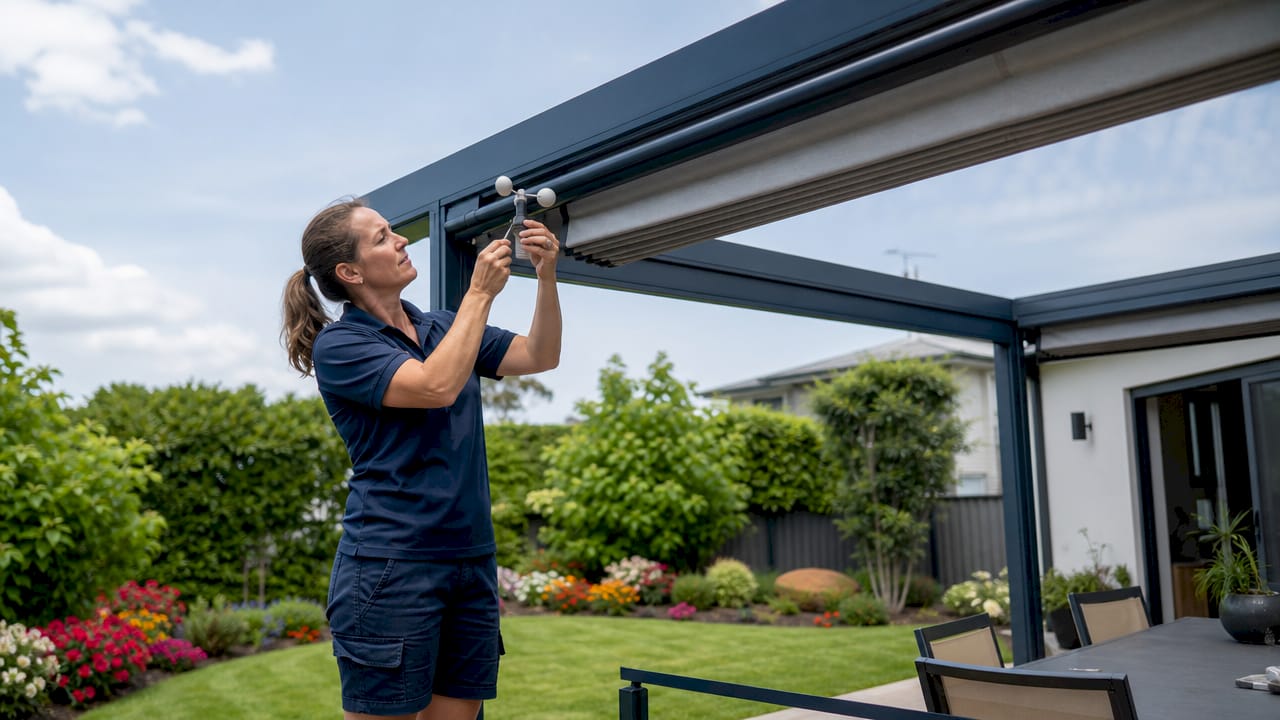
Sensor types vary by function. Sunlight sensors measure solar radiation and trigger shading when brightness exceeds a set threshold. Temperature sensors monitor heat build-up and can extend an awning before a space becomes uncomfortable. Wind sensors are particularly important for outdoor structures. Wind sensors act as safety failsafes even when Wi-Fi or app connectivity fails, retracting awnings automatically during a storm to prevent damage.
Control systems operate across several capability levels:
Basic scheduling: The shading extends or retracts at set times of day, regardless of conditions.
Sensor-triggered automation: The system responds to live data from sunlight, wind, or temperature sensors.
App and voice control: Homeowners adjust shading remotely via a smartphone app or voice assistant.
IFTTT and scene logic: Complex rules link shading to other smart home events, such as closing blinds when a thermostat reading rises above a set point.
Professional systems can control multiple shading channels with ranges up to 65 feet and support both voice and app integrations. That level of control suits larger properties or commercial settings where several zones need independent management.
Pro Tip: Do not confuse motorisation with automation. A motorised awning uses a button or remote to move. An automated awning moves itself based on sensor data. The motor is the mechanism; the automation is the intelligence.
What are the benefits of automating outdoor shading?
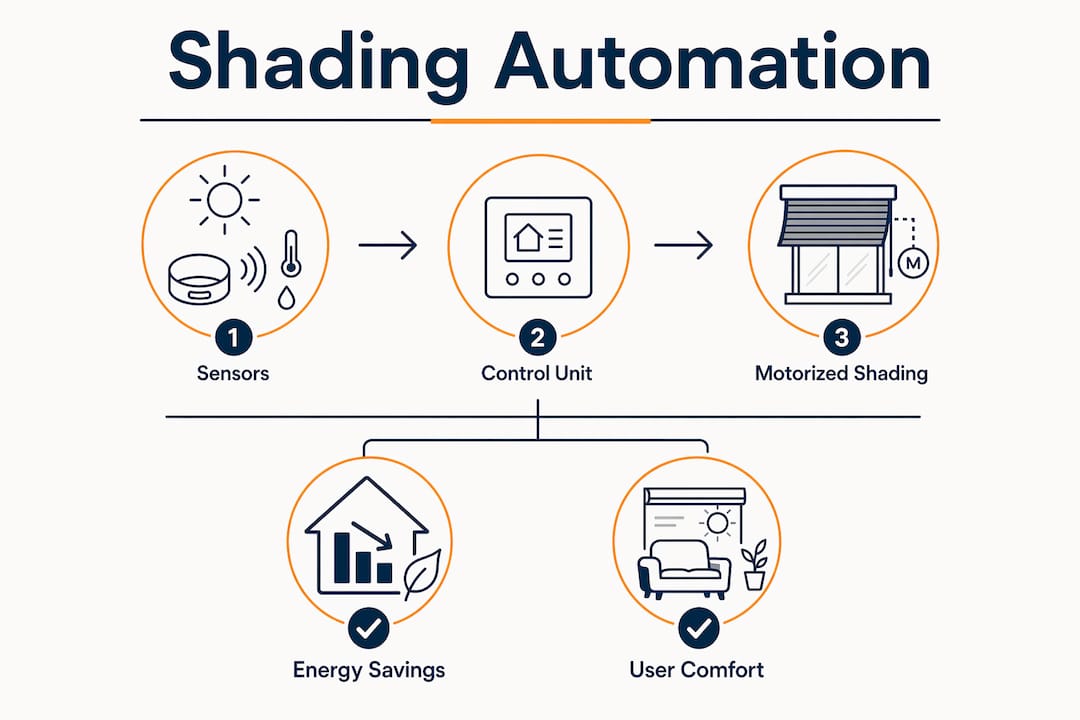
The benefits of outdoor shading multiply significantly when automation is added. The most immediate gain is comfort. Manual shading relies on someone noticing the sun has shifted and then acting on it. Automated shading reacts the moment conditions change, maintaining consistent light levels without any intervention.
Energy efficiency is the second major advantage. Passive house configurations treat proactive shading as the primary defence against solar heat gain. Blocking heat before it enters a building or outdoor living area reduces the need for fans, air conditioning, and other cooling methods. That reduction directly lowers energy consumption.
Glare control is an underrated benefit. Glare is a common complaint in spaces without consistent shading management. Automated systems eliminate user error by adjusting proactively rather than waiting for someone to notice the problem. The result is a more usable outdoor space throughout the day.
Additional benefits include:
Furniture and fabric protection: Automated shading limits UV exposure to outdoor furniture, reducing fading and material degradation over time.
Weather protection: Wind-triggered retraction prevents awning damage during sudden gusts, extending the lifespan of the structure.
Privacy management: Automated closing at dusk or when triggered by a schedule adds a layer of privacy without manual effort.
Reduced maintenance burden: Consistent, sensor-driven operation puts less mechanical stress on motors than repeated manual use.
Highly insulated modern homes risk overheating, making automated external shading an essential feature rather than an optional upgrade. This is particularly relevant in the UK, where newer builds with high thermal mass can trap heat during warmer months. Automated shading addresses that problem at the source, before heat accumulates.
What are the installation options for shading automation?
Installation complexity for automated shading systems ranges from straightforward wireless setups to fully integrated building management configurations. The right choice depends on the size of the property, the number of shading zones, and the level of integration required.
Entry-level wireless systems are the simplest starting point. A wireless motor fits inside the awning or blind tube, and a standalone sensor communicates with it directly. No cabling is needed beyond a power source. These systems suit single-zone installations and are ideal for homeowners adding automation to an existing structure.
For more complex requirements, the installation process follows a clear progression:
Site survey: A certified installer assesses the property, identifies shading zones, and maps out sensor placement for optimal coverage.
Infrastructure planning: Decisions are made about cabling routes, power supply points, and compatibility with existing smart home systems such as KNX or Control4.
Motor and sensor installation: Motors are fitted to each shading structure, and sensors are positioned to capture accurate environmental data without obstruction.
Control unit configuration: The central controller is programmed with schedules, sensor thresholds, and any scene logic required.
Integration testing: The full system is tested across all channels to confirm accurate response times and failsafe behaviour.
Full integration requires cabling and configuration by certified partners to guarantee system compatibility. Attempting a complex multi-zone installation without professional support risks misconfiguration, voided warranties, and unreliable performance.
Professional installations can manage up to 16 channels, enabling precise remote control across large properties or commercial spaces. That scalability makes professional-grade systems a sound long-term investment for homeowners planning future extensions.
Pro Tip: When specifying a system, ask your installer about firmware update capability. Systems updated via over-the-air firmware improve motor efficiency and extend functional lifespan well beyond legacy motorised shading. It is the difference between a system that ages well and one that becomes obsolete.
For a detailed look at how these setups connect to wider smart home infrastructure, the integrated shading solutions guide from Infinityawnings covers the professional requirements in full.
How does shading automation improve outdoor living?
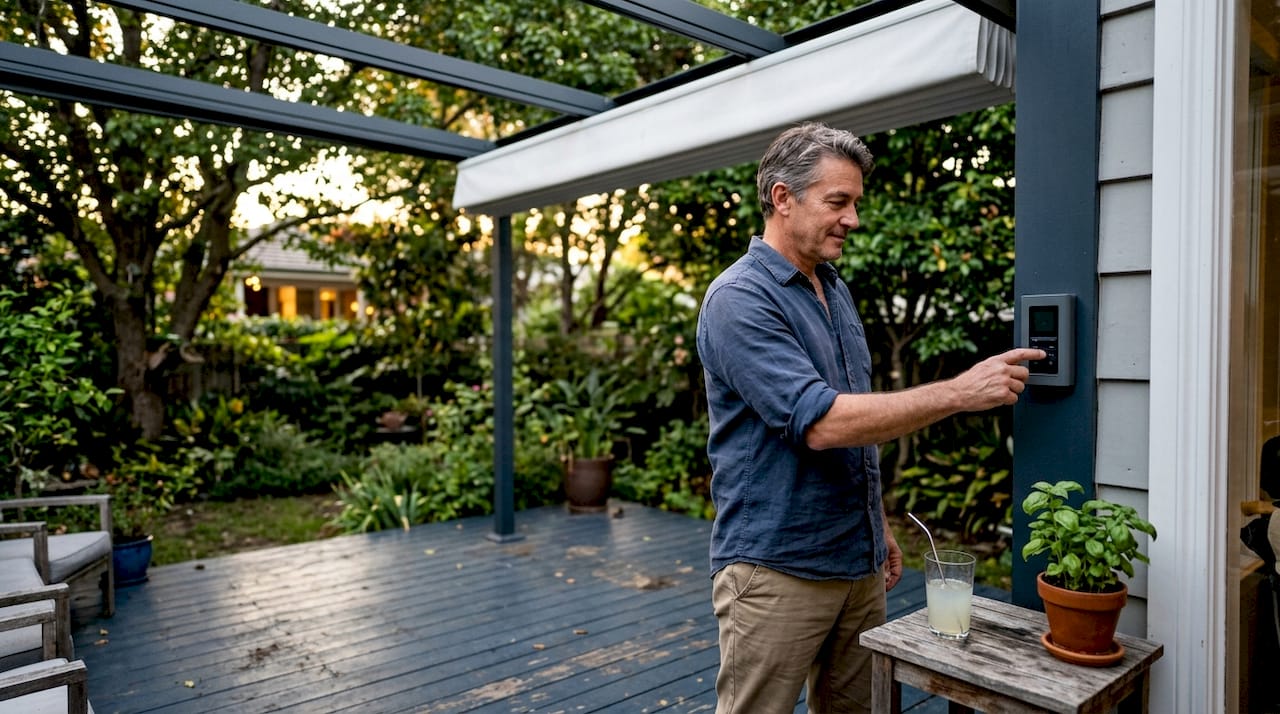
Automated shading transforms an outdoor space from a weather-dependent area into a consistently usable one. The core mechanism is responsiveness. Rather than reacting to discomfort after it has set in, the system anticipates and prevents it.
Sun position changes throughout the day, and a fixed awning position that works at midday may leave a patio exposed by late afternoon. Automated systems track solar angle and adjust coverage continuously. The result is consistent shade without any manual repositioning. For homeowners who use their outdoor space for dining, working, or relaxing, that consistency is a practical daily benefit.
Scheduling adds another layer of usability. A system can be programmed to extend the awning at breakfast time, retract it at midday to allow natural light, and extend again in the afternoon when solar heat peaks. That kind of lifestyle-matched scheduling is not possible with manual operation without constant attention.
Voice and app control provide immediate override capability. If conditions change unexpectedly or a homeowner wants to adjust the scene for guests, a single voice command or tap on a smartphone achieves it instantly. This is particularly useful for entertaining, where adjusting shading manually would interrupt the occasion.
Weather protection is the most critical automated function for outdoor structures. Wind-triggered retraction means an awning pulls back automatically when gusts reach a dangerous level, even if no one is home. Wind sensors integrated directly with motor controls provide this failsafe without relying on internet connectivity. That independence from Wi-Fi makes the safety function reliable in all conditions.
For a broader view of how shading affects outdoor well-being, the Infinityawnings article on shading and outdoor comfort provides useful context on the practical impact.
Key takeaways
Shading automation is the most effective way to maintain consistent outdoor comfort, protect structures from weather damage, and reduce energy use without ongoing manual effort.
Point | Details |
Core definition | Shading automation uses sensors, motors, and control logic to adjust outdoor shading without manual input. |
Energy efficiency | Automated external shading blocks solar heat gain before it builds up, reducing cooling energy demand. |
Safety through sensors | Wind sensors retract awnings automatically during storms, independent of Wi-Fi or app connectivity. |
Installation complexity | Systems range from simple wireless setups to 16-channel professional installations requiring certified partners. |
Long-term value | Firmware-updatable systems extend motor lifespan and improve performance beyond legacy motorised shading. |
Why I think shading automation is no longer optional
After working in the outdoor shading sector for over 15 years, I have watched automated shading shift from a premium add-on to a practical necessity. The change has been driven by two things: better insulated homes that trap heat, and homeowners who genuinely want to use their outdoor spaces rather than just look at them.
The most common mistake I see is treating automation as an afterthought. Homeowners invest in a quality pergola or awning, then add a basic remote motor and call it done. That approach misses the point. The real value comes when the system responds to the environment without any input from you. A sensor-triggered setup that retracts in wind and extends in sun pays for itself in prevented damage and improved daily comfort within a single season.
My honest advice: prioritise sensor quality over control app features. A reliable wind sensor and a well-calibrated sunlight sensor will serve you better than a flashy interface with unreliable hardware behind it. The technology should be invisible. If you are thinking about it, it is not working properly.
Integration with building management systems extends system value significantly, and I expect software-defined shading to become the norm within the next few years. Homeowners who invest in updatable, professionally installed systems now will not need to replace them when standards evolve.
— Andrew
Pergolas and automated shading from Infinityawnings
Infinityawnings designs and installs pergolas and retractable awnings across Yorkshire, Derbyshire, Nottinghamshire, and Lincolnshire, with over 15 years of experience in outdoor shading solutions.
Pergolas from Infinityawnings are built to accommodate motorised and automated shading systems from the outset, using premium brands including Weinor, Tarasola, and Morvelle. Professional installation covers sensor placement, motor fitting, and control configuration, so the system works correctly from day one. Whether you need a single-zone wireless setup or a fully integrated multi-channel system, Infinityawnings provides a bespoke solution matched to your property and lifestyle. Visit the Infinityawnings pergola range to see current options and request a free quote.
FAQ
What is shading automation in simple terms?
Shading automation is the use of sensors and motors to move outdoor shading structures automatically in response to sunlight, temperature, or wind, without any manual input from the homeowner.
How does a wind sensor improve shading safety?
A wind sensor triggers automatic retraction of an awning when gusts reach a set speed. This protection works independently of Wi-Fi or app connectivity, making it reliable even during power or network disruptions.
Do I need a professional to install an automated shading system?
Simple wireless sensor systems can be fitted without specialist support, but multi-zone or fully integrated systems require a certified installer to handle cabling, compatibility checks, and control unit configuration correctly.
Can automated shading reduce my energy bills?
Automated external shading blocks solar heat gain before it builds up indoors or in covered outdoor spaces, reducing reliance on fans and cooling systems. Passive house research identifies proactive shading as the primary defence against overheating.
What is the difference between motorised and automated shading?
A motorised system moves via a button or remote control operated by a person. An automated system moves itself based on sensor data, schedules, or programmed logic, requiring no human action to function.
Recommended
Comments