
Why choose veranda solutions for your outdoor space
- Andrew Crookes

- Jul 1
- 8 min read
TL;DR:
A veranda is a roofed, open-sided structure attached to a building that creates a sheltered outdoor space. It offers weather protection, space extension, increased property value, and low maintenance, making it popular across the UK. Verandas are easier and quicker to install than conservatories and are highly customizable, providing functional outdoor areas for various uses.
A veranda solution is a roofed, open-sided structure attached to a building that transforms an exposed outdoor area into a sheltered, usable living space. Unlike a conservatory, it keeps you connected to the garden while shielding you from rain, sun, and wind. That balance is exactly why choose veranda solutions has become one of the most searched topics among homeowners and commercial property owners across the UK. Infinityawnings, with over 15 years of experience installing verandas across Yorkshire, Derbyshire, Nottinghamshire, and Lincolnshire, sees this demand grow every year. Modern verandas use aluminium frames and polycarbonate or glass roofing, making them durable, low-maintenance, and genuinely suited to the British climate.
Why choose veranda solutions for your property?
Verandas deliver four core advantages: weather protection, space extension, improved kerb appeal, and long-term durability. Each one has a direct impact on how you use and value your property.
Weather protection. Verandas shelter you from rain, sun, and wind, making outdoor living accessible year-round rather than only on warm, dry days.
Space extension. A veranda adds usable square footage to your home or commercial premises without the cost or disruption of a full building extension.
Property value. Homes with functional outdoor spaces attract stronger buyer interest and command higher market appeal, making a veranda a sound financial decision.
Low maintenance. Modern aluminium frames and polycarbonate or glass roofs require minimal upkeep compared with timber structures that need regular painting or treating.
Flexibility. Verandas suit residential gardens, restaurant terraces, hotel courtyards, and school outdoor areas equally well.
Pro Tip: If you run a hospitality business, a covered outdoor terrace can extend your trading season significantly. Customers are far more likely to sit outside when they know they will stay dry.
The benefits of veranda solutions extend beyond comfort. A well-designed veranda changes how you relate to your outdoor space. Instead of retreating indoors at the first sign of drizzle, you stay outside, entertain guests, and use the space productively. That shift in behaviour is one of the most underrated veranda solutions advantages.
How do verandas compare with conservatories and patio covers?
Choosing between a veranda, a conservatory, and a basic patio cover is a decision that affects your budget, planning obligations, and how the finished space feels to use. The three structures solve similar problems in very different ways.
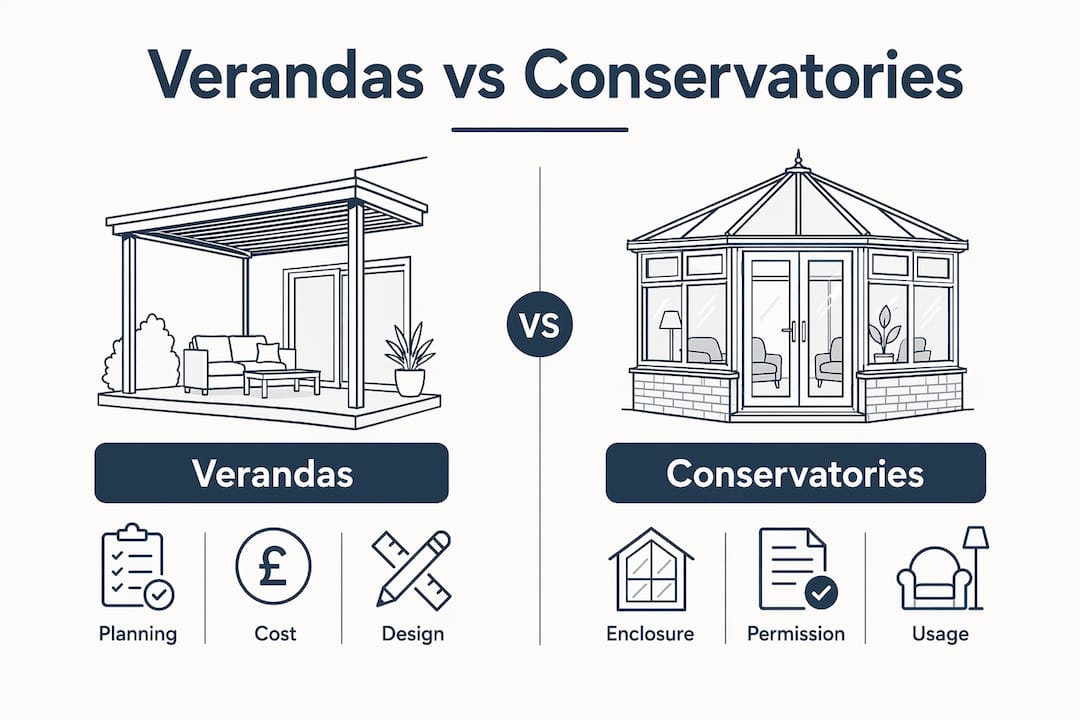
A conservatory is fully enclosed with glazed walls and a roof. It creates an indoor room, which means it requires planning permission in most cases and carries a significantly higher cost. A patio cover, at the other end of the scale, is a simple overhead structure with no walls and often limited weather resistance. A veranda sits between the two. It provides a proper roof with open or partially screened sides, giving genuine shelter without the expense or planning burden of a conservatory.
Verandas generally require less planning permission in the UK compared with conservatories. That makes them quicker to install and far less disruptive. Many verandas fall under permitted development rules, meaning no formal application is needed unless specific size or location thresholds are exceeded. That legal simplicity is one of the strongest reasons to pick veranda structures over enclosed alternatives.
Feature | Veranda | Conservatory | Patio cover |
Planning permission | Usually not required | Usually required | Rarely required |
Weather protection | High | Very high | Low to moderate |
Outdoor feel | Retained | Lost | Fully retained |
Cost level | Mid-range | High | Low |
Year-round usability | Yes | Yes | Limited |
Maintenance demand | Low | Moderate | Low |
Customisation options | High | Moderate | Low |
Veranda costs sit at a mid-range level between patio covers and conservatories. That pricing position makes them the most practical choice for property owners who want real shelter without committing to a full building project.
Pro Tip: Before ruling out a veranda on planning grounds, check your local authority’s permitted development guidelines. Most standard residential verandas qualify without any formal application.
What customisation options are available with veranda solutions?
Modern veranda solutions are not one-size-fits-all structures. The range of materials, finishes, and accessories available means you can tailor a veranda precisely to your property’s architecture and your personal preferences.
Roofing materials. Glass gives a premium, light-filled finish. Polycarbonate is lighter and more affordable while still providing strong weather resistance. Solid aluminium roofing suits properties where full shade is the priority.
Frame colours and finishes. Powder-coated aluminium frames come in a wide range of RAL colours, from classic white and anthracite grey to bespoke shades that match your property’s exterior.
Side panels and glazing. Adding glass or polycarbonate side panels converts an open veranda into a semi-enclosed space, extending its usability into colder months. Veranda enclosures are particularly popular for commercial settings where wind protection matters.
Integrated lighting. LED strip lighting built into the frame creates a usable evening space without the need for external fittings or trailing cables.
Heating. Infrared heaters mounted to the veranda structure extend comfortable use well into autumn and winter.
Modular design. Modern verandas use modular construction that allows future expansion without rebuilding the entire structure. That flexibility suits property owners whose outdoor living needs may change over time.
The style options for verandas range from clean, contemporary designs with flat roofs and minimal framing to more traditional pitched-roof structures that complement older properties. Choosing the right style is as much about the building it attaches to as it is about personal taste. A Victorian terrace calls for a different aesthetic than a modern commercial premises.
Customisation with side panels, glazing, lighting, and heating means a veranda can serve as an outdoor dining area, a sheltered workspace, or a year-round entertaining space. The structure itself stays the same. The accessories determine how far you push its usability.
How to select and maintain veranda solutions for lasting results
Selecting the right veranda starts with an honest assessment of your property and how you intend to use the space. Rushing this stage leads to structures that look out of place or fail to deliver the shelter you need.
Assess your architecture. Look at your property’s roofline, wall materials, and existing colour palette. A veranda that clashes with the building undermines the kerb appeal it is supposed to create.
Measure your outdoor space. Identify the area you want to cover and consider how the veranda will affect light entering the building. A deeper structure provides more shelter but reduces natural light indoors.
Check planning requirements. Review your local permitted development rules before ordering. The UK planning guide for verandas covers the key thresholds and exceptions relevant to most residential and commercial properties.
Choose your materials carefully. Aluminium frames and polycarbonate or glass roofs deliver year-round performance with minimal upkeep. Avoid timber if low maintenance is a priority.
Plan for installation timing. Most professional veranda installations complete within one to three days. Scheduling during drier months reduces disruption, though a reputable installer will work year-round.
Routine maintenance to protect your investment
Aluminium frames need nothing more than an occasional wipe with warm soapy water. Polycarbonate panels benefit from a soft cloth clean twice a year to prevent algae build-up, particularly in shaded positions. Glass roofing stays cleaner for longer but may need a specialist cleaner to remove hard water marks in areas with high mineral content in the water supply.
Pro Tip: Never use abrasive pads or solvent-based cleaners on polycarbonate panels. They cause micro-scratches that cloud the surface over time, reducing light transmission and appearance.
Seasonal checks matter more than most property owners realise. Before winter, clear any leaf debris from guttering channels built into the veranda frame. After winter, inspect fixings and seals for any movement caused by frost. Catching small issues early prevents costly repairs later.
Key takeaways
Veranda solutions are the most practical outdoor structure for UK property owners who want genuine year-round shelter without the cost or planning burden of a conservatory.
Point | Details |
Year-round usability | Aluminium and glass or polycarbonate construction delivers weather protection in all seasons. |
Planning advantage | Most verandas fall under permitted development, avoiding formal planning applications. |
Cost position | Verandas sit between basic patio covers and conservatories, offering strong value for money. |
Customisation depth | Side panels, heating, lighting, and modular frames allow precise tailoring to any property. |
Low maintenance | Aluminium frames and modern roofing materials require only basic cleaning to stay in good condition. |
What I have learned from watching verandas change how people use their gardens
After years of seeing outdoor structures installed across the north of England, the pattern is consistent. Property owners who invest in a veranda use their outdoor space far more than those who do not. That sounds obvious, but the scale of the change surprises most people. A garden that sat unused from october to april suddenly becomes a space for morning coffee, weekend meals, and evening entertaining. The shelter removes the mental barrier of “it might rain.”
What I find genuinely underappreciated is how well verandas suit the British climate specifically. A conservatory solves the weather problem by eliminating the outdoors entirely. A veranda solves it while keeping you in the garden. For most people, that distinction matters enormously. Sitting under a glass roof listening to rain on the panels is a fundamentally different experience from sitting inside a glazed room.
The commercial applications are equally compelling. Bars and restaurants that add covered outdoor terraces report that the space becomes their most popular seating area, not just a wet-weather fallback. The shelter creates a defined, atmospheric environment that enclosed indoor spaces struggle to replicate.
My honest view is that verandas are underused in the UK relative to their practical value. The planning simplicity, the material quality available today, and the genuine lifestyle improvement they deliver make them one of the strongest outdoor investments a property owner can make.
— Andrew
Pergolas and verandas from Infinityawnings
Infinityawnings designs, supplies, and installs verandas and pergolas for homeowners and commercial properties across Yorkshire, Derbyshire, Nottinghamshire, and Lincolnshire. With over 15 years of experience and products from trusted manufacturers, the team tailors every structure to the property and the owner’s needs.
Whether you want a sheltered garden retreat or a covered commercial terrace, Infinityawnings offers a free consultation to help you choose the right structure, materials, and accessories. Browse the full range of pergolas and veranda solutions to see what is possible for your property, or get in touch to request a free quote tailored to your space.
FAQ
What is a veranda solution?
A veranda solution is a roofed, open-sided structure attached to a building that provides shelter from rain, sun, and wind while maintaining an outdoor feel. Modern versions use aluminium frames with glass or polycarbonate roofing for durability and low maintenance.
Do verandas need planning permission in the UK?
Most verandas fall under permitted development rules and do not require a formal planning application. Exceptions apply when size or location thresholds are exceeded, so checking your local authority guidelines before installation is advisable.
How do veranda solutions enhance property value?
Verandas create functional outdoor living space that appeals to buyers seeking modern lifestyles. Properties with usable, sheltered outdoor areas attract stronger market interest compared with those offering only an exposed garden.
What materials are used in modern veranda solutions?
Modern verandas typically use powder-coated aluminium frames combined with polycarbonate or glass roofing panels. These materials deliver strong weather resistance, long service life, and minimal maintenance requirements.
Can verandas be expanded after installation?
Yes. Modular veranda construction allows future expansion without rebuilding the existing structure. This makes verandas a flexible choice for property owners whose outdoor living requirements may grow over time.
Recommended
Comments