
Why shading matters for restaurants: a 2026 guide
- Andrew Crookes

- Jul 10
- 8 min read
TL;DR:
Effective outdoor shading transforms unpredictable weather into a reliable, revenue-generating outdoor space for restaurants. Properly designed shelters increase guest dwell time, spend, and outdoor booking consistency while protecting diners from weather and glare. Legal compliance and professional installation are essential to maximize benefits and avoid costly mistakes.
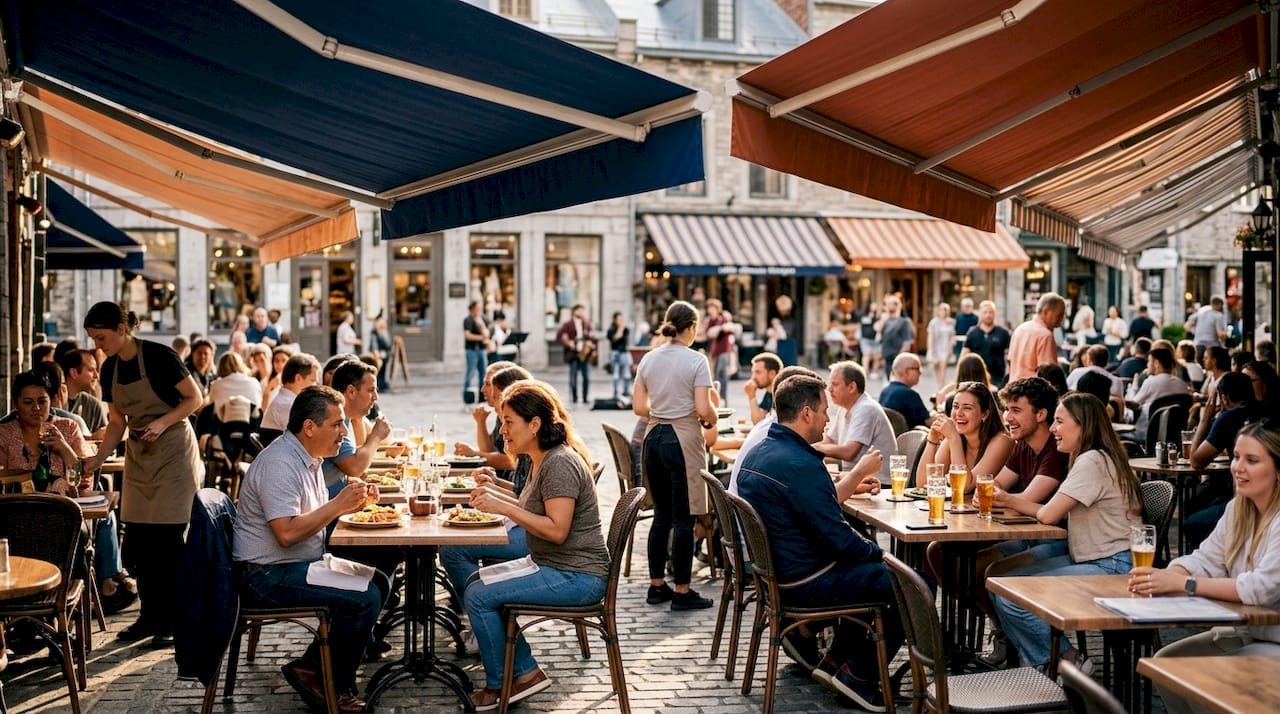
Shading in restaurants is the strategic use of outdoor covers and shelters that protect diners from sun, rain, and wind to create a comfortable and profitable alfresco dining environment. The industry term for this practice is “outdoor microclimate management,” and it directly determines whether your patio generates revenue or sits empty. Outdoor-capable venues see a median week-on-week sales increase of 8.95% compared to just 0.46% for indoor-only venues during UK heatwaves. That gap is not a coincidence. It is the financial result of having protected, usable outdoor space when customers want to be outside.
Why shading matters for restaurants: comfort, behaviour, and spend
Shading directly changes how long guests stay and how much they spend. Diners seated in direct sunlight eat faster, feel less relaxed, and are less likely to order a second round of drinks. A shaded terrace slows the meal down in the best possible way, creating the conditions for higher average spend per cover.
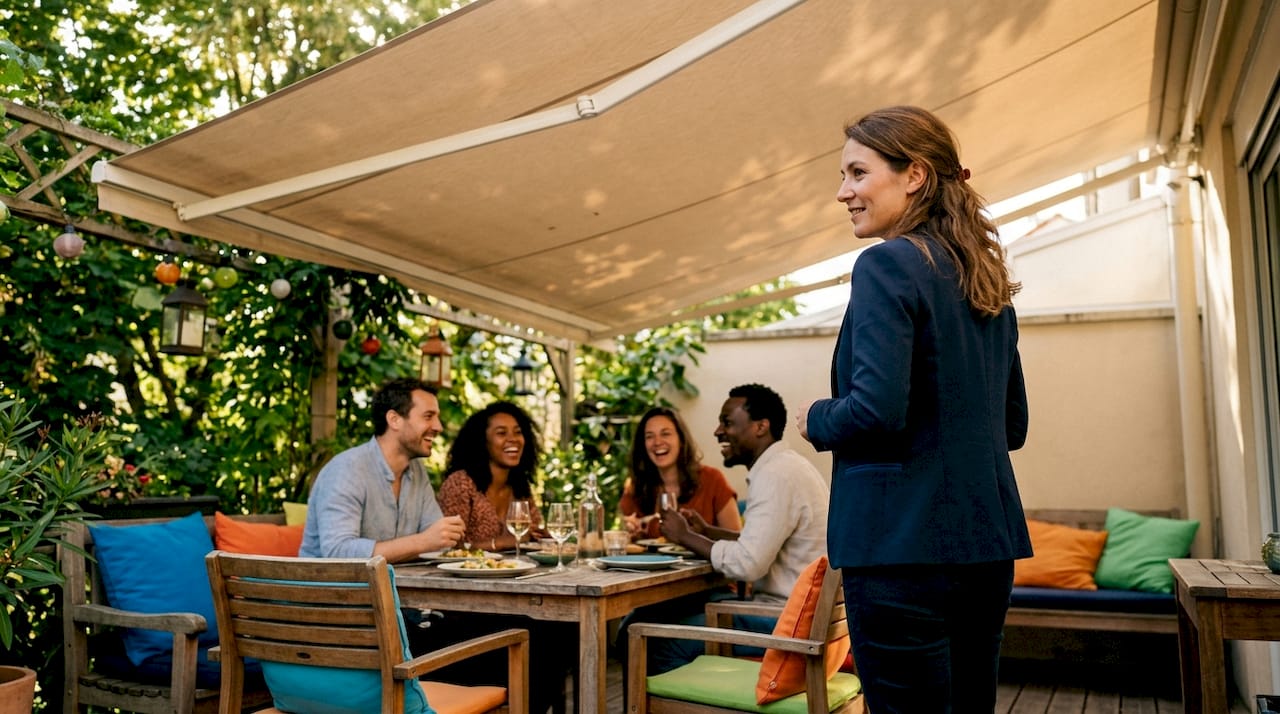
Protection from rain and wind is equally important. A sudden shower does not just displace guests for ten minutes. It triggers cancellations, early departures, and negative reviews. Shading transforms outdoor seating from a weather-dependent gamble into a dependable, year-round asset that increases occupancy, spend, and staff efficiency. That shift in reliability changes how customers perceive your venue before they even arrive.
The best shading solutions do not isolate diners from the outdoor feel. They create a microclimate: sheltered enough to be comfortable, open enough to feel alfresco. Retractable awnings achieve this particularly well, allowing operators to open the canopy on calm, sunny days and close it when conditions change. The outdoor ambience remains intact while the comfort is guaranteed.
Lighting and heating extend this microclimate into the evening and into cooler months. Heaters and soft lighting increase trading in typically cold months, recovering spring and autumn trade that most venues write off entirely. Integrated LED lighting also shapes mood, making the space feel intentional rather than improvised.
Key benefits of effective shading on customer behaviour:
Guests dwell longer, increasing the likelihood of additional orders
Shaded spaces feel more private and relaxed, encouraging conversation and repeat visits
Protection from glare reduces discomfort and complaints
Covered spaces allow service to continue uninterrupted during light rain
Evening lighting under a canopy creates atmosphere that indoor spaces cannot replicate
Pro Tip: Install a retractable awning with integrated LED strips and a patio heater connection point from the outset. Retrofitting electrical components later costs significantly more and often requires additional planning consent.
What are the revenue benefits of restaurant outdoor shading?
A covered outdoor space is not a comfort upgrade. It is a revenue project. A covered 50-seat beer garden loses approximately 80–110 trading days yearly to weather. Recovering 75 of those days at £35 or more per head adds over £95,000 annually. That figure reframes the cost of installation entirely.
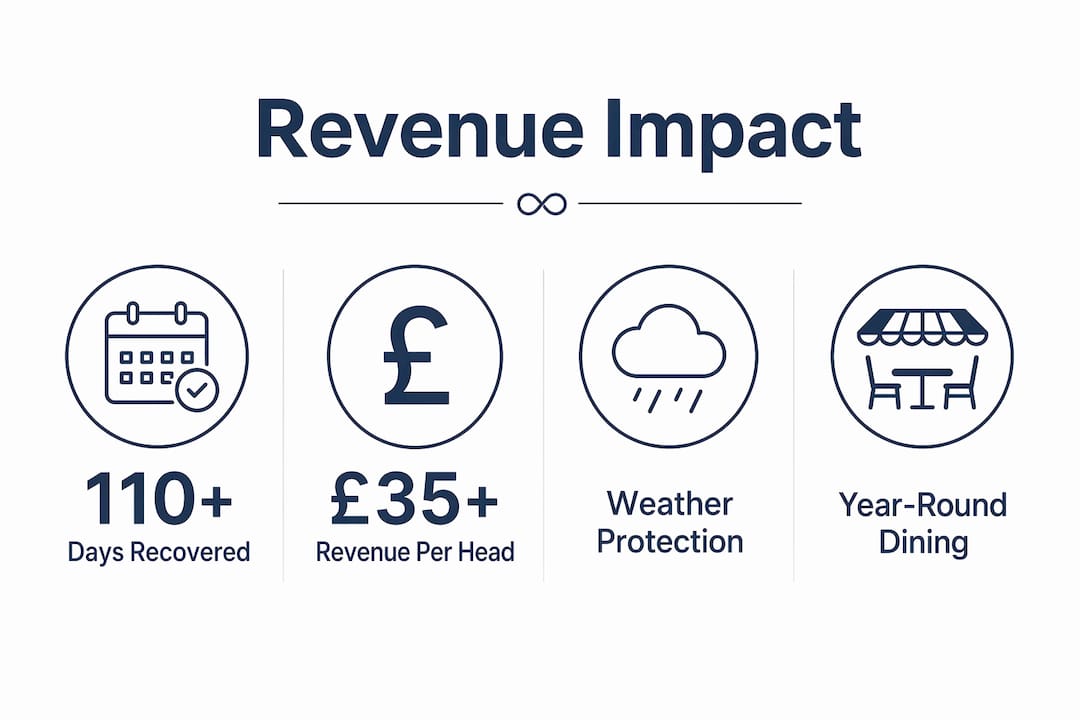
Outdoor seating has progressed from a seasonal amenity to a core revenue driver treated as an extension of indoor dining space. Venues that invest in shading report higher table turnover, more reliable booking patterns, and reduced last-minute cancellations. Staff efficiency improves too, because weather-driven table moves and mid-service scrambles disappear when the space is properly protected.
The operational case is just as strong as the financial one. Commercial awnings enable weather-agnostic service, maximising profit per square foot by making outdoor seating usable in most conditions. That reliability allows you to sell the space with confidence, take deposits on outdoor bookings, and plan staffing around a predictable cover count.
Scenario | Without shading | With shading |
Trading days lost to weather | 80–110 per year | Reduced to 10–25 per year |
Outdoor booking reliability | Low, weather-dependent | High, bookable with confidence |
Average spend per cover | Lower (shorter dwell time) | Higher (relaxed, extended meals) |
Staff disruption from weather | Frequent table moves and cancellations | Minimal disruption |
Season length | April to September | February to November |
Pro Tip: Track your outdoor covers separately from indoor covers in your EPOS system. Knowing the exact revenue contribution of your outdoor space makes the business case for shading investment far easier to present to investors or lenders.
What are the legal requirements for outdoor shading in the UK?
The legal framework for outdoor shading in the UK splits into two distinct categories, and confusing them is a costly mistake. A Pavement Licence covers movable furniture placed on public land. It does not require planning permission, but it requires daily removal of furniture and is valid for between six months and two years. Permanent structures, including fixed pergolas and glass verandas, require full planning permission. No deemed permission exists for permanent builds as of 2026.
The steps most restaurant operators need to follow are:
Determine land ownership. Establish whether your outdoor space sits on private land or public highway. Pavement Licences apply only to public land.
Apply for a Pavement Licence if using public space. Submit to your local authority with a site plan, furniture specification, and public liability insurance evidence.
Apply for planning permission for permanent structures. Engage an architect or specialist installer to prepare drawings and a planning statement.
Check listed building consent requirements. Historic properties may need separate listed building consent before any external structure is installed.
Update your premises licence. Alcohol service in outdoor areas is only legal within the licensed premises boundary. Failure to update premises licence plans creates direct legal risk, including potential licence review.
Integrate the shading footprint into your licence plan. Work with your licensing solicitor to redraw the premises plan to include the new covered area.
Many operators overlook critical licensing nuances around outdoor spaces and risk non-compliance. Legal advice at the planning stage costs far less than a licence review or enforcement action later.
How to choose the right shading solution for your venue
The right shading solution depends on your space, your budget, and how you intend to use the area across the year. Each structure type offers a different balance of protection, aesthetics, and operational flexibility.
Retractable awnings
Retractable awnings are the most flexible option for most restaurants. They extend over a terrace when needed and retract fully when conditions are ideal. Weinor and Selt, both stocked by Infinityawnings, produce motorised retractable awnings with wind sensors that retract automatically in strong gusts. This protects the fabric and removes the need for staff to monitor weather constantly. For outdoor branding through awning design, custom fabric colours and logo screen printing turn the canopy into a street-level marketing asset.
Pergolas and bioclimatic pergolas
Pergolas offer a more permanent feel and suit venues with a defined outdoor dining area. Bioclimatic pergolas use adjustable louvred roofs that open and close to control airflow, light, and rain protection. Tarasola and Morvelle, available through Infinityawnings, produce bioclimatic systems with integrated guttering, LED lighting channels, and heater mounting points. These structures require planning permission but deliver a year-round outdoor room rather than a seasonal terrace.
Glass verandas
Glass verandas create an enclosed outdoor space that feels closer to an indoor extension. They suit venues in exposed locations where wind is the primary challenge. The trade-off is cost and the need for planning permission. They also reduce the alfresco feel that many diners seek.
Practical considerations when selecting any shading structure:
Wind load rating. UK coastal and elevated sites require structures rated for higher wind loads. Always request the wind load specification from your installer.
Drainage. Flat or low-pitch canopies must have integrated guttering. Pooling water damages fabric and creates a poor customer experience.
Electrical integration. Plan for heater and lighting circuits before installation. Selecting awning fabric with UV and water resistance ratings appropriate for the UK climate extends the lifespan of the installation significantly.
Maintenance access. Motorised systems require annual servicing. Confirm service availability with your installer before committing.
A professional site survey is not optional. Wind impact is consistently underestimated by operators who self-specify. Integrated zip screens or glass walls are commonly needed to address wind channelling that a basic canopy does not resolve.
Key takeaways
Effective outdoor shading is the single most reliable way to convert a weather-dependent terrace into a year-round revenue asset for a restaurant.
Point | Details |
Revenue impact is substantial | Recovering lost trading days at £35+ per head can add over £95,000 annually to a 50-seat outdoor space. |
Shading changes guest behaviour | Protected diners dwell longer, spend more, and return more often than those exposed to the elements. |
Legal compliance is non-negotiable | Permanent structures need planning permission; alcohol service outdoors requires an updated premises licence. |
Structure choice determines flexibility | Retractable awnings suit most venues; bioclimatic pergolas deliver year-round outdoor rooms for higher investment. |
Professional installation matters | Wind load, drainage, and electrical integration must be specified by an expert, not estimated by the operator. |
Andrew’s view: shading is a business decision, not a comfort upgrade
Operators consistently underestimate two things: the wind and the paperwork. I have seen beautifully specified awnings installed on exposed terraces without adequate wind load ratings, only to be retracted permanently after the first autumn storm. And I have seen venues invest in covered outdoor spaces without updating their premises licence, then face a licensing review when a council officer noticed the discrepancy. Both mistakes are entirely avoidable with proper planning.
The more interesting shift I have observed is in customer expectation. Outdoor dining used to be a summer bonus. Guests now expect a covered, heated, and lit outdoor space to be available in february and october. Venues that cannot offer that are losing bookings to those that can. Shading is no longer a differentiator. For a growing number of operators, it is the baseline.
The brands that get this right treat their outdoor space as a second dining room with its own identity. Custom fabric colours, logo-printed canopies, and consistent lighting create a brand experience that extends beyond the front door. That street-level presence attracts passing trade in a way that no amount of social media advertising replicates. If you are planning a shading installation, start with the revenue model, not the product catalogue. Know what your outdoor space is worth when it is fully operational, then work backwards to the structure that delivers that return.
— Andrew
How Infinityawnings can help with your restaurant’s outdoor space
Restaurant operators across Yorkshire, Derbyshire, Nottinghamshire, and Lincolnshire use Infinityawnings to design and install outdoor shading that works commercially, not just aesthetically.
Infinityawnings supplies and installs pergolas from Tarasola and Morvelle, retractable awnings from Weinor and Selt, and glass verandas built for the UK climate. Every installation begins with a professional site survey that accounts for wind load, drainage, and electrical requirements. Custom fabric options, powder-coated frames, and logo printing mean your outdoor space reinforces your brand from the street. Explore restaurant pergola options and request a free quote to find the right structure for your venue.
FAQ
Why does outdoor shading increase restaurant revenue?
Shading converts weather-dependent outdoor space into a reliable, bookable asset. Recovering lost trading days at £35 or more per head can add over £95,000 annually to a 50-seat outdoor area.
Do I need planning permission for a restaurant awning?
Retractable awnings on private land often do not require planning permission, but permanent structures such as pergolas and glass verandas do. Always confirm with your local planning authority before installation.
Can I serve alcohol in my covered outdoor area?
Alcohol service is only legal within the boundary defined in your premises licence. You must update your premises licence plan to include any new covered outdoor area before serving alcohol there.
What shading type suits a UK restaurant best?
Retractable awnings offer the best flexibility for most venues, extending when needed and retracting in high winds. Bioclimatic pergolas suit operators who want a permanent, year-round outdoor room with integrated heating and lighting.
How do I protect my outdoor shading from wind damage?
Request the wind load specification for any structure before purchase. Sites in exposed or elevated locations require higher-rated structures, and zip screens or glass side panels are often needed to address wind channelling that a canopy alone cannot resolve.
Recommended
Comments