
How to maintain awnings for lasting outdoor comfort

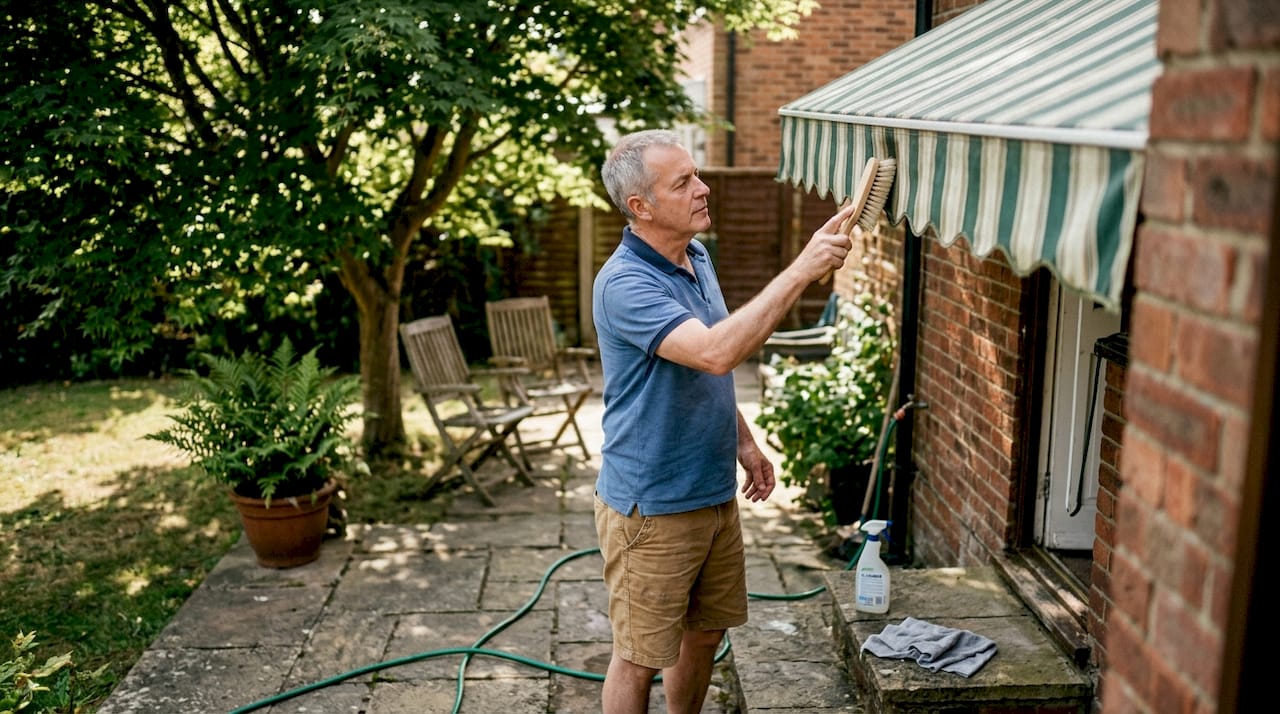
Picture this: you pull out the garden awning on the first warm weekend of the year, only to find the fabric streaked with mildew, the arms stiff and creaking, and the whole thing looking tired before the season has even begun. It is a frustrating situation, and one that is entirely avoidable. A neglected awning does not just look poor — it can fail early, costing you hundreds in repairs or replacement. The good news is that with a consistent routine covering inspection, cleaning, lubrication, seasonal care, and a few simple fixes, you can keep your awning performing beautifully for well over a decade.
Table of Contents
Key Takeaways
Point | Details |
Regular inspection matters | Monthly checks prevent minor issues from becoming expensive repairs. |
Clean and dry every time | Always air dry fabric fully before retracting to stop mould and mildew. |
Lubricate moving parts | Keep arms and joints running smoothly by using only silicone-based spray. |
Seasonal care is essential | Follow a year-round routine for maximum awning lifespan and reliability. |
Reproof for protection | Reapply fabric protector regularly to maintain water resistance and UV defence. |
Essential tools and preparation
With the stakes clear, your first step is gathering the right materials for effective maintenance. Turning up to clean your awning without the correct supplies is like painting a wall without a dust sheet — you will make more problems than you solve. Fortunately, the kit list is straightforward and affordable.
Item | Purpose |
Soft-bristled brush | Removes loose debris and scrubs fabric gently |
Mild, pH-neutral soap | Safe cleaning without damaging protective coatings |
Garden hose or pressure washer (low setting) | Rinsing fabric and frame thoroughly |
Silicone-based lubricant spray | Keeps joints, arms, and pivots moving freely |
Microfibre cloths | Wiping down frame and checking for surface rust |
Safety ladder with stabiliser feet | Reaching upper fixings and frame safely |
Rubber gloves and safety goggles | Protecting hands and eyes during cleaning |
Before you start, run through this preparation checklist:
Check the weather forecast — avoid cleaning in direct strong sunlight or when rain is imminent
Ensure your ladder is on firm, level ground before climbing
Fully extend the awning to access all areas of the fabric and frame
Remove loose debris by hand or with a dry brush before applying any liquid
Keep children and pets away from the work area
Retractable awning cleaning is most effective when the fabric is brushed first and then washed with lukewarm water, because this prevents dirt from being ground deeper into the weave during scrubbing. Mild soap and lukewarm water with a soft-bristled brush, followed by thorough rinsing and air drying before retraction, prevents mould, mildew, and staining.
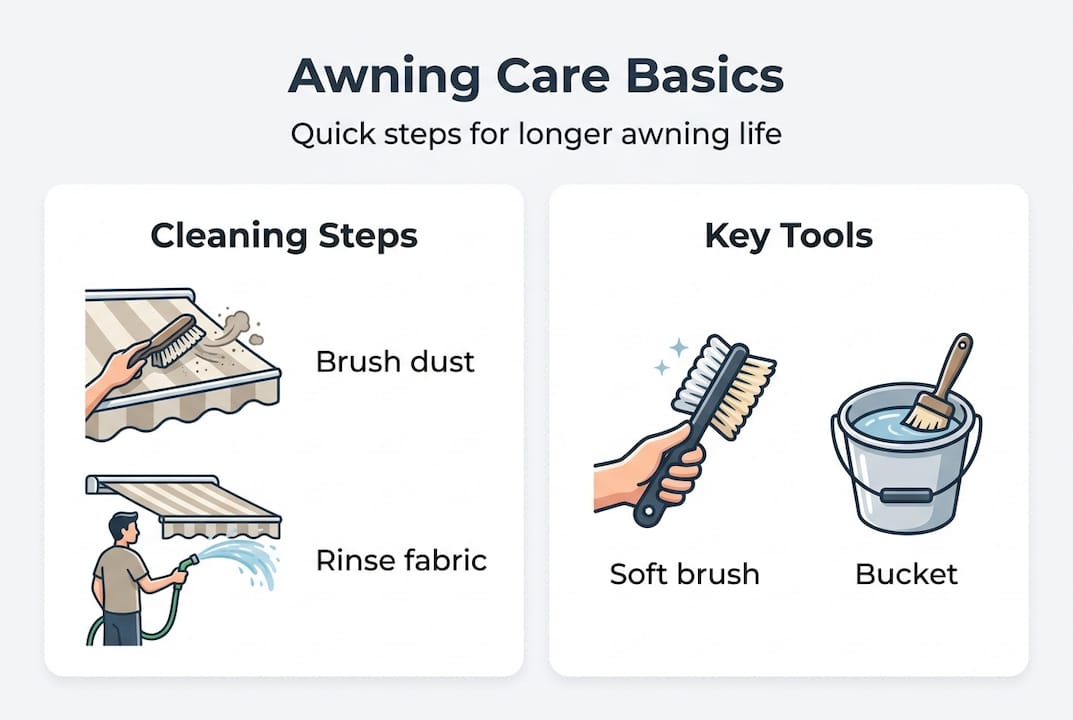
Pro Tip: Always use a pH-neutral cleaner on your awning fabric. Bleach and acidic or alkaline cleaners strip the water-repellent coating from the fibres, leaving the fabric vulnerable to soaking, staining, and early deterioration.
Inspection: catching problems early
With your supplies ready, it is time to examine your awning for subtle early signs of trouble. Most awning damage does not happen overnight — it builds gradually through small issues that go unnoticed until they become expensive problems. A monthly visual check takes less than ten minutes and can save you a significant repair bill.
Here is what to look for during each inspection:
Fabric: Check for small tears, fraying at the edges, fading patches, or areas where the waterproof coating appears to be peeling or cracking
Frame and arms: Look for rust spots, corrosion, or paint chipping on metal components — pay particular attention to joints and welds
Brackets and fixings: Tighten any loose bolts or screws, especially after periods of high wind
Alignment: Check that both arms extend evenly and that the awning sits level when fully open
Fabric tension: Sagging fabric can pool water and cause unnecessary strain on the frame
Monthly inspections of structure, arms, brackets, and joints for rust, corrosion, and loose fittings — followed by tightening bolts and addressing damage early — are the single most effective habit you can build as an awning owner. Using a maintenance checklist for awnings ensures nothing is missed during each round of checks.
Safety note: Always retract your awning during storms, high winds, heavy rain, or snowfall. Leaving it extended in severe weather is the most common cause of structural damage and torn fabric.
Pro Tip: Check your awning’s pitch angle regularly. An angle of around 14 degrees is ideal for effective water runoff. If the pitch is too shallow, rainwater pools on the fabric and adds weight that strains the arms and fixings.
Cleaning, drying, and reproofing your awning
Once you have checked the hardware, ensuring the fabric’s cleanliness is next for both appearance and longevity. The UK’s damp climate — particularly across Yorkshire, Derbyshire, Nottinghamshire, and Lincolnshire — makes mould and mildew a genuine threat to awning fabric. A proper cleaning routine keeps both problems firmly at bay.
Follow these steps for a thorough fabric clean:
Use a dry, soft-bristled brush to sweep away loose leaves, dust, and debris
Mix a small amount of mild, pH-neutral soap with lukewarm water in a bucket
Apply the soapy solution with a soft brush using gentle circular motions
Rinse thoroughly with a garden hose, working from the highest point downwards
Leave the awning fully extended and allow it to air dry completely before retracting
Thorough rinsing and air drying before retraction is critical — retracting damp fabric is the fastest route to mildew growth. For stubborn mildew spots, a diluted white vinegar solution can be effective. Apply it carefully to the affected area, allow it to sit for a few minutes, then rinse well. Always test on a small, inconspicuous area first, as described in removing mildew from awnings guidance. Never use bleach, even diluted — it causes irreversible damage to protective fabric coatings.
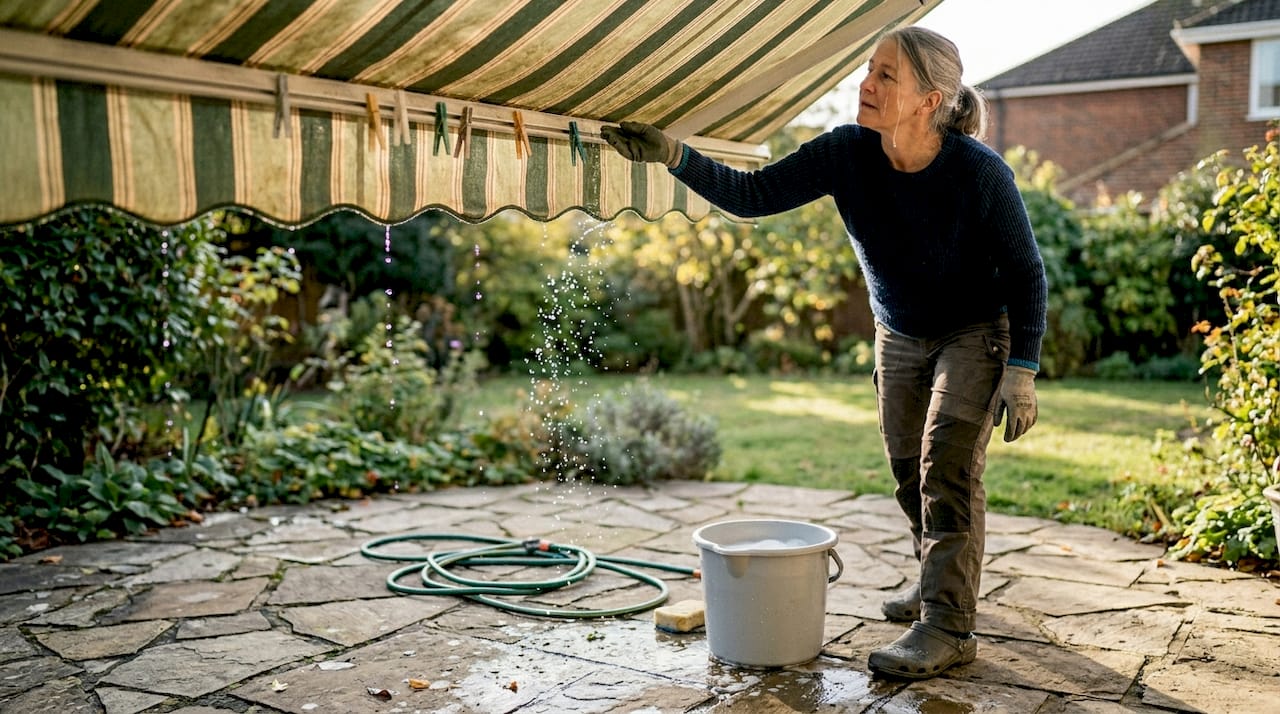
Reproofing is the step most owners skip, but it is essential. Reapply fabric protector every one to two years, or after any deep clean, to maintain water repellency and UV protection.
Scenario | Reproof frequency |
Light use, sheltered position | Every 2 years |
Regular use, exposed position | Every 12 to 18 months |
After deep clean with strong solution | Immediately after drying |
Commercial or high-traffic use | Annually |
If you want to explore choosing durable awning fabrics that hold their coating longer, the right material choice at the outset makes maintenance considerably easier.
Pro Tip: Always test any spot-cleaner on a small, hidden section of fabric before applying it to a visible area. Even products labelled as safe can react unexpectedly with certain fabric treatments.
Lubrication and mechanism care
With a clean, dry awning, attention turns to keeping the moving parts in top shape. The mechanical components of a retractable awning — arms, joints, pivots, and tracks — work hard every time the awning is extended or retracted. Without regular lubrication, friction builds up, operation becomes stiff, and in motorised awnings, the motor works harder than it should.
Lubricate moving parts monthly with a silicone-based spray or lightweight oil to ensure smooth operation and reduce friction. Here is where to focus:
Pivot points and arm joints: Apply silicone spray directly to the joint and work the arm through its full range of motion to distribute the lubricant
Guide tracks: Wipe clean first, then apply a thin, even coat of silicone spray along the full length
Roller tube: Check for any resistance or grinding sounds, which may indicate debris inside the housing
Motor connections: For electric awnings, check that cables are undamaged and connectors are clean and dry
Never use WD-40 or heavy grease on awning mechanisms. WD-40 is a solvent, not a lubricant, and grease attracts dirt that accelerates wear. Stick to dry silicone sprays designed for outdoor use.
For guidance on repairing awning mechanisms when lubrication alone is not enough, it is worth knowing when to call in a professional rather than risk further damage.
Pro Tip: Small alignment adjustments to the arms — ensuring both sides extend evenly — can significantly extend the life of your motor and gearbox by preventing uneven load distribution.
Seasonal routines for year-round performance
To keep your efforts consistent, an easy-to-follow seasonal schedule is crucial. Seasonal routines — spring cleaning and lubrication, summer frequent checks, autumn debris clearance, and winter retraction or dry storage — form the backbone of long-term awning care.
Spring: Full clean, lubrication of all moving parts, inspection of fixings after winter
Summer: Monthly cleaning during high-use periods, check fabric tension after hot spells
Autumn: Clear fallen leaves and debris promptly, inspect for any storm damage
Winter: Retract fully, ensure fabric is completely dry before storage, check cover if stored
Well-maintained awnings last between five and fifteen years or more, depending on quality, exposure, and care — and regular maintenance is what pushes that figure toward the upper end.
Care aspect | Residential | Commercial |
Cleaning frequency | Seasonal (4 times per year) | Monthly or more |
Inspection frequency | Monthly | Fortnightly |
Professional service | Every 2 to 3 years | Annually |
Reproofing | Every 1 to 2 years | Annually |
For business owners running bars, restaurants, or hotels, annual professional servicing is not optional — it is a practical safeguard against liability and unexpected closure. For further guidance on preventing weather damage and expert seasonal maintenance, both resources are worth bookmarking.
The expert’s view: what most awning owners get wrong
After fifteen years of working with homeowners and businesses across Yorkshire and the surrounding counties, the pattern of avoidable awning failures is remarkably consistent. The biggest mistakes are not dramatic — they are quiet habits that compound over time.
The most damaging is retracting a damp awning. It feels harmless in the moment, but trapped moisture in a rolled fabric creates a perfect environment for mildew to establish itself within days. In the UK’s climate, this is not a rare edge case — it is a near-certainty if the habit continues.
The second most common oversight is skipping reproofing. Owners clean the fabric diligently but forget that the water-repellent coating degrades with each wash. Without reproofing, even a clean awning will start to soak through rather than shed rain.
Small details matter more than expensive fixes. Choosing the right cleaner, checking the pitch angle annually, and lubricating monthly costs almost nothing. Replacing a motor or frame arm because these steps were skipped costs considerably more. A checklist for awning maintenance turns good intentions into a reliable habit — and that is what genuinely extends an awning’s lifespan.
Get more from your awning investment
Having learned how to keep your awning at its best, expert help is always at hand for support and upgrades. Whether you are looking to refresh an existing installation or explore new shading solutions for your home or business, Infinity Awnings offers a full range of premium retractable awnings, pergolas, and verandas across Yorkshire, Derbyshire, Nottinghamshire, and Lincolnshire.

Our team brings over fifteen years of hands-on experience to every project, from initial design through to installation and aftercare. For in-depth awning care advice or to request a free, no-obligation quote, get in touch today. Protecting your investment starts with the right guidance — and we are here to provide it.
Frequently asked questions
How often should I clean my awning?
Clean your awning at least once every season, or monthly during high-use summer months, to prevent mould, staining, and fabric wear building up over time.
Is it safe to use bleach or strong chemicals on awning fabric?
No — always use mild, pH-neutral cleaners to protect the fabric’s water-repellent coating, as bleach and harsh chemicals cause permanent damage even when diluted.
What should I do if I find mildew or mould?
Apply a diluted vinegar solution to the affected spot after testing on a hidden area first, then rinse well and air dry thoroughly before retracting — this approach is particularly important in the damp climates common across Yorkshire and Lincolnshire.
How can I make my awning last as long as possible?
Follow a consistent routine of regular cleaning, monthly inspections, proper drying, and annual reproofing — quality awnings that are well cared for can last fifteen years or more.
Do business awnings need extra care?
Yes — commercial awnings face heavier use and should be inspected fortnightly, cleaned monthly, and professionally serviced at least once a year to maintain safety and appearance standards.
Recommended
Comments