
Top awning designs for 2026 to transform your space

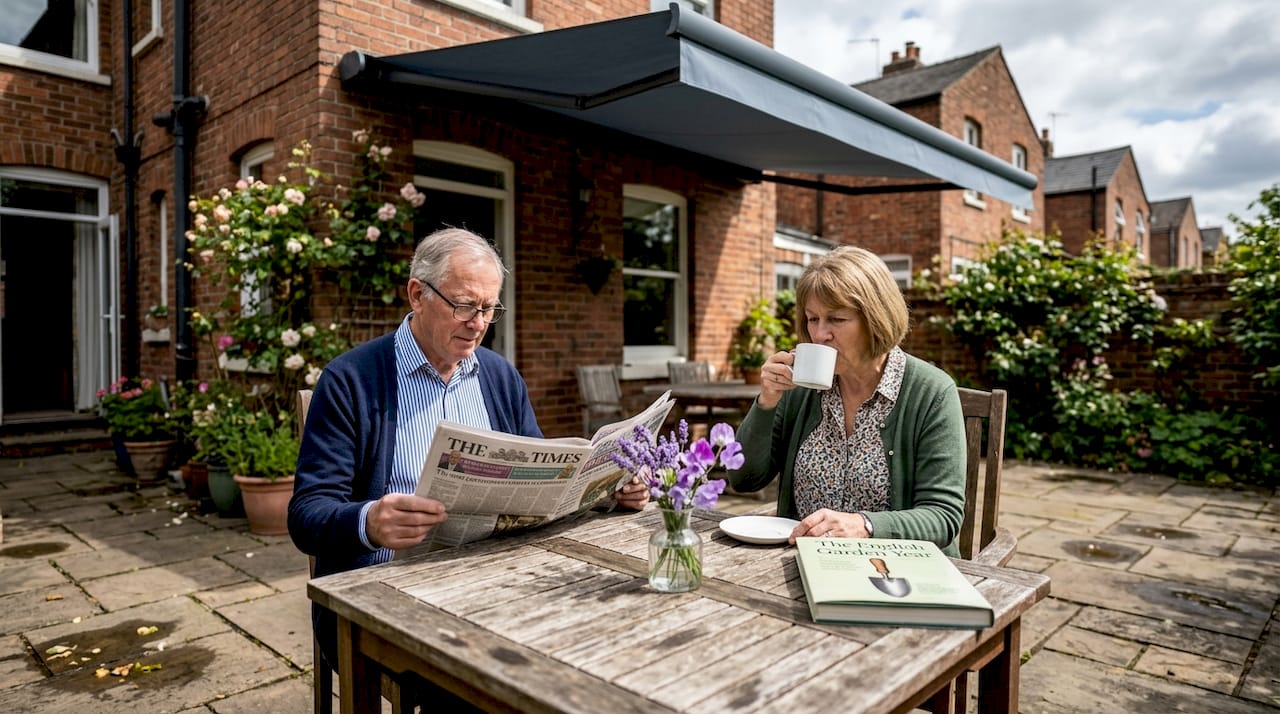
Awnings have come a long way from the striped canvas rolls your grandparents pulled out on a sunny afternoon. In 2026, the best awning designs combine smart automation, weather-resilient fabrics, and architectural minimalism into something genuinely impressive. If you live in Yorkshire, Derbyshire, Nottinghamshire, or Lincolnshire, you already know how unpredictable the British climate can be. That makes choosing the right awning more than a style decision. It is a practical investment in how you use your outdoor space, and the options available this year make that investment more rewarding than ever.
Table of Contents
Key Takeaways
Point | Details |
Smart automation | Motorised awnings with sensors maximise convenience and protect against sudden weather changes. |
Premium fabrics | Solution-dyed acrylic beats polyester or PVC for lifespan, UV and water resistance. |
Minimalist design | Slimline frames, neutral colours, and integrated lighting set the tone for 2026’s most desirable awnings. |
Local weatherproofing | Choose wind-resistant, waterproof models for the variable weather in Yorkshire, Derbyshire, Nottinghamshire, and Lincolnshire. |
Maximise your investment | Quarterly maintenance and local aftercare help your awning last longer and offer better value. |
What’s driving awning design trends in 2026?
The shift in what UK buyers want from their outdoor spaces has been building for years, and 2026 is where it all comes together. People are no longer satisfied with a basic shade structure. They want control, comfort, and something that looks like it belongs on the building rather than bolted onto it as an afterthought.
Several forces are shaping this change right now:
Climate awareness: More unpredictable summers and wetter springs have pushed buyers towards weather-resilient, adaptable solutions.
Smart home integration: Awnings that connect to home automation systems are no longer a luxury. They are becoming a standard expectation.
Energy efficiency: Shading that reduces solar heat gain is now seen as part of a home’s energy strategy, not just a comfort feature.
Aesthetic restraint: Bright stripes and bold patterns are giving way to neutral tones that complement modern architecture.
Demand for automatic, smarter solutions is rapidly increasing among UK buyers, and it is easy to see why. If you are still weighing up your options, exploring the full range of upcoming awning trends will give you a clearer picture of what is now possible.
Now that we have set the scene, let us break down the specific trends leading the way this year.
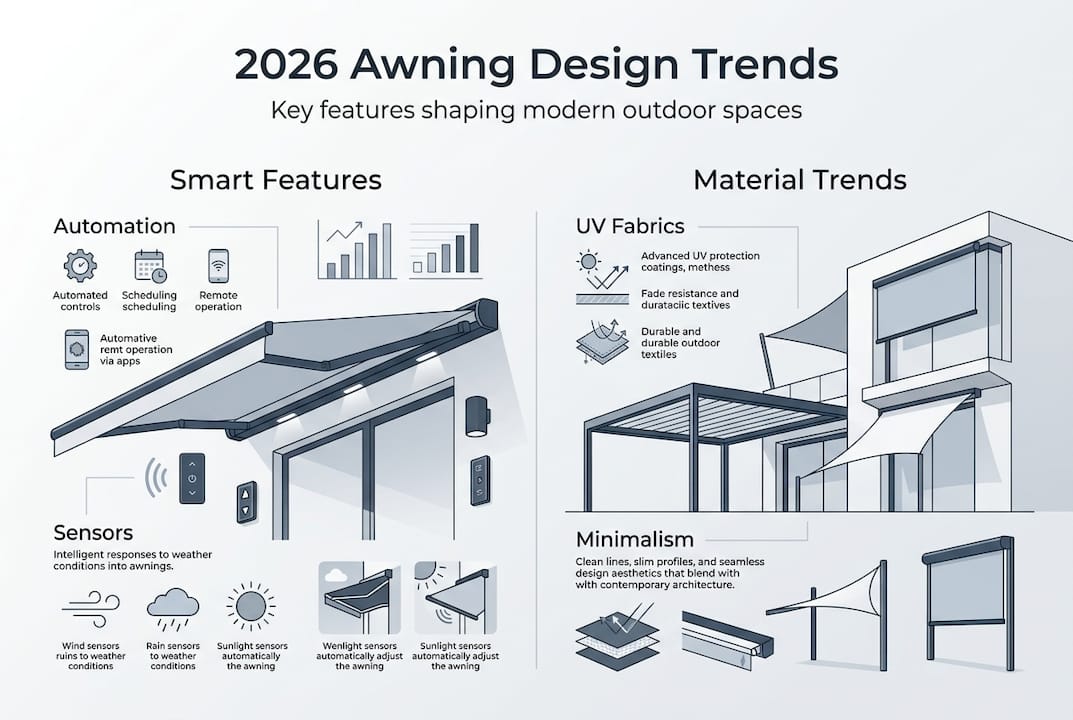
Smart retractable awnings: Automatic weather response
If there is one trend that defines 2026, it is the rise of the smart retractable awning. These systems use wind and rain sensors to automatically retract when conditions turn, and extend again once it is safe. For anyone who has watched a gust of wind destroy a manual awning, the appeal is obvious.
The benefits of retractable awnings go well beyond convenience. Electric awnings with smart sensors protect fabric and extend usability by 30 to 40%, which is a meaningful gain over a product’s lifetime. Motorised systems can operate on wind thresholds of 10 to 50 kph and deliver up to 77% solar heat reduction, making them genuinely functional rather than decorative.
Feature | Manual awning | Smart electric awning |
Wind response | Manual retraction required | Automatic sensor retraction |
Solar heat reduction | Moderate | Up to 77% |
Usability extension | Standard | 30 to 40% more usable days |
Remote/app control | No | Yes |
Lifespan impact | Depends on user | Significantly improved |
For businesses such as restaurants or hotels, app-controlled operation means staff can manage outdoor seating areas without stepping outside. For homeowners, it means your awning works even when you are not at home.
“The best smart awnings do not just react to weather. They learn your preferences and adapt your outdoor space accordingly.”
Pro Tip: When reviewing the cost of installation, factor in the long-term savings from reduced fabric replacement and energy bills. A motorised system often pays for itself faster than buyers expect.
Smart automation is only one facet of 2026’s innovations. Let us look at what is new in the materials themselves.
Fabric innovations: Durability, UV and rain protection
The fabric your awning is made from determines how long it lasts, how it looks after five years, and how well it handles a British summer. In 2026, solution-dyed acrylic has firmly established itself as the premium choice, and for good reason.
Solution-dyed means the colour is baked into the fibre during manufacturing, not applied to the surface afterwards. The result is a fabric that resists fading, mildew, and moisture far better than alternatives. Solution-dyed acrylic offers a 10 to 20 year lifespan, UPF 50+ UV protection, and superior water repellency, which makes it the obvious choice for the variable conditions across Yorkshire and the surrounding counties.
Fabric type | Lifespan | UV protection | Water resistance | Best use |
Solution-dyed acrylic | 10 to 20 years | UPF 50+ | Excellent | Premium residential and commercial |
Polyester | 5 to 8 years | Moderate | Good | Budget installations |
PVC | 5 to 10 years | Good | Very good | Industrial or high-moisture areas |
When choosing awning fabrics, colour matters more than most buyers realise. Darker shades absorb more heat and provide stronger glare reduction, while lighter tones reflect more light and keep the space beneath brighter. For more technical details on awning fabrics, including weave density and coating types, it is worth reviewing manufacturer specifications before committing.
Pro Tip: Always ask for a fabric sample before ordering. What looks right on a screen can appear very different against your brickwork or render in natural daylight.
Materials are just the start. Let us explore the distinctive look and design details dominating installations in 2026.
Minimalism and integration: Style trends for modern awnings
The days of the awning as a visual afterthought are over. In 2026, the best installations are designed to look like they were always part of the building. Slim cassette profiles, powder-coated frames in architectural colours, and clean geometric lines are the hallmarks of this year’s most sought-after designs.
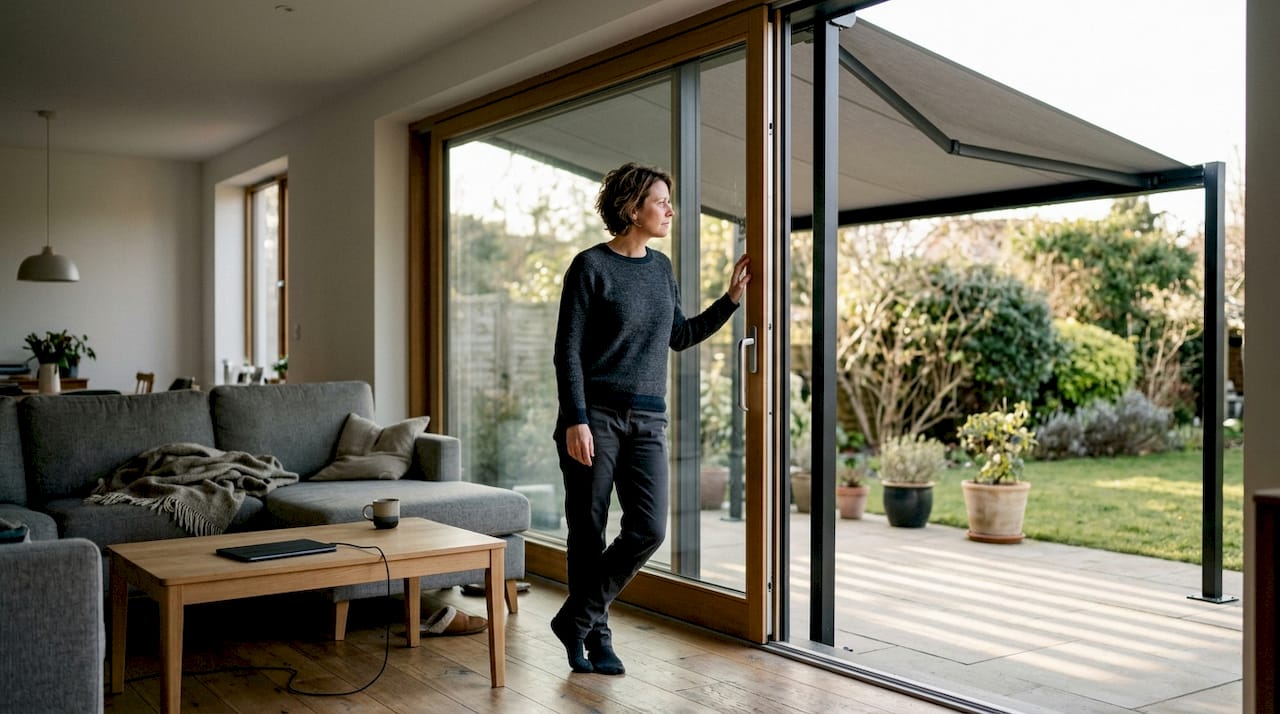
Minimalist lines, slim frames, neutral and earth tones, and integrated lighting mark 2026’s key style trends, reflecting a broader shift in how homeowners and businesses think about outdoor space.
The most popular colour choices this year include:
Sand and warm beige: Softens modern architecture and works well with brick or stone.
Slate grey and charcoal: Pairs with contemporary render, anthracite windows, and dark timber.
Anthracite and graphite frames: Replaces the old white aluminium look with something far more considered.
Integrated LED lighting: Extends usability into the evening without additional fittings cluttering the space.
Infrared heaters: Built into the cassette or valance, allowing outdoor use well into autumn.
For businesses, bespoke fabric printing allows brand colours or logos to be incorporated without compromising the overall aesthetic. For homeowners, the goal is usually the opposite: an awning that blends so well you barely notice it until you need it. Exploring modern UK awning styles will show you just how far the design options have come.
“An awning that looks like it belongs is worth far more than one that merely functions.”
While style and material trends are essential, choosing the right awning for local climates and use cases is crucial.
Choosing the right awning for your region: Yorkshire, Derbyshire, Nottinghamshire and Lincolnshire
Buying an awning in the north and midlands of England is not the same as buying one in the south. Wind exposure, rainfall frequency, and temperature variation all influence which system will serve you best. Here is what to prioritise for these counties specifically.
Wind resistance: Look for systems rated to at least Beaufort scale 5 or 6. Exposed gardens in Lincolnshire or the Yorkshire Dales need robust sensor-driven retraction.
Waterproof rating: Opt for fabrics with a hydrostatic head rating above 300mm for reliable rain protection.
Sensor specification: Ensure wind and rain sensors are included as standard, not optional extras.
Local installation: Choose a supplier with regional experience and aftercare coverage in your county.
Warranty terms: Confirm what is covered and for how long, particularly for motorised components.
Wind-resistant, waterproof systems with local installation are advised for these regions, with costs ranging from £900 for a manual awning to £3,800 for a fully motorised system with smart features.
Awning type | Typical cost range | Best suited for |
Manual retractable | £900 to £1,400 | Sheltered gardens, lower budgets |
Electric without sensors | £1,400 to £2,200 | Moderate exposure, convenience focus |
Smart motorised with sensors | £2,200 to £3,800 | Exposed locations, maximum usability |
For detailed weatherproofing tips specific to this region, and a full awning cost breakdown covering what drives the price, both resources are worth reading before you request a quote.
Now that you know how to select the right awning, let us cover expert tips for longevity and best value.
Expert tips: Maximising value and lifespan from your awning investment
Even the best awning will underperform if it is not looked after properly. The good news is that the maintenance required is straightforward, and the payoff is significant.
Quarterly cleaning can extend awning lifespan by up to 40%, which on a premium installation represents a considerable saving. Here is how to approach it:
Clean the fabric every three months using a soft brush and mild soapy water. Avoid pressure washers, which can damage the coating.
Check sensors twice a year, ideally before summer and before winter. A faulty sensor that fails to retract in a storm can cause serious damage.
Inspect the frame and fixings annually for corrosion, loose bolts, or signs of movement.
Lubricate moving parts with a silicone-based product. Never use oil-based lubricants on fabric or plastic components.
Keep records of installation dates, warranty documents, and service visits. This matters for resale value and guarantee claims.
Pro Tip: If your awning develops a mechanical fault, resist the urge to fix it yourself. Motorised systems involve electrical components and tensioned arms that can cause injury if handled incorrectly. Use a qualified engineer.
For a full awnings maintenance guide, including seasonal checklists, and specific advice on retractable awning care and awning repair advice, these resources will keep your investment performing at its best for years to come.
Looking for a trusted awning specialist in your area?
With over 15 years of experience serving homeowners and businesses across Yorkshire, Derbyshire, Nottinghamshire, and Lincolnshire, Infinity Awnings is well placed to help you act on everything covered in this article.
Whether you are drawn to a smart motorised system with integrated heating and lighting, or you simply want expert guidance on which fabric and frame will suit your property best, the team offers free surveys and a downloadable inspiration brochure to get you started. Every installation comes with aftercare support and access to premium brands including Weinor, Tarasola, and Morvelle. If you are ready to make your outdoor space work harder in 2026, getting in touch is the obvious next step.
Frequently asked questions
Are retractable or fixed awnings better for UK weather in 2026?
Retractable awnings offer up to 30% more usable days and adapt to variable weather far better than fixed structures. Fixed pergolas offer permanence but cannot respond to sudden wind or rain.
What awning fabrics last longest in the British climate?
Solution-dyed acrylic outperforms polyester and PVC in both longevity and UV resistance, offering a lifespan of 10 to 20 years with UPF 50+ protection and strong water repellency.
How much does a modern awning cost in Yorkshire and the Midlands?
Awning costs span from £900 to £3,800 depending on whether you choose a manual or fully motorised smart system, with installation and optional extras influencing the final figure.
What are the top colour and style options for awnings in 2026?
Neutral palettes and minimalist lines dominate awning preferences for 2026, with sand, slate, and charcoal tones proving most popular alongside integrated LED lighting and slim cassette frames.
How do you maintain and care for a modern awning?
Quarterly cleaning extends awning lifespan by up to 40%. Combine this with regular sensor checks and professional servicing of motorised components to protect your investment long term.
Recommended
Comments