
Why install outdoor shading: UK benefits for homes 2026
- Andrew Crookes

- Mar 9
- 12 min read
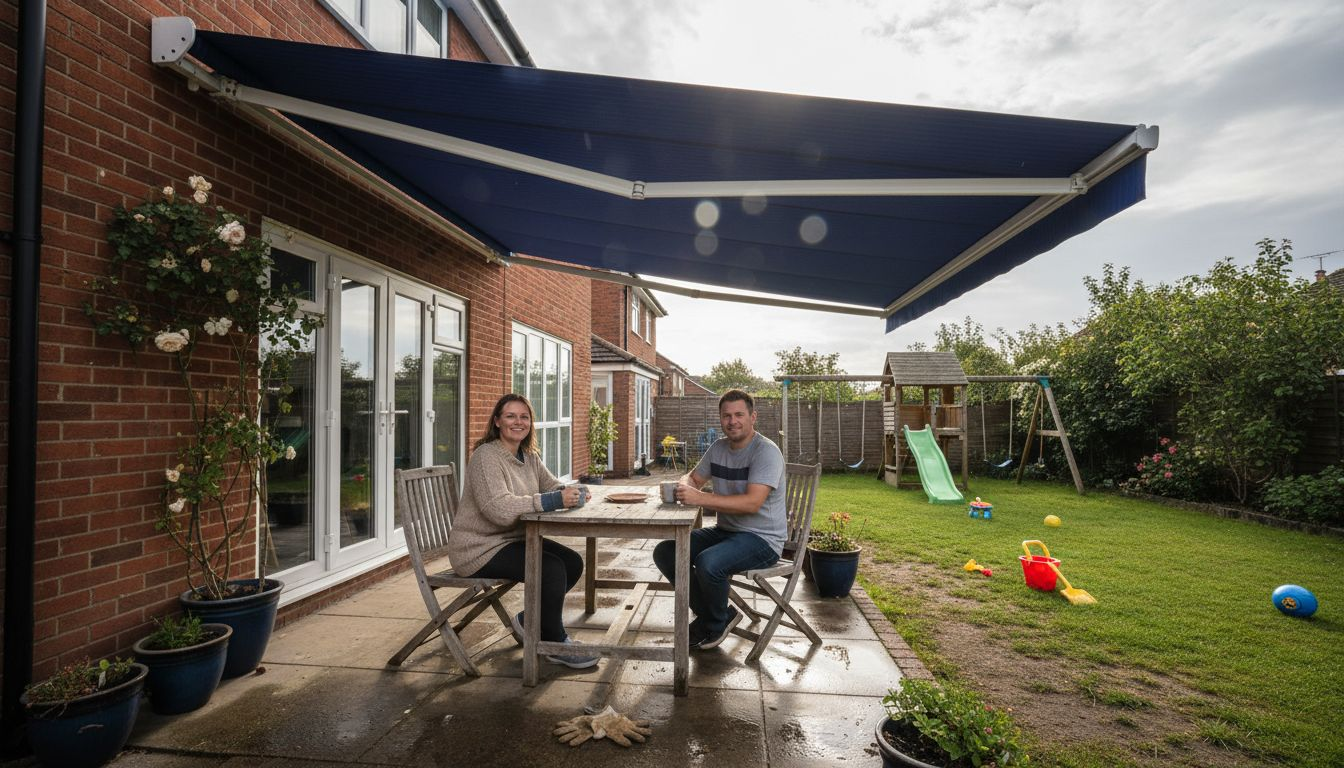
Many homeowners and businesses believe indoor blinds suffice for heat control, yet external shading blocks 97% of solar heat before it reaches windows, far outperforming interior solutions. Understanding outdoor shading’s comprehensive benefits transforms how you approach comfort, energy efficiency, and space usability across Yorkshire, Derbyshire, Nottinghamshire, and Lincolnshire properties, delivering measurable improvements in temperature control, health protection, and year-round outdoor enjoyment.
Table of Contents
Key takeaways
Point | Details |
Heat blocking efficiency | External shading blocks up to 97% of solar heat before reaching windows, reducing indoor temperatures significantly. |
UV protection | Properly installed shading reduces harmful UV exposure by up to 90%, lowering skin cancer risks for outdoor users. |
Energy cost reduction | Outdoor shading decreases cooling and heating demands, cutting annual energy bills measurably. |
Year-round usability | Shading extends outdoor space utility by up to 30%, making areas functional even during variable UK weather. |
Regulatory compliance | Choosing compliant shading solutions ensures adherence to UK building regulations whilst maximising durability. |
Understanding outdoor shading: what it is and how it works
Outdoor shading encompasses external structures designed to block or filter solar radiation before it penetrates windows and indoor spaces. What is outdoor shading includes retractable awnings, pergolas, verandas, and external roller blinds, each engineered to intercept sunlight at the building envelope. These solutions function by creating physical barriers that reflect or absorb solar energy outdoors, preventing heat from entering through glazing and walls.
For homes and businesses across Yorkshire, Derbyshire, Nottinghamshire, and Lincolnshire, this mechanism proves crucial during increasingly warm summers and variable seasonal conditions. The three-part framework governing outdoor shading effectiveness comprises solar heat control, UV and glare protection, and regulatory alignment with UK building standards. Each component works together to deliver comprehensive benefits beyond aesthetic appeal.
Common outdoor shading types include:
Retractable awnings offering flexible coverage adjusted to weather conditions
Pergolas providing permanent or semi-permanent overhead protection with optional fabric covers
External roller blinds mounted outside windows for direct solar heat blocking
Verandas creating covered outdoor rooms extending living spaces
Brise-soleil systems featuring angled slats controlling sunlight angles
The mechanism behind outdoor shading’s superior performance lies in intercepting solar radiation before thermal energy transfers through glazing. External shading blocks 97% of solar heat whilst maintaining natural light and unobstructed views, a feat impossible with internal blinds that trap heat between window and fabric. This fundamental principle makes outdoor shading the most effective thermal control method for residential and commercial properties.
How outdoor shading improves comfort and energy efficiency
Outdoor shading’s thermal performance delivers quantifiable improvements in indoor comfort and energy consumption. During summer heatwaves, properly installed external shading reduces indoor temperatures by 12 to 18°C compared to unshaded spaces, transforming uncomfortably hot rooms into pleasant environments without air conditioning. This temperature reduction stems from blocking solar radiation before it converts to thermal energy inside buildings.
External shading preserves electricity supplies by reducing cooling demand during peak consumption periods, directly lowering energy bills. Homeowners and businesses see measurable cost savings through decreased reliance on air conditioning systems, fans, and mechanical cooling. The energy efficiency benefits extend beyond summer, as shading manages heat gain year-round, reducing the frequency and intensity of heating system activation during transitional seasons.
Shading type | Heat blocking efficiency | Energy cost impact | Comfort improvement |
External awnings | 90 to 97% | 20 to 30% cooling reduction | Significant indoor temperature drop |
Internal blinds | 30 to 50% | 5 to 10% cooling reduction | Modest temperature improvement |
No shading | 0% | Baseline consumption | Maximum heat build-up |
Immediate comfort benefits from outdoor shading include:
Lower indoor temperatures by blocking solar heat before window penetration
Reduced glare on screens, furniture, and work surfaces without darkening rooms
Natural light retention whilst controlling excessive brightness and heat
Decreased reliance on artificial cooling systems and associated noise
Enhanced outdoor comfort enabling extended patio and garden use
Pro Tip: Select shading types based on window orientation and glazing factors. South-facing windows benefit most from retractable awnings allowing winter sun penetration, whilst west-facing glazing requires fixed shading to combat afternoon heat. Consider automated systems responding to temperature and sunlight sensors, maximising energy efficiency without manual adjustments.
The data clearly demonstrates external shading’s superiority over internal solutions. Interior blinds trap heat between fabric and glass, creating a greenhouse effect that radiates warmth indoors. External shading prevents this thermal build-up entirely, maintaining cooler indoor environments whilst preserving outdoor views and daylight quality that occupants value.
Health benefits of outdoor shading
UV radiation causes 90% of nonmelanoma skin cancers, making outdoor shading a vital health protection measure for families and employees using outdoor spaces. Properly designed shading structures intercept harmful ultraviolet rays before they reach skin, significantly reducing cancer risks for people spending time on patios, terraces, and garden areas. This protective function becomes increasingly important as outdoor living spaces expand in residential and commercial properties.
UV radiation causes 90% of nonmelanoma skin cancers; outdoor shading reduces harmful UV exposure, lowering health risks significantly whilst enabling safer outdoor enjoyment.
Outdoor shading extends beyond cancer prevention to improve overall wellbeing. Shading reduces glare and light intensity, creating more comfortable indoor environments with improved daylight quality. Occupants experience less eye strain, headaches, and fatigue associated with excessive brightness and heat. The psychological benefits include enhanced mood and productivity in shaded indoor and outdoor spaces compared to overheated, glare-filled environments.
Health advantages from outdoor shading include:
Significant reduction in harmful UV exposure for outdoor space users
Lower skin cancer risks for families, employees, and customers
Decreased heat-related illnesses during warm weather periods
Improved indoor air quality by reducing cooling system reliance
Enhanced sleep quality through better bedroom temperature control
Reduced eye strain and headaches from controlled daylight levels
For businesses operating outdoor hospitality areas, shading transforms customer experience whilst protecting staff health. Restaurants, pubs, and cafés with retractable awnings create comfortable dining environments extending service hours beyond peak sun periods. Educational institutions benefit from shaded outdoor learning spaces protecting children’s sensitive skin during breaks and outdoor activities.
The cumulative health impact proves substantial over time. Families using shaded gardens and patios enjoy outdoor living without sunburn risks, encouraging physical activity and outdoor time essential for children’s development. Commercial properties demonstrate duty of care through UV protection, reducing long-term health liabilities whilst creating attractive, functional outdoor spaces customers prefer.
Year-round benefits of outdoor shading
Outdoor shading delivers value beyond summer months by enhancing space utility and thermal comfort throughout the year. Shading extends outdoor space usability by 30% despite the UK’s variable weather, transforming patios and terraces into functional areas during spring, autumn, and mild winter days. This extended usability increases property value and lifestyle quality for homeowners whilst expanding revenue opportunities for hospitality businesses.
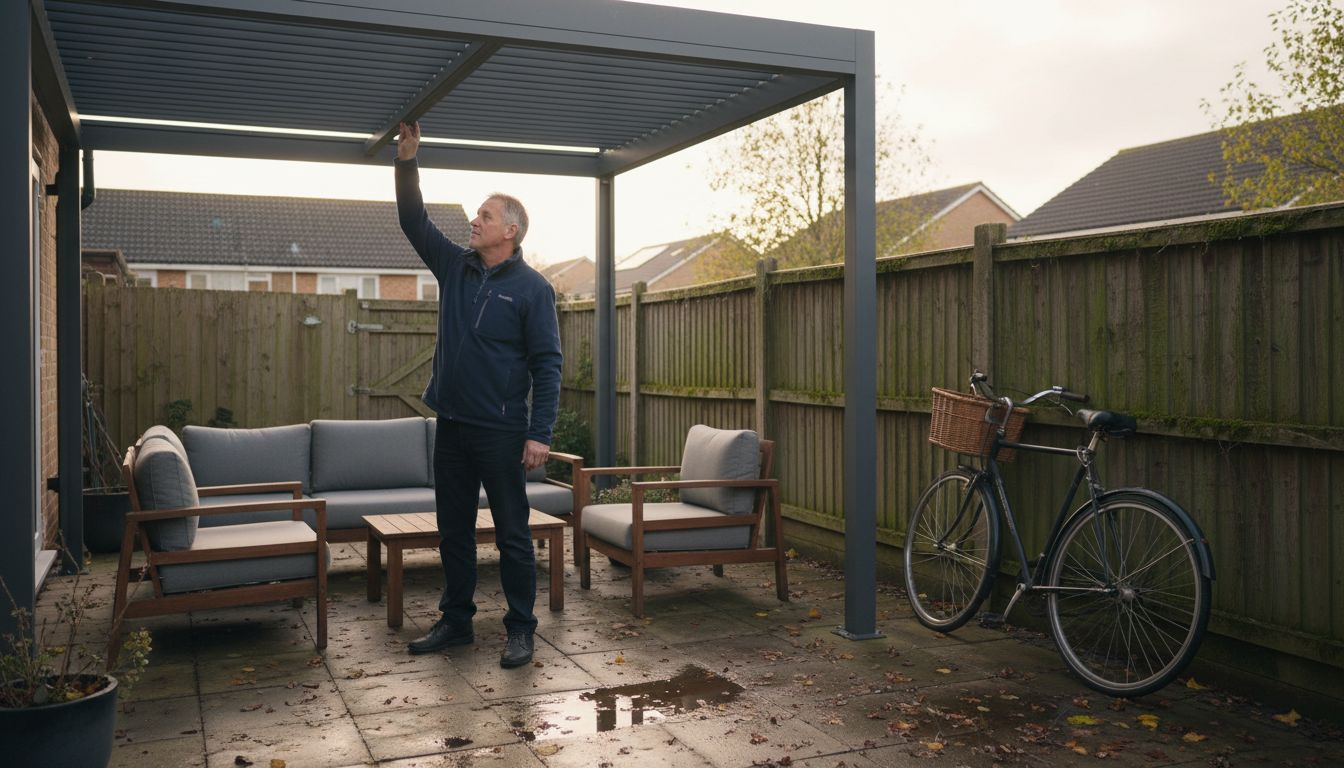
During colder months, outdoor shading contributes to thermal efficiency by reducing heat loss by 18% when appropriately managed. Retractable awnings and adjustable pergola covers can be positioned to allow winter sunlight penetration, warming indoor spaces naturally whilst blocking heat escape during evenings. This dual functionality maximises year-round energy efficiency, contradicting the misconception that shading serves only summer needs.
Season | Temperature benefit | Energy impact | Usability enhancement |
Summer | 12 to 18°C indoor cooling | 20 to 30% cooling cost reduction | Peak outdoor space use |
Spring/Autumn | 5 to 10°C temperature regulation | 10 to 15% heating reduction | Extended outdoor season |
Winter | 8 to 12% heat retention | Reduced heat loss overnight | Protected outdoor storage |
Year-round shading benefits include:
Extended outdoor dining and entertaining possibilities throughout seasons
Protection from rain, wind, and light snow enabling patio use
Thermal regulation reducing both cooling and heating demands
Furniture and outdoor equipment protection from weather damage
Enhanced property aesthetics across all seasons
Increased natural light control adapting to seasonal sun angles
Pro Tip: Manage shading position seasonally to maximise benefits. Retract or adjust awnings during winter months to allow low-angle sunlight warming indoor spaces naturally. Extend shading during spring and autumn to control variable temperature swings. Automated systems with seasonal programming optimise thermal performance without daily manual intervention.
Businesses particularly benefit from year-round shading utility. Hospitality venues maintain outdoor seating revenue through shoulder seasons, whilst retail properties create covered outdoor displays and queuing areas functional regardless of weather. Outdoor shading examples demonstrate how commercial properties across Yorkshire and surrounding regions leverage shading for continuous operational advantages.
Regulatory and sustainability considerations in outdoor shading installation
UK building regulations significantly influence outdoor shading choices and installation requirements. Part L and Part O compliance regulate energy efficiency and overheating control in buildings, establishing standards for shading products and installation methods. Part L focuses on conservation of fuel and power, whilst Part O addresses overheating mitigation, both directly relevant to external shading systems designed to manage solar heat gain.
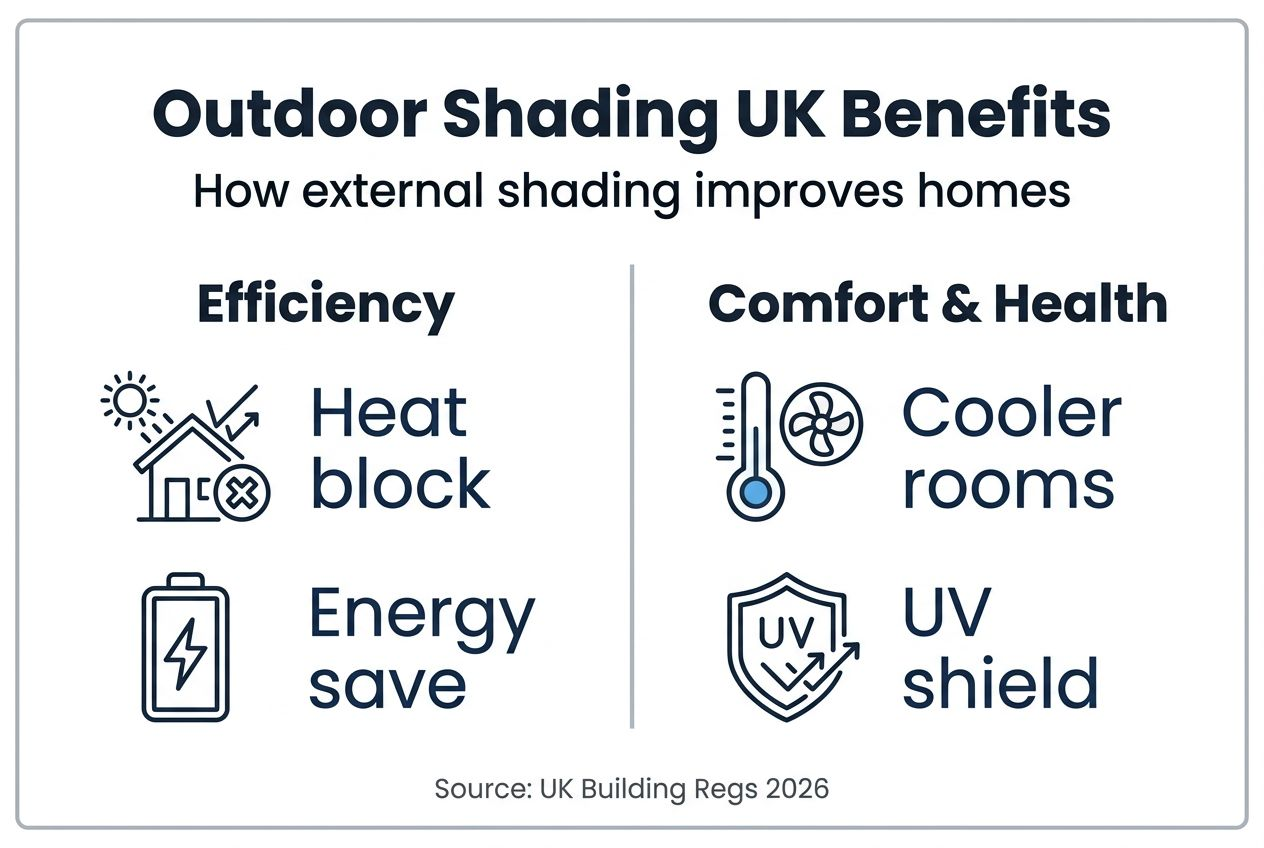
Compliant shading solutions support national net-zero carbon emission targets by reducing energy consumption for cooling and heating. Properties achieving lower operational energy demand through effective shading contribute to broader environmental goals whilst benefiting from reduced utility costs. This alignment makes outdoor shading a practical sustainability measure accessible to homeowners and businesses committed to environmental responsibility.
Durable, weather-resistant materials prove essential for British climate conditions. Corrosion-resistant aluminium frames withstand moisture and temperature fluctuations characteristic of Yorkshire, Derbyshire, Nottinghamshire, and Lincolnshire weather patterns. Fade-resistant, waterproof fabrics maintain appearance and function through years of UV exposure, rain, and wind. Material quality directly impacts longevity, reducing replacement frequency and associated environmental impact from manufacturing and disposal.
Key regulatory and sustainability factors include:
Building regulation compliance avoiding costly retrofits or legal complications
Energy performance certification improvements through documented shading installation
Material durability ensuring 10 to 15 year minimum functional lifespan
Local planning permission requirements for certain shading types and sizes
Recyclable materials supporting circular economy principles
Maintenance accessibility reducing long-term environmental footprint
Choosing compliant shading solutions requires understanding local authority requirements and building characteristics. New constructions must incorporate overheating mitigation strategies where Part O applies, making external shading a preferred solution. Retrofits benefit from professional assessment ensuring regulatory compliance whilst optimising thermal performance for specific building orientations and glazing ratios.
Selecting outdoor awnings involves evaluating material sustainability alongside functional requirements. Premium fabrics treated with environmentally responsible coatings balance performance with ecological considerations. Aluminium components sourced from recycled materials reduce carbon footprint without compromising structural integrity essential for wind resistance and longevity in exposed locations.
Common misconceptions about outdoor shading
Widespread myths about outdoor shading effectiveness create hesitation amongst potential buyers. The belief that indoor blinds alone suffice for heat and glare control persists despite clear evidence showing external shading outperforms internal solutions by blocking solar heat before glazing penetration. Interior blinds trap heat between fabric and windows, radiating warmth indoors and providing minimal temperature reduction compared to external systems.
Another misconception positions outdoor shading as purely decorative rather than functional. Quality shading systems deliver substantial thermal control without compromising natural light or outdoor views. Modern designs integrate aesthetics with performance, offering customisable colours, patterns, and styles that enhance property appearance whilst providing measurable comfort and energy benefits.
External shading blocks up to 97% of solar heat before reaching windows, a performance level impossible for internal blinds to achieve regardless of fabric thickness or colour.
The assumption that outdoor shading serves only summer needs overlooks year-round thermal regulation benefits. Properly managed shading systems contribute to heat retention during colder months whilst extending outdoor space usability through transitional seasons. This versatility makes shading a four-season investment rather than a single-purpose summer accessory.
Common false beliefs and factual corrections include:
Myth: Indoor blinds provide equivalent heat control. Fact: External shading blocks 97% of solar heat versus 30 to 50% for internal solutions.
Myth: Shading darkens rooms excessively. Fact: External shading maintains natural light whilst controlling heat and glare.
Myth: Outdoor shading suits only south-facing properties. Fact: All orientations benefit from tailored shading controlling specific sun angle challenges.
Myth: Installation disrupts property structure significantly. Fact: Modern mounting systems install with minimal invasiveness using existing facade features.
Myth: Shading requires constant maintenance. Fact: Quality materials need only annual cleaning and periodic mechanical inspection.
Addressing these misconceptions builds confidence in outdoor shading investments. Installation tips demonstrate how professional fitting minimises disruption whilst ensuring optimal performance. Understanding the factual performance data and operational characteristics helps homeowners and businesses make informed decisions based on genuine benefits rather than outdated assumptions.
Choosing and installing the right outdoor shading solution
Selecting appropriate outdoor shading requires evaluating specific property characteristics and user requirements. Common shading types offer distinct advantages suited to different applications and preferences.
Shading type | Advantages | Considerations | Typical uses |
Retractable awnings | Flexible coverage, adjustable to weather, compact storage | Requires quality mechanisms for longevity | Residential patios, commercial terraces |
Pergolas | Permanent structure, customisable covers, supports climbing plants | Fixed footprint, planning permission may apply | Gardens, outdoor dining areas |
External roller blinds | Maximum heat blocking, precise control, sleek appearance | Limited to window dimensions | South and west-facing windows |
Verandas | Full weather protection, creates outdoor rooms, adds property value | Significant investment, structural requirements | Residential extensions, hospitality venues |
Assessment steps for choosing awnings include:
Evaluate sun exposure patterns throughout the day and seasons identifying peak heat periods.
Measure available space accurately including projection requirements for retractable systems.
Determine operation preferences weighing manual versus motorised mechanisms based on frequency of use.
Select durable materials appropriate for local weather including wind resistance ratings.
Verify building regulation compliance and planning permission requirements with local authorities.
Compare customisation options including fabric patterns, colours, and functional add-ons.
Durable materials prove essential for British weather conditions. Powder-coated aluminium frames resist corrosion from moisture and temperature fluctuations. Solution-dyed acrylic fabrics maintain colour vibrancy through years of UV exposure whilst providing water resistance and mould prevention. Stainless steel fixtures ensure mechanical reliability in exposed coastal and rural locations common across the target regions.
Pro Tip: Consider customisation options extending functionality and style. Integrated LED lighting transforms outdoor spaces into evening entertainment areas. Infrared heaters enable comfortable outdoor use during cooler months. Wind and rain sensors automate retraction protecting shading investment from storm damage. These additions enhance usability whilst demonstrating attention to comprehensive outdoor living needs.
Professional installation ensures optimal performance and regulatory compliance. Local installers familiar with Yorkshire, Derbyshire, Nottinghamshire, and Lincolnshire climate patterns and building codes provide expertise preventing common pitfalls. Proper mounting, tensioning, and waterproofing require specialised knowledge protecting shading investment and maximising functional lifespan. Installation tips highlight critical factors distinguishing professional results from amateur attempts risking structural damage or premature failure.
Enhance your outdoor spaces with expert shading solutions
Transforming outdoor areas into comfortable, usable spaces requires professional expertise and quality products tailored to regional conditions. Infinity Awnings specialises in customised outdoor shading solutions designed specifically for Yorkshire, Derbyshire, Nottinghamshire, and Lincolnshire properties, combining 15 years of industry experience with premium brands including Weinor, Llaza, Selt, Tarasola, and Morvelle.
Professional installation services ensure regulatory compliance and durability essential for British weather patterns. Whether you need retractable awnings maximising flexibility, elegant pergolas creating permanent outdoor rooms, or sleek external blinds controlling window heat gain, expert consultation identifies solutions matching your style preferences and practical requirements. Customisable options including electric operation, integrated lighting, and heating systems extend outdoor space functionality throughout the year.
Contact Infinity Awnings for free consultations and detailed quotes tailored to your specific property characteristics and comfort goals.
Frequently asked questions about outdoor shading
What types of outdoor shading work best for North of England climates?
Retractable awnings prove most versatile for Yorkshire, Derbyshire, Nottinghamshire, and Lincolnshire conditions, allowing adjustment to variable weather patterns whilst providing maximum coverage during sunny periods. Durable, waterproof fabrics and corrosion-resistant aluminium frames withstand moisture and temperature fluctuations characteristic of the region. Pergolas with retractable canopies offer permanent structure benefits combined with operational flexibility.
How much can outdoor shading reduce annual energy bills?
Properly installed external shading reduces cooling costs by 20 to 30% during warm months by blocking solar heat before window penetration. Year-round benefits include 10 to 15% heating cost reduction through improved thermal regulation and heat retention management. Actual savings depend on property size, glazing area, shading coverage, and existing insulation quality.
Are there building regulations to consider before installing shading?
UK building regulations Part L and Part O influence shading installations, particularly for new constructions and significant renovations requiring energy efficiency and overheating control measures. Most residential shading installations proceed without planning permission, though certain sizes, locations, and conservation areas may require local authority approval. Professional installers ensure compliance with relevant regulations.
Can outdoor shading protect against UV rays effectively?
Quality outdoor shading fabrics block 90 to 98% of harmful UV radiation, significantly reducing skin cancer risks for outdoor space users. The protective effectiveness depends on fabric density, colour, and treatment, with darker, tightly woven materials providing superior UV blocking. Properly positioned shading creates safe outdoor environments for extended family time and commercial customer use.
What maintenance keeps outdoor shading durable long-term?
Annual cleaning with mild soap and water removes dirt and prevents mould growth on fabrics. Mechanical components require periodic lubrication and inspection ensuring smooth operation. Quality materials need minimal maintenance beyond these basics, with professional servicing every two to three years recommended for motorised systems. Proper winter storage or retraction during severe weather extends lifespan significantly.
Does outdoor shading work during winter months?
Retractable shading systems managed seasonally contribute to winter thermal efficiency by allowing low-angle sunlight warming indoor spaces naturally during the day. Fixed pergolas with optional covers provide weather protection enabling outdoor space use during mild winter periods. The year-round versatility makes outdoor shading a continuous investment rather than seasonal accessory.
Recommended
Comments